On March 16, OpenSea co-founder and CEO Devin Finzer tweeted that the OpenSea Foundation has decided to postpone the scheduled SEA token issuance event on March 30. In October 2025, Finzer first announced that SEA would launch in Q1 2026. With Q1 coming to an end, a new timetable is still undecided.
Finzer attributed the delay to the current harsh crypto market conditions and emphasized that "SEA launches only once." The foundation chose to wait for everything to be ready rather than rush to meet the original date.
Refund or Keep Rewards: Users Must Choose One
For users who participated in Wave 3 to Wave 6 reward events after the Q1 schedule was announced, OpenSea has proposed an optional compensation plan.
The core logic is to exchange refunds for Treasure rewards, where users can apply for a refund of the transaction fees collected by the platform during these rounds. However, if a refund is chosen, the Treasure rewards from the corresponding waves will be removed from the account. If users choose not to refund, the held Treasure rewards will remain unchanged. The foundation promises to take this into account at TGE and this equity is independent of the historical activity allocation.
This design is in response to community dissatisfaction with the reward mechanism. Previously, Wave 1 distributed a $12.2 million prize pool containing NFTs and tokens. However, community feedback indicated that obtaining high-level chests required very high transaction volumes, and the reward distribution was criticized for strongly encouraging wash trading. OpenSea had previously paused its new XP reward system due to this.
60-Day Zero Fees and Product Roadmap
In addition to the refund plan, OpenSea announced the implementation of a 60-day zero-fee policy starting on March 31. The zero-fee period covers the platform's own token transaction fees, and a new fee system will be introduced after the period, with Finzer stating that the rates will be more competitive for high-frequency traders.
On the product side, while the March 30 event was canceled, the team will host another event focusing on product updates in the coming months. OpenSea's OS2 platform officially exited Beta in May 2025, currently supporting cross-chain token transactions on 22 chains. The mobile app has entered the closed testing phase, featuring an AI trading assistant called OpenSea Intelligence. Perpetual contract trading functionality is also on the roadmap.
NFT Industry Stagnation Leads OpenSea to Opt for Further Delay
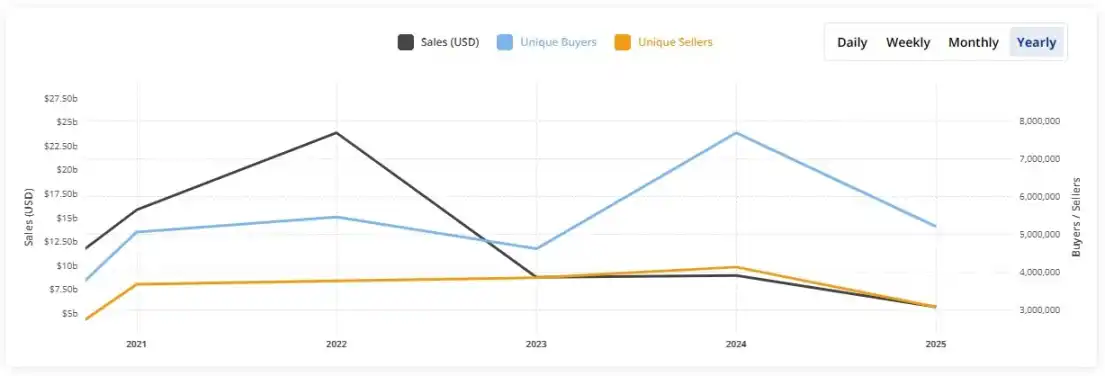
Behind the coin issuance delay lies a contracting industry landscape. Data from CryptoSlam shows that the total NFT sales for the full year of 2025 amounted to $5.63 billion, a 37% decrease from the $8.9 billion in 2024. However, the supply side expanded in reverse to 1.34 billion pieces, dropping from $124 to $96. The total market value of NFTs by the end of 2025 was approximately $2.4 billion.
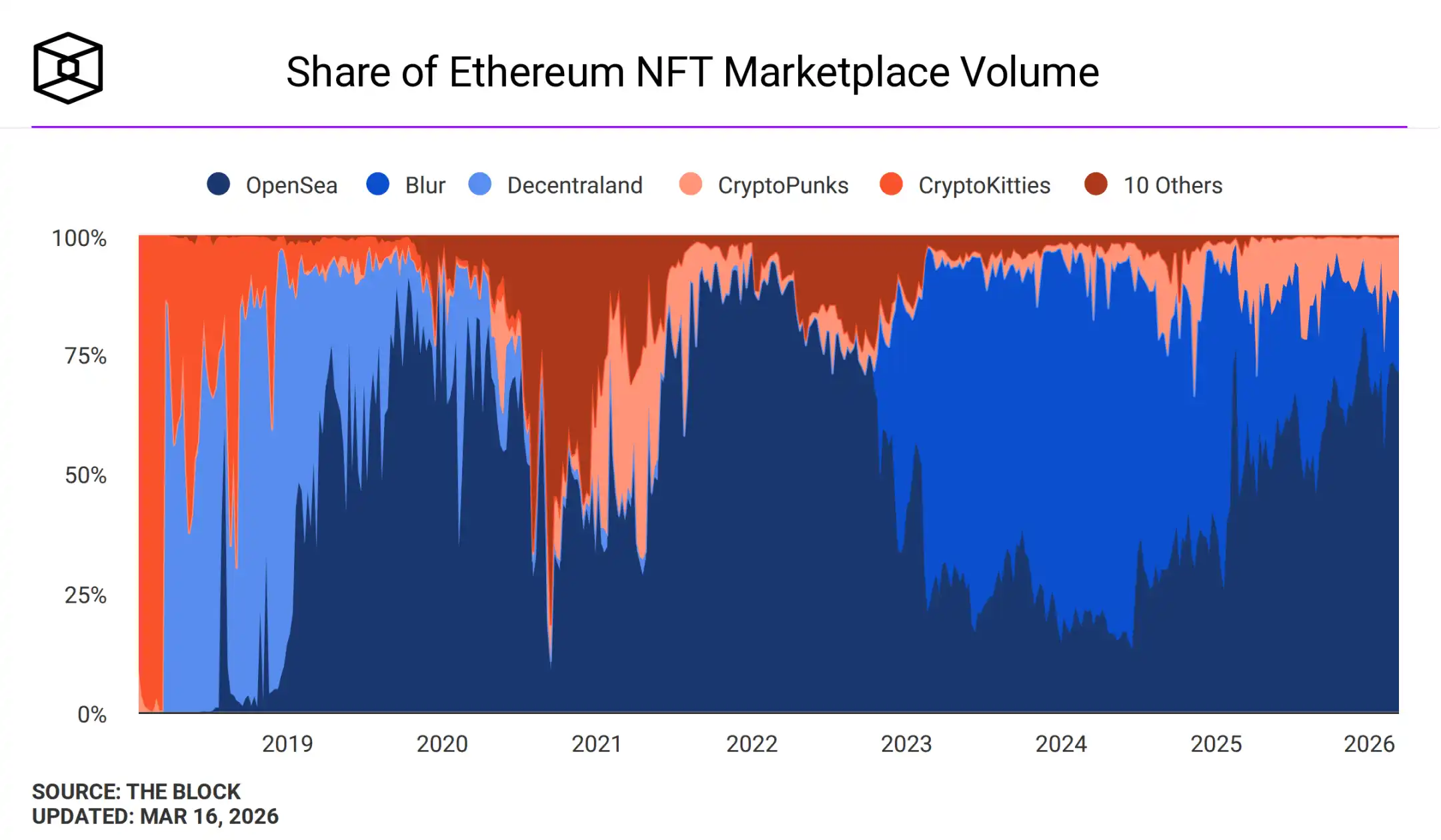
OpenSea's market share, on the contrary, has been rising in this backdrop, but what is fueling the figures is no longer NFTs. According to The Block data, OpenSea's current Ethereum NFT transaction market share is about 71%. Following the announcement of the SEA token, its market share kept climbing. However, out of the $26 billion in monthly transactions in October 2025, over 90% came from token trades, while NFT transactions themselves remained weak.
In May 2025, following the exit of OS2 from beta, OpenSea's monthly active users rebounded to 467,000, the highest since 2023. However, as the entire market cools off, the enthusiasm in NFT trading has significantly waned.
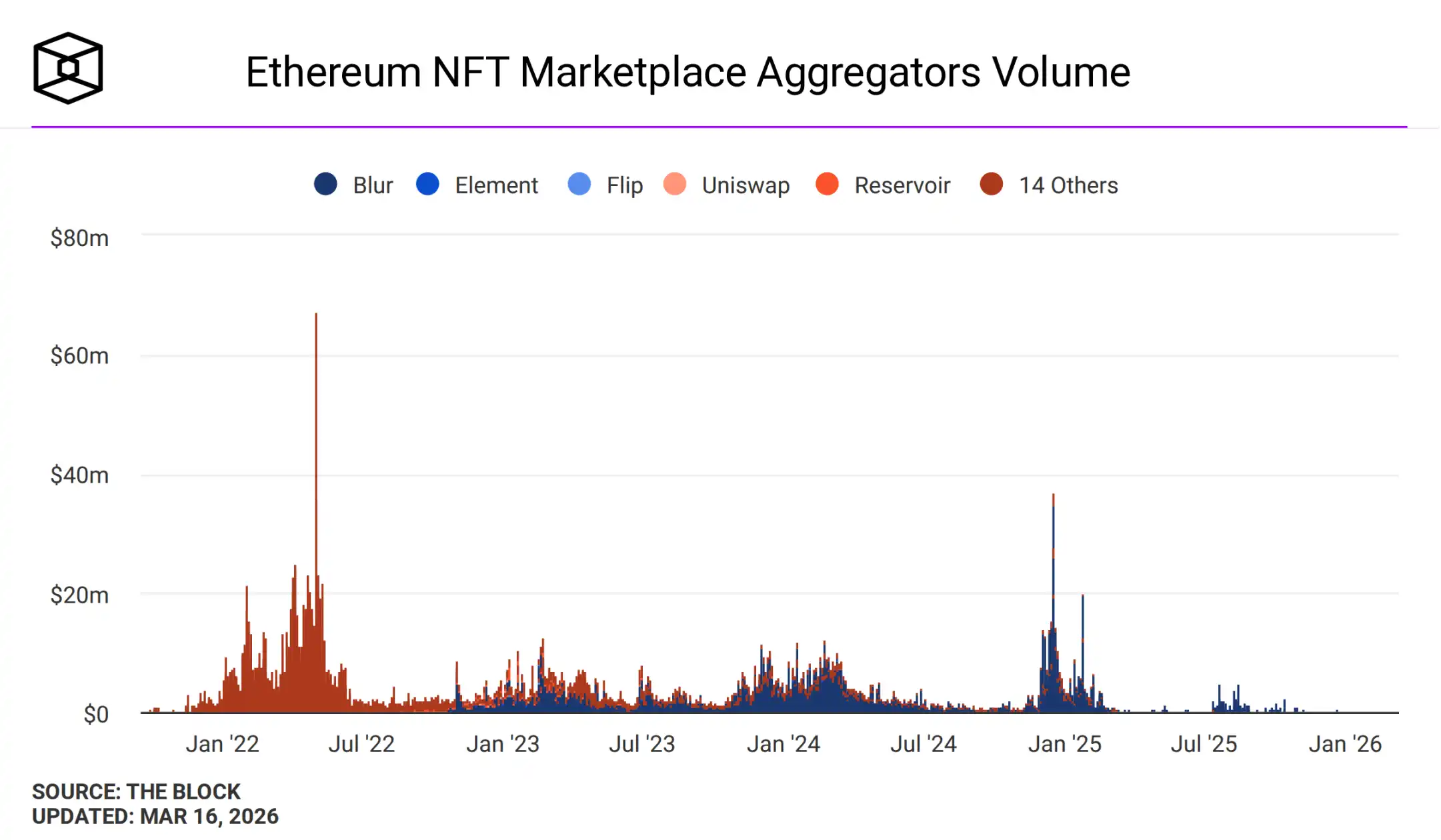
This also explains why OpenSea is in a hurry to transform. Perpetual contracts, cross-chain token trading, and mobile applications are all seeking new traffic entries outside of NFTs. The SEA token was originally the climax of this transformation narrative. However, with the current delay, the momentum of the transformation also hangs in the balance.
50% of the token's supply is pledged to the community, with 50% of the platform's revenue post-launch allocated for SEA buybacks. Users can stake SEA to support specific collections or token projects. This tokenomics model, announced in October 2025, had once driven a wave of transaction volume growth. The current delay might erode the community expectations that were built up during that time.
In the tweet, Finzer mentioned that the previous timeline announcement was "way too early," creating unnecessary uncertainty. He promised that the next time the foundation sets a new timeline, it will be "well-considered and very specific." Until then, how much confidence the community retains in SEA may depend on whether the 60-day zero-fee period can bring substantial user retention growth.
