On February 13, 2010, a kindergarten teacher in Japan posted several photos on a blog of a Shiba Inu dog she had rescued - Kabosu. What started as an unintentional share led to a legendary moment in the crypto world, becoming the biggest leader in the memecoin community. Yes, that dog is the original Doge, and that teacher is the respected @kabosumama - Atsuko Sato.
Fourteen years later, on May 24, 2024, this most well-known dog in the crypto world peacefully passed away at the age of eighteen. To humans, this is a flowery age, but to dogs, it is a ripe old age.
For the global crypto community and internet users, Kabosu's departure signifies not just the passing of a pet but the end of an era of a cultural symbol.
Its departure sparked widespread mourning in the crypto community. However, it also left behind a potential opportunity: though Doge may be gone, crypto continues, so who will inherit its legendary narrative? Just like now, whenever a celebrity posts a photo of an animal, a bunch of people immediately ask for the name in the comments.
As the flagship of memes, the successor to Doge, what heights will it reach?
Comparing a precedent: when Big Brother was about to announce the dog's name at the time, what was the level of attention across the entire internet? Needless to say, it was all about Doge. And all of this also laid the groundwork for the subsequent events.
A Bolt from the Blue
A few months after Kabosu's passing, on July 27, 2024, Kabosu Mama announced on social media that she had adopted a new 10-year-old rescue Shiba Inu and chose to name it "Neiro" (meaning "timbre" in Japanese).
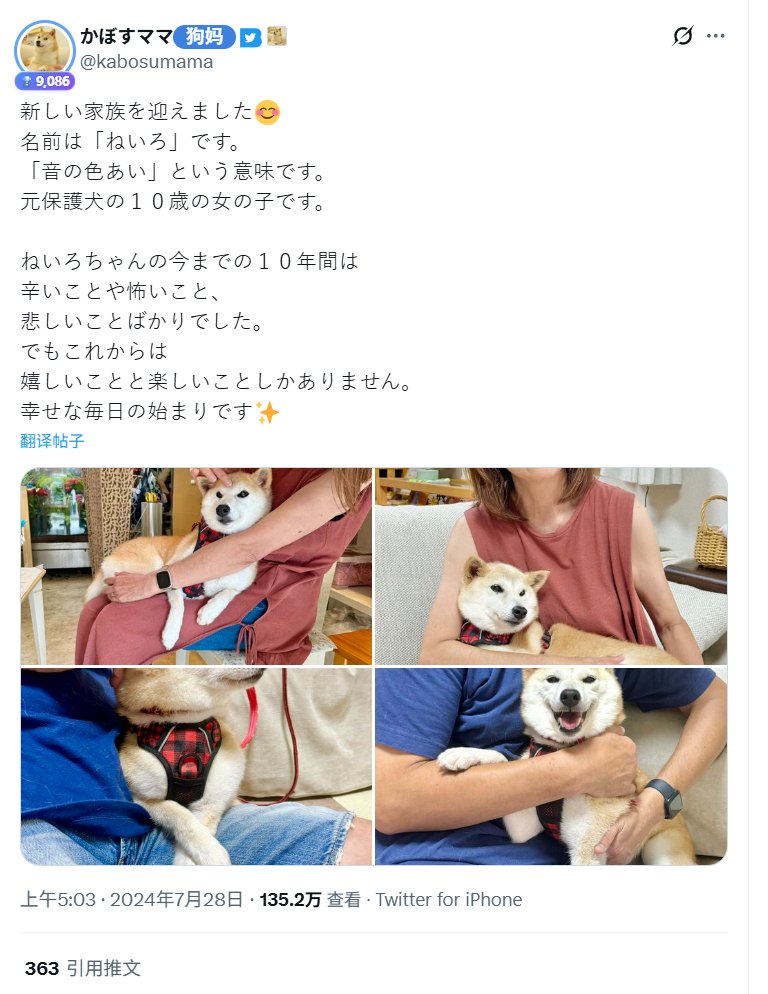
One announcement instantaneously ignited the memecoin market. After the announcement, all the on-chain team opened up with all guns blazing, rushing to launch Neiro-named coins. Multiple coins with the same name were released in a short period, but in terms of scale, only four performed decently in the end.
Leading the charge was, of course, the fastest Solana blockchain, which saw the release of two representatives. The first one, spelled in all caps as NEIRO, though the earliest, did not have a very high market capitalization initially, starting at just a few million. In contrast, the other named Neiro in lowercase, while launched later, saw its market cap skyrocket to nearly one billion.
At this point, the issue arises: which one is the orthodox Neiro coin? Is it based on chronological order or market capitalization popularity?
The market has been debating about this, but big players definitely prefer high market cap, so a large number of players rushed into the lowercase version. However, there is still a group of players insisting that the OG is the orthodox one, the first one being the "original version."
「As the market cap kept rising steadily, skepticism grew louder. A large number of people came forward to point out that the lowercase one was the second one to be launched and should not be considered authentic. The choice should be the uppercase one, as it was the first.
At this point, a key turning point emerged as ansem entered the scene.
It is rare to see him making calls now, but on 7/28, he posted several messages, emphasizing that the first NEIRO in uppercase is the orthodox one. He even joined their space. As a top KOL, his actions directly caused the collapse of the Neiro with a large market cap in lowercase, with significant funds leaving and flowing into NEIRO.
Consequently, the original Neiro with a market cap of 100m plummeted to 20m, while the 5m NEIRO surged to 20m. Subsequently, the two Neiros chased each other, one gaining as the other one decreased. What is this called?
Exactly, it's what was mentioned a few days ago, a fork. Then, both sides began to hurl insults and accusations while also relentlessly criticizing ansem, blaming him for "missing out on Neiro's chips," feeling dissatisfied and selfishly supporting NEIRO, and so on.
Copyright: Since the coin's inception, there has always been a copyright issue. Kabosu Mama has refused to endorse any Neiro coin, focusing only on projects collaborating with Own The Doge DAO, which poses a potential risk.
While the two Neiros were in an indistinguishable situation, the coin issuance team was still working overtime. Various new Neiro series coins continued to emerge, most of them on the Solana blockchain. Initially, everyone was puzzled about the legitimacy of Neiro, and now they are even more speechless. People began switching to different new targets, some overnight fortunes were made, but some bought the wrong ones and went to zero directly.
According to tweets at the time, many people bought the wrong coin due to similar names, missing out on the surge, or even being scammed. After a weekend of fierce fighting, the debate finally settled: the uppercase NEIRO continued to rise to 70m, while the original lowercase Neiro, which had previously exceeded a billion, eventually dropped to 10m.
What seemed like an initial success in uppercase actually ended up being a lose-lose situation. The back-and-forth changes significantly dampened players' enthusiasm, and the ultimate outcome was quite straightforward: the on-chain hype of Neiro on the Solana blockchain gradually faded away. Whether in uppercase or lowercase, the market value started a continuous decline until it hit zero.
An Interlude: The lowercase Neiro on Solana was revealed to be a rug pull, with the developer spending 3 SOL and cashing out over 3 million, which was also a significant factor in the collapse and set the stage for the subsequent sharp decline of Neiro on Ethereum.
However, just as the excitement around Neiro on the Solana blockchain dissipated, some people started shifting their focus to Ethereum. After all, Ethereum is still the OG meme stronghold. Initially, everyone thought Ethereum shouldn't be that chaotic, but when it arrived, they realized it was even worse than Solana, with a level of chaos that surpassed that of Solana.
First Point of Contention: The First Place Debate
In Ethereum, there were also two prominent Neiros, distinguished by their casing. The difference lay in the fact that the first one was called Neiro CTO, while the later one was named NEIRO ETH. For convenience, the subsequent discussion will refer to the CTO version (lowercase) and the ETH version (uppercase).
However, please note that neither of them was the so-called first one. Although the CTO version was named First Neiro on Ethereum. Strictly speaking, the actual first one was the FirstNeiroToken. Where was the problem?
The issue arose because this so-called first one and the CTO version were both deployed in the same block, with FirstNeiroToken deploying first in the 18th transaction within the same block, while the CTO version came in as the 20th transaction.
Yet, leveraging its fundraising pump-and-dump power, the CTO version directly overshadowed the hype around the FirstNeiroToken. Although some netizens tweeted theoretical arguments about the legitimacy of being the first, including critiquing the CTO version's community for engaging in malicious competitive behavior, such as defaming the FirstNeiroToken community and artificially boosting engagement, due to the vast difference in market capitalization, which only reached a peak of 2 million, there were still not many people paying attention to this coin, and ultimately, it faded into obscurity.
Subsequently, in the promotion activities, the CTO version consistently referred to itself as the first Neiro on Ethereum, and most people accepted this claim. This marked the first point of contention, which did not cause a significant uproar and did not have a substantial impact.
Second Point of Contention: Owner vs. Ownerless
First is the cto version, where someone was responsible for the project's operation at launch, making it a project with a leader. In the early stages, the developers held power over the contract owner, fees, limits, and other aspects, so the project was initially developer-centric.
However, not long after, under a lot of controversy and public pressure, the developer abandoned the project, leading to a direct 90% price drop. This situation involved both panic selling and possibly developer dumping, causing a temporary stalemate. But later, the community confirmed that the developer had relinquished power, so they took over project affairs, achieving a true CTO setup and establishing the non-profit "Neiro Community Foundation."
At this point, the cto version had a market capitalization of around $20 million.
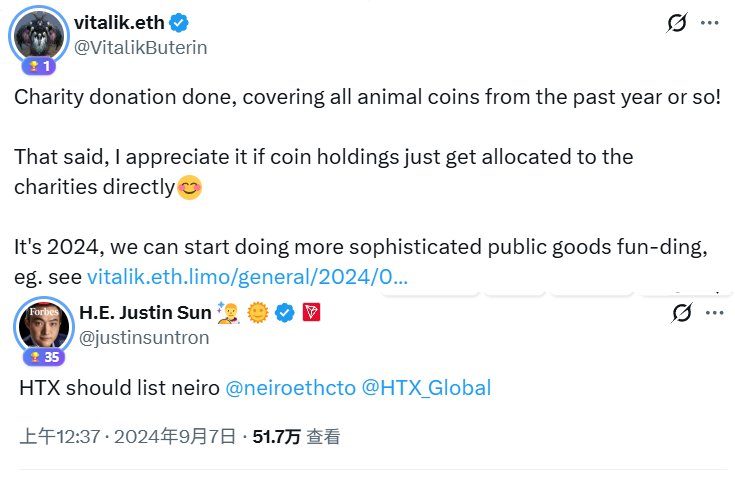
Celebrity Effect: The cto version allocated approximately 4% of the tokens to V God (Vitalik Buterin). Then, on August 15, V God donated the tokens to an animal charity supported by the cto, giving the cto version a top-tier credibility endorsement but also attracting some skepticism. On September 6, Justin Sun tweeted that HTX should be listed on NEIRO CTO, and the next day it was listed;
Looking at the eth version of Neiro, it is a typical ownerless project that relinquished all power at launch, with no one responsible for operation, purely driven by community members. However, it faced an issue with bundling: an analyst warned that around 80% of the token supply was bought by the same group of addresses and swiftly transferred to hundreds of small wallets.
Nevertheless, the bundling was real, and so was the price surge. Within a few days of launch, the market cap soared to $350 million, demonstrating an overwhelming strength surpassing the cto version. During this time, the community was divided: some said that whale-controlled tokens were beneficial for market manipulation, while others believed that excessive bundling could lead to a crash.
Over time, more and more doubts arose, and unfortunately, after hitting the $350 million peak, the price plummeted all the way down with no signs of recovery until it reached $20 million, marking a 95% drop, at which point its market cap was nearly the same as the cto version.
The third and most contentious point: Listing
After a continuous price drop, the eth version's community did not entirely give up; they decided to buy the dip once again. In parallel, news emerged that the project was about to be listed on Binance, triggering another massive pump. Within seven days, the market cap rebounded from $20 million to $200 million, reclaiming a dominant position. On the other hand, the cto version was still struggling, hovering between $10-20 million, without any news.
Comparison between the two — 200m vs 20m, and the ETH version has already deployed the contract, while the CTO version has nothing. At first glance, it seems like the winner is clear. However, as expected, the unexpected happened.
Major Turning Point: On September 16th, Binance announced the listing of spot $Neiro (CTO)
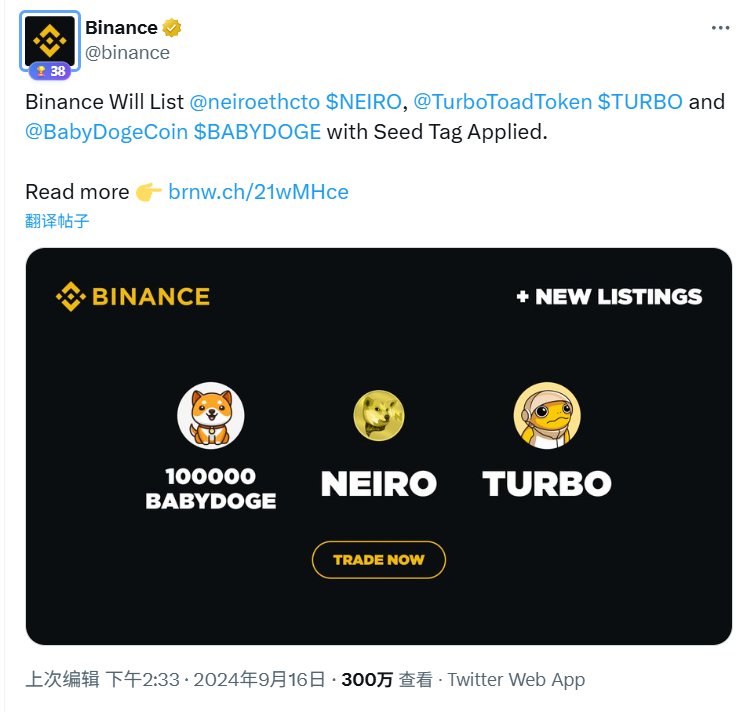
The CTO version saw a rapid price increase, going from 15m to nearly 200m on the same day, surging to 400m in three days. It continued to rise rapidly, showing that Binance spot listings are truly impressive! On the other hand, the ETH version faced an awkward situation. Despite having already deployed the contract and having a market cap of 200m, listing on spot exchange should have been a natural progression. However, it was preempted by the CTO version.
This triggered a sell-off directly, with the ETH version experiencing its highest trading volume day in history. The price dropped from 130m to 70m, nearly halving. Meanwhile, the CTO version continued to thrive, while the ETH version began its decline.
Whale Interlude: On the third day of the CTO version's listing, the ETH version attracted a heavyweight player: an individual who had earned 150 million dollars from SHIB bought $2.3 million worth of ETH version Neiro, drawing significant attention. Could he turn the tide? It seems not. Twenty days later, this top player exited at a loss, switching to buy the CTO version. This event marked a complete shift in market sentiment, signaling that the ETH version indeed had no hope.
However, amidst the heavy selling pressure, there were numerous doubts: why skip a coin with a market cap of only 15m and go for one with 200m?
This severely disrupted the market. Rumors suggested that Binance insiders bought a large number of chips, artificially pumping the price before selling off.
This incident created a huge stir: the founder of Singaporean fund Block Infinity even threatened to disclose information about Binance personnel on social media, questioning potential corruption. Leonidas, founder of Ord.io, criticized Binance for listing a mere $15 million market cap "corporate memecoin," calling it a mockery of countless grassroots community projects. There were many such criticisms, but ultimately, they faded away.
As I write this, I am reminded of $PALU, which surged to alpha at 3m. Isn't this just a repeat of the Neiro saga?
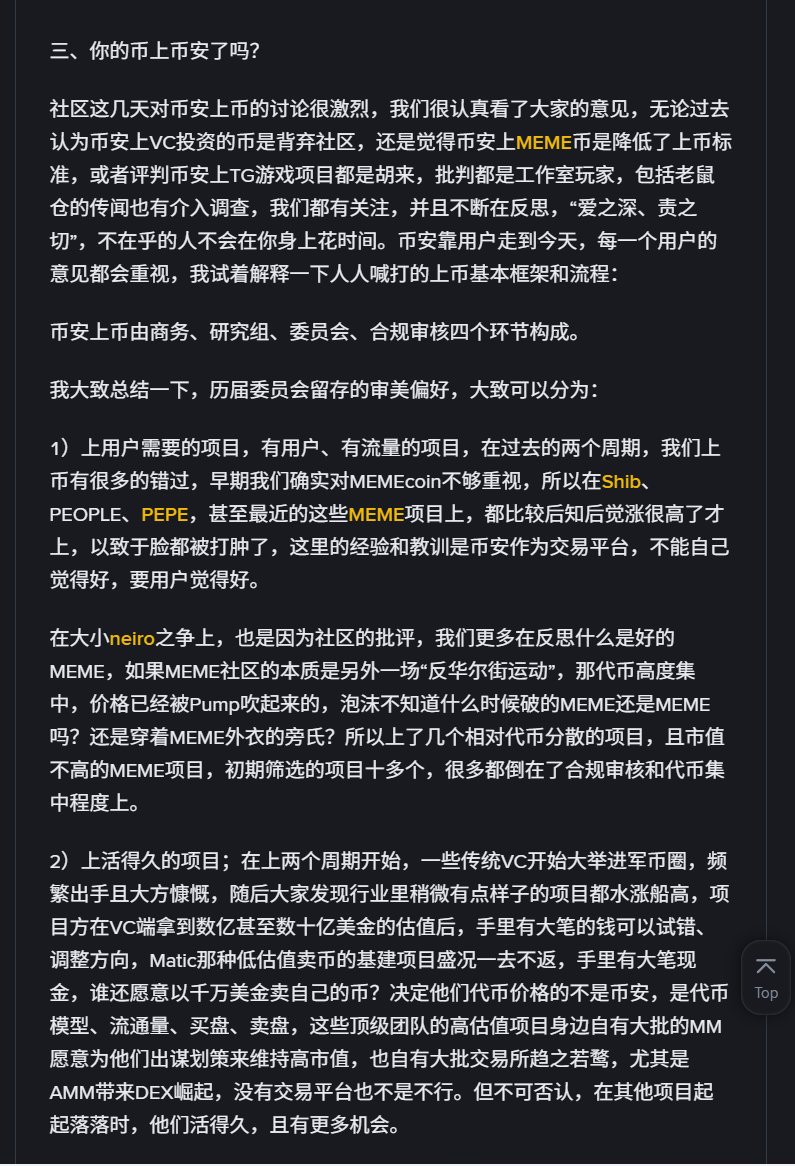
Binance Response: In response to the NEIRO incident, Binance Square released a lengthy article titled "If we disagree, you're probably right," providing an explanation. The decision to list Neiro CTO was based on its alignment with the meme narrative of "decentralization, low market cap launch, and community-determined winners," rather than the type characterized by artificially inflated prices and high coin concentration.
The issue of forking was vividly demonstrated throughout Neiro's history.
From the initial sol chain, where the prominent Neiro BroPump and Neiro lol were in conflict, to the subsequent proliferation of numerous Neiro memes, the entire market descended into endless chaos. Players kept switching between various targets, suffering heavy losses, exhausting significant resources and energy, ultimately leading them to leave and turn to Ethereum;
Yet Ethereum also faced significant forking issues, apart from the first true Neiro. Just considering the cto and eth version forks of Neiro sparked countless conflicts and debates: developers of the cto version abandoned the project, while the eth version saw massive bundling. Of course, the most severe problem arose with Binance listing the cto version first. This event triggered the biggest conflict within the Neiro community, as the eth version had an overwhelmingly unequal advantage yet was preempted by the cto version.
Moreover, the market cap was too low, bordering on the exaggerated. It was so exaggerated that it marked the lowest historical point for Binance's listing of a memecoin spot, without exception. It didn't even have anything similar, naturally leading to countless questions and insults.
Authorization Successful: In April 2025, the Neiro CTO project achieved a milestone event in its development history: a decentralized autonomous organization (DAO) collaboration with OwnTheDoge, officially acquiring global exclusive intellectual property (IP) licensing for the Neiro name and image from kabosu mama herself, becoming the sole legitimate heir to the legendary Doge meme.
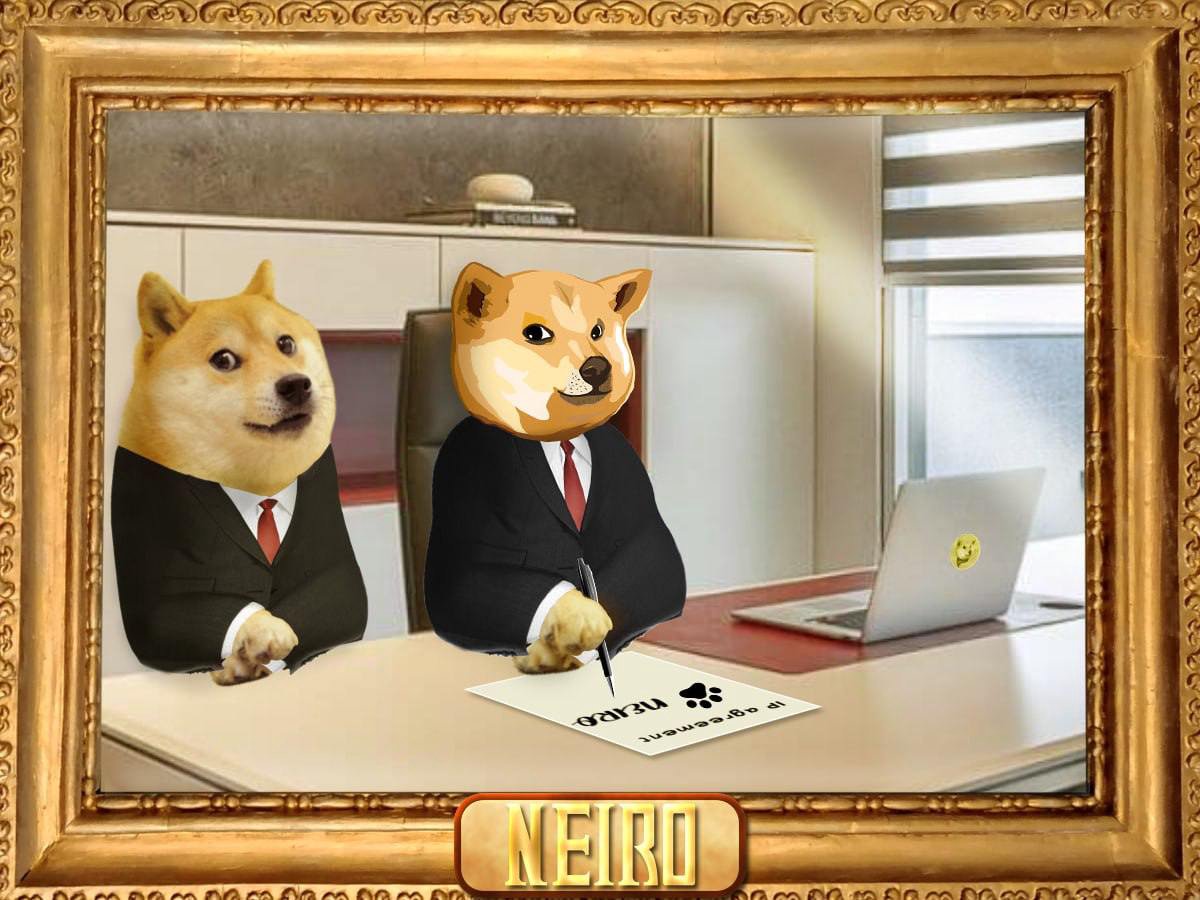
The most immediate impact of this event was that the legal team of the Neiro CTO project issued copyright infringement notices to major exchanges, requesting the delisting of all unauthorized "Neiro" token contracts. The sole target of this action was NEIRO ETH, even though it had not been listed on Binance spot, but was available on various other second-tier exchanges, including Binance futures.
Major exchanges also responded quickly, successively announcing the delisting of infringing Neiro perpetual contracts or spot trading pairs. With this, the NEIRO ETH came to a definitive end.
After the Neiro CTO launched on Binance, it almost immediately began surging, continuously reaching new highs. Finally, on November 12, 2024, it hit an all-time high of 1.3B, becoming the 6th on the meme market cap rankings, following only shib, doge, pepe, floki, bonk, wif.
Although time has passed, it is no longer in the frontline meme series, but it still left a mark in memecoin development history.
Among the memecoin development history, Neiro was the most peculiar, lacking any particular cultural narrative, not heavily involved in charity, not to mention meme antics. The only unique point was being the "doge heir." Throughout its development history, there was a constant struggle among various Neiro communities, from sol to eth, and even on other chains, although predominantly on sol and eth. The text only lists five, but in reality, there are numerous homonymous and derivative Neiros.
Looking back at the tweets from that time, there were all sorts of insults, accusations, complaints, and even legal confrontations, eventually leading to the emergence of this Neiro CTO.
Before its launch, it was neither the first Neiro in the true sense nor the Neiro with the highest market cap. It was even a meme of "developer rug pull." Yet, it entered the spot market and launched with the lowest historical market cap. From the perspective at that time, no one could have foreseen what would follow, including that player who made $150 million from shib.
Will there be similar extreme branching situations like Neiro in the future market? No one knows, but if it does happen, it will undoubtedly once again spark a massive battle, harming the market and players with no benefits.
Welcome to join the official BlockBeats community:
Telegram Subscription Group: https://t.me/theblockbeats
Telegram Discussion Group: https://t.me/BlockBeats_App
Official Twitter Account: https://twitter.com/BlockBeatsAsia
