Editor's Note: In the past few weeks, hopes for peace regarding the Iran issue had momentarily resurged. However, the assessment given in this article is quite the opposite: the author believes that the breakdown of US-Iran negotiations is not just a diplomatic setback but a sign of the Middle East conflict intensifying.
The article focuses on three key risk points: first, the stalling of Iran-US dialogue, with Tehran setting Israeli withdrawal from Lebanon and halting military actions against Gaza and Lebanon as conditions to resume negotiations; second, Hezbollah's ongoing attacks in northern Israel while Israel retains the option to strike Beirut; and third, Iran and its allies starting to include key global energy and shipping chokepoints such as the Strait of Hormuz and the Bab el Mandeb Strait in their retaliation toolbox, potentially turning regional conflicts into a global supply chain risk.
It is important to note that the original article carries strong apocalyptic and war prophecy tones, as the author directly elevates the current situation to "World War III has arrived." This assessment is highly subjective and requires careful consideration by readers. However, what makes the article noteworthy is its connection of disparate conflict events into one chain of observation: the breakdown of negotiations, proxy wars, Israeli military actions, Iran's missile capabilities restoration, and the threat of key chokepoints being blocked, all collectively forming a more dangerous Middle East risk structure.
In other words, the real cause for concern may not lie in the failure of a particular ceasefire but rather in all parties simultaneously bringing negotiation, military deterrence, energy passages, and regional proxy forces to the table. If the conflict continues to escalate, the Middle East theater's impact will not only affect regional security but could also reshape global energy prices, shipping costs, and the risk pricing of great power rivalry.
The following is the original text:
The Middle East conflict has been ongoing for over two and a half years, yet the vast majority still do not fully grasp the significance of this conflict. This is not just another Middle East crisis that comes and goes. This is, in fact, the real big one. Over the past few weeks, the mainstream media has been assuring us that a permanent agreement with Iran was close at hand and that peace was finally on the horizon for the Middle East; however, I have been warning that a permanent agreement was never going to happen. In fact, last week I wrote that a permanent agreement with Iran was now impossible. Many thought I was completely wrong, but now, negotiations between the US and Iran have completely broken down.

When President Trump first learned that Iran had terminated the peace talks, his response was that he "didn't care" because the negotiations had "become very boring."
On Monday, U.S. President Donald Trump, in an interview with CNBC, casually remarked on the possible breakdown of peace talks with Iran, saying, "To be honest with you, I couldn't care less if they end."
During a phone interview with CNBC reporter Eamon Javers on Monday afternoon, Trump said, "I really don't care. I don't care at all." He also stated that the lengthy negotiations "had started to become very boring."
However, it was evident that President Trump did care, as he soon made phone calls to the leaders of Israel and Hezbollah.
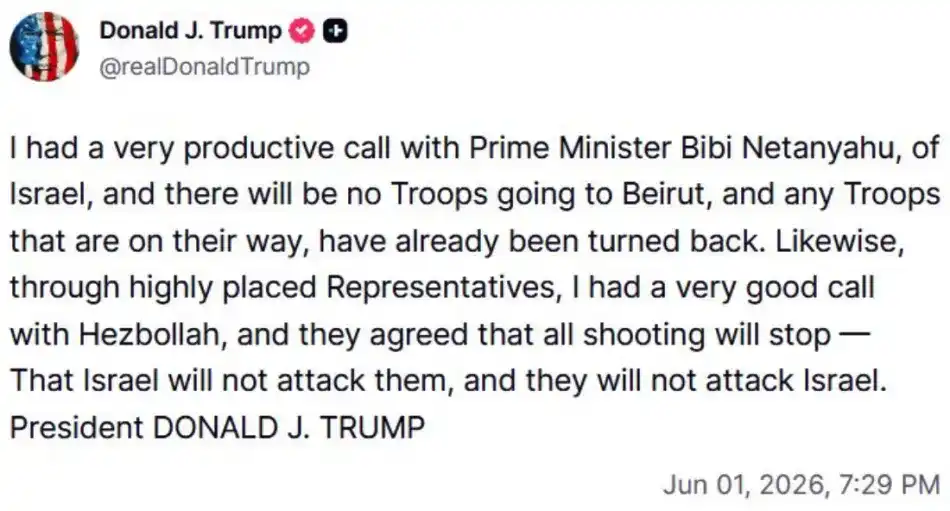
When Trump announced this news, everyone cheered.
However, shortly after, there were reports that Hezbollah had launched more rockets towards northern Israel.
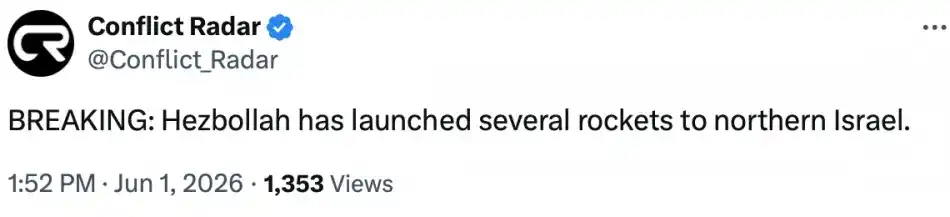
Hezbollah will not back down, and Iran does not want them to either.
In fact, the Iranian Islamic Revolutionary Guard Corps has apparently been secretly encouraging Hezbollah to escalate attacks on Israel.
According to Axios citing a Lebanese official on Monday, the Iranian Revolutionary Guard has been urging Hezbollah to intensify the war against Israel in order for Tehran to gain leverage in negotiations with the United States.
If the rocket and drone attacks continue to target northern Israel, the consequences will be inevitable.
At Trump's request, Israeli Prime Minister Benjamin Netanyahu called off the planned strike on Beirut. However, after speaking with Trump, he warned that if Hezbollah does not stop launching rockets and drones, Israel's strike on Beirut will proceed.
Israeli Prime Minister Benjamin Netanyahu stated that if Hezbollah does not cease its attacks on northern Israel, Israel will carry out the previously planned strikes on Beirut. Earlier, U.S. President Trump had said that the Israeli Defense Forces would not enter the Lebanese capital and that Israel and Hezbollah would cease their attacks on each other.
In a Hebrew statement, Netanyahu said, "Tonight I spoke with President Trump and told him that if Hezbollah does not stop attacking our cities and civilians, Israel will strike terrorist targets in Beirut. Our position has not changed."
He also stated: "Meanwhile, the Israel Defense Forces will continue to carry out operations in southern Lebanon as planned."
This is completely unacceptable to the Iranians.
They are telling us that they will not engage in any further negotiations with the United States until every Israeli soldier has completely withdrawn from Lebanon.
According to Tasnim, there will be "no dialogue" until Israel fully withdraws from its occupied areas in Lebanon and ceases all attacks on Lebanon and Gaza.
The report stated: "Furthermore, the Resistance Front and Iran have decided to completely block the Strait of Hormuz and activate other fronts, including the Strait of Mandeb, to punish the Jewish nationalists and their supporters."
Iran has also warned that if Israel eventually attacks southern Beirut, residents in northern Israel will face great danger.
The Iranian Islamic Revolutionary Guard Corps has warned residents of northern Israel that if Israel carries out its threatened attack on southern Beirut, they should evacuate their homes.
The Iran-affiliated semi-official Fars News media outlet published on the X platform, closely linked to the Revolutionary Guards, is warning Israelis in the "northern regions and military settlements on occupied territories" that they should leave the area if they do not want to be harmed.
Will Iran soon launch ballistic missiles at Israeli cities again?
It is a possibility.
The Iranians are currently in a state of war and they seem unafraid to pull the trigger.
On Monday, Iran launched multiple missiles and drones at a US military base inside Kuwait.
Prior to the ceasefire being broken, Iran had targeted a US Air Force base in Kuwait with missiles and drones in retaliation for US airstrikes on Iranian radar and drone command centers. Washington referred to these airstrikes as "defensive strikes" against Iranian regime radar and drone command facilities.
Additionally, Iran has just used a cruise missile to strike a commercial ship in response to a previous attack on a ship heading towards Iranian waters.
The Iranian Revolutionary Guard announced on Monday that its navy had targeted the MSC Saviska V with a cruise missile to retaliate against a Gambia-flagged bulk carrier, Lian Star, on its way to Iran that was attacked by the US military in the Gulf of Oman. The Guards labeled the ship as belonging to the "American-Israeli enemy."
It seems like war is back on the table, and Iranian officials appear to once again be in the crosshairs.
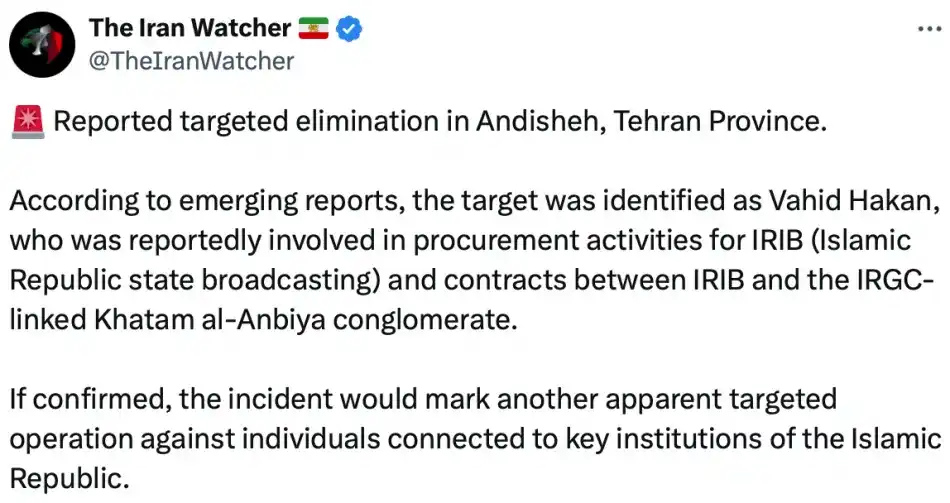
This was never supposed to happen. According to the mainstream media narrative, we were already very close to peace.
Yet I believe we will still see more headlines tomorrow about a potential agreement with Iran, even though they have made it very clear that they will not negotiate with us again until their conditions are met.
And since one of the conditions is the withdrawal of all Israeli troops from Lebanon, these conditions will never be met, as it is simply not going to happen.
I know many people are extremely eager for peace, but this is not a time of peace. This is a time of war. The Third World War has already begun, and the Iranians have been gearing up for the next round of conflict.
According to a report on Sunday, Iran has repaired dozens of missile site entrances that were recently hit by US and Israeli strikes in the recent conflict. Meanwhile, as talks for a ceasefire with the US are underway, the Islamic Republic of Iran continues to rebuild its military infrastructure.
The report states that CNN, citing satellite images, said Iran has unearthed 50 of the 69 tunnel entrances at 18 underground missile sites nationwide. Iran has also repaired other damaged areas of these bases, including key access roads previously bombed by the US and Israel.
The report mentions that the Iranian regime "is now rapidly clearing its subterranean weapon storage and is ready to launch more long-range missiles at Israel and other Middle Eastern countries." The report cites experts who say Iran still possesses around 1000 ballistic missiles, most of which are stored in these 18 locations.
Personally, I believe Iran has far more than just 1000 ballistic missiles left. I also am certain that they still have some unconventional tricks up their sleeves. If pushed far enough, they will use these means.
So we should hope for cooler heads to prevail, but that seems unlikely at this point.
We are actually witnessing the start of the Third World War unfolding before us, with more death and destruction to come. Of course, many will continue to shout "peace and security" for as long as possible, but the reality is that no one can stop what is coming.
Welcome to join the official BlockBeats community:
Telegram Subscription Group: https://t.me/theblockbeats
Telegram Discussion Group: https://t.me/BlockBeats_App
Official Twitter Account: https://twitter.com/BlockBeatsAsia
