Article by Sleepy
Silicon Valley has recently been arguing about one issue: how much is a life worth.
A young man named Nico Laqua, 25 years old, grew up in San Diego. His father worked as a lawyer at the USAA, a lifetime. Nico watched his father typing on the computer, filling out forms, and reading clauses since he was a child, with the house full of papers.
Later, when ChatGPT came out, he looked at those papers and thought that the insurance industry is one of the industries in the world that deals with text the most, so using ChatGPT to process it should be very handy.
So in the summer of 2024, he and Emily Yuan, who dropped out of Stanford, entered Y Combinator with this idea and started an insurance company named Corgi, with a logo of a corgi.
Corgi is not a middleman; they underwrite themselves, issue policies themselves, handle claims themselves, and hold a full-stack insurance license. For this license, they spent $35 million, acquiring an old insurance company with decades of history, buying both the shell and the qualifications.
Corgi officially opened in July 2025. By the end of the year, its annual recurring revenue had exceeded $40 million, covering over 40,000 startup clients, spanning 49 states, with a customer churn rate of less than one percent. In an industry as thin as paper profit margins, these numbers are solid and leave nothing to be said.
But recently, people have seen Corgi not because of its impressive performance.
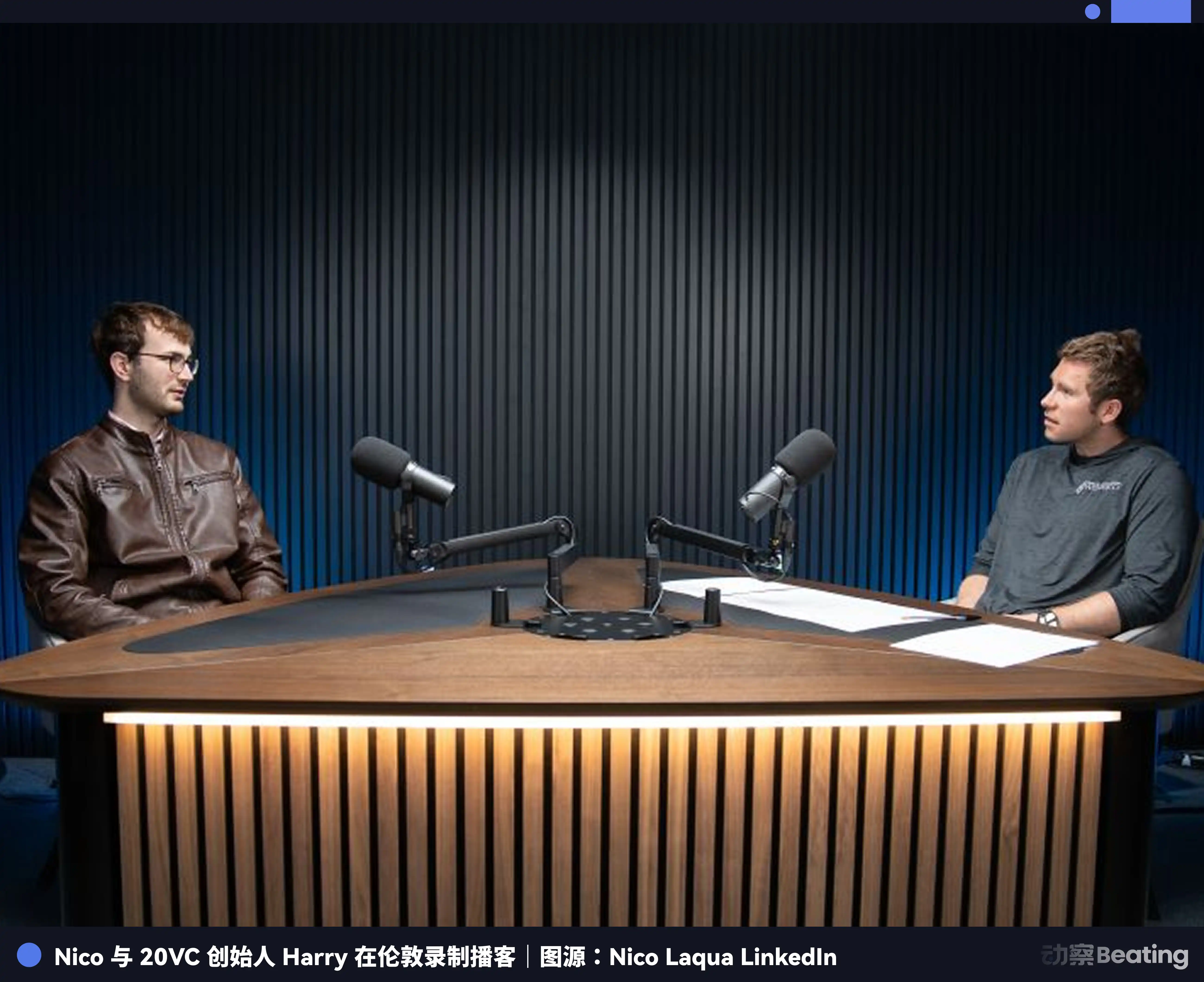
At the end of May 2026, Nico appeared on Harry Stebbings' podcast 20VC. The title of that episode was "America's Most Extreme Workplace Culture."
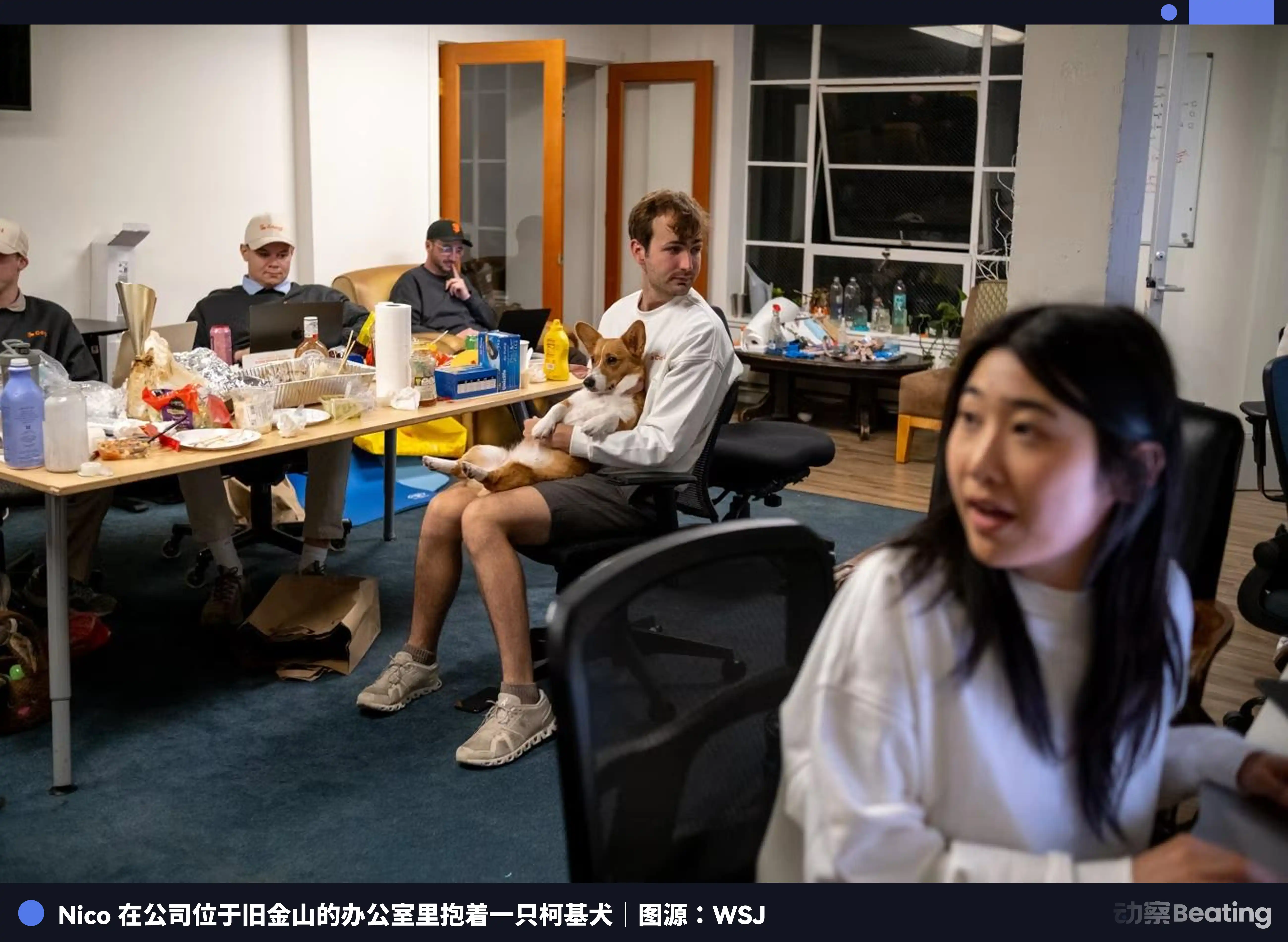
He lives in the office in San Francisco's Financial District, with a mattress directly on the floor, and showers at the Equinox gym on the next street. "They close at 8 p.m. on Friday nights," he said, "which is not great."
He sleeps three to four hours a day, has psoriasis, and a slight palpitation. When he mentioned these conditions, his tone was very calm, as if he were reading someone else's medical report.
He also complains that the cafes in the Financial District close too early. After six or seven in the evening, there is almost no "nightlife" in the San Francisco Financial District. So he took over an old storefront in the basement of the office building, spent less than $100,000 to turn it into a 24-hour coffee shop, making it convenient for himself and his employees to have coffee anytime during their 24/7 overtime shifts.
Corgi's interviews are always scheduled on weekends. Nico said, "If your days off happen to be every Saturday and Sunday, then Corgi is not the place for you."
He mentioned that the office of a high-growth startup should be full of energy every day. While employees can take an occasional day off, a fixed weekend break does not exist. "If you can get things done in five days, you can definitely do more in six or seven days. You should give it your all."
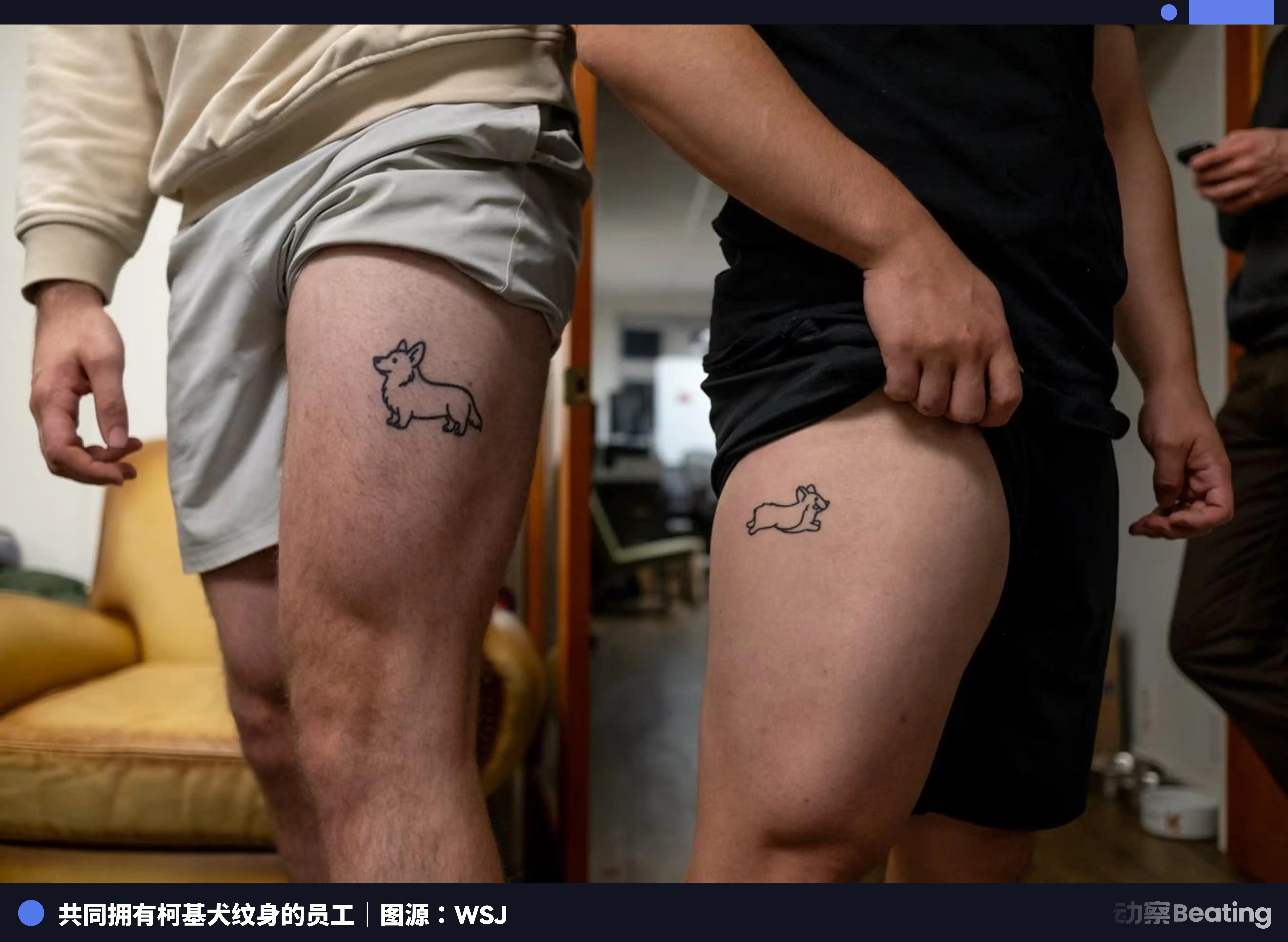
In such a company, among the initial 30 employees, two-thirds of them had the Corgi logo tattooed on their bodies.
As the interview was nearing its end, the host asked a multiple-choice question: Corgi becomes a trillion-dollar company, but you die at fifty. Or the company fails, and you live to be eighty. Which one do you choose?
"Too easy. Anyway, I'll die sooner or later," Nico replied, quoting a set of data, saying that ninety-eight percent of Olympic athletes would trade ten years of their life for a gold medal.
I listened to that segment repeatedly and felt something was off.
Not because he chose to die thirty years earlier; how he chose was his business. What puzzled me was how he found this question simple. For someone to answer a question that puts a price on their life so decisively, without hesitation, it seemed like he had already thought it through, or perhaps he never felt there was anything worth considering.
To someone so resolute about their own life, either they had truly figured it out, or maybe they never really thought about it, and these two states look identical from the outside. But what actually concerns me is the third possibility: he had thought about it, but the logic itself was flawed, and he was oblivious to it.
After the show aired, he received death threats and numerous private messages. Linear founder Karri Saarinen wrote on Twitter, "This kind of thinking often represents young founders who treat entrepreneurship as their persona. They find it hard to do anything outside of work and fail to understand that your work is not the same as you."
Nico replied, "If you care deeply about a question, you will naturally work hard for it."
He didn't think he was crazy.
You Will Be Unfortunate
To understand why this matter is twisted, we must first talk about the origins of the insurance business.
In seventeenth-century London, there was an unremarkable coffeehouse on Tower Street by the Thames River, owned by Edward Lloyd. Shipowners, merchants, and brokers crowded inside, sipping coffee and discussing only bad news. This ship might sink, that cargo might be lost, the storm was merciless, treating every brave sailor equally. While maritime trade was profitable, it also carried great risks. When a ship set sail, no one could guarantee its return.
They chatted back and forth, discussing a profession. You put up some money, and I'll shoulder the risk you can't bear. The Lloyd's coffee house later transformed into a mutual insurance company, still a totem of the global insurance industry today.
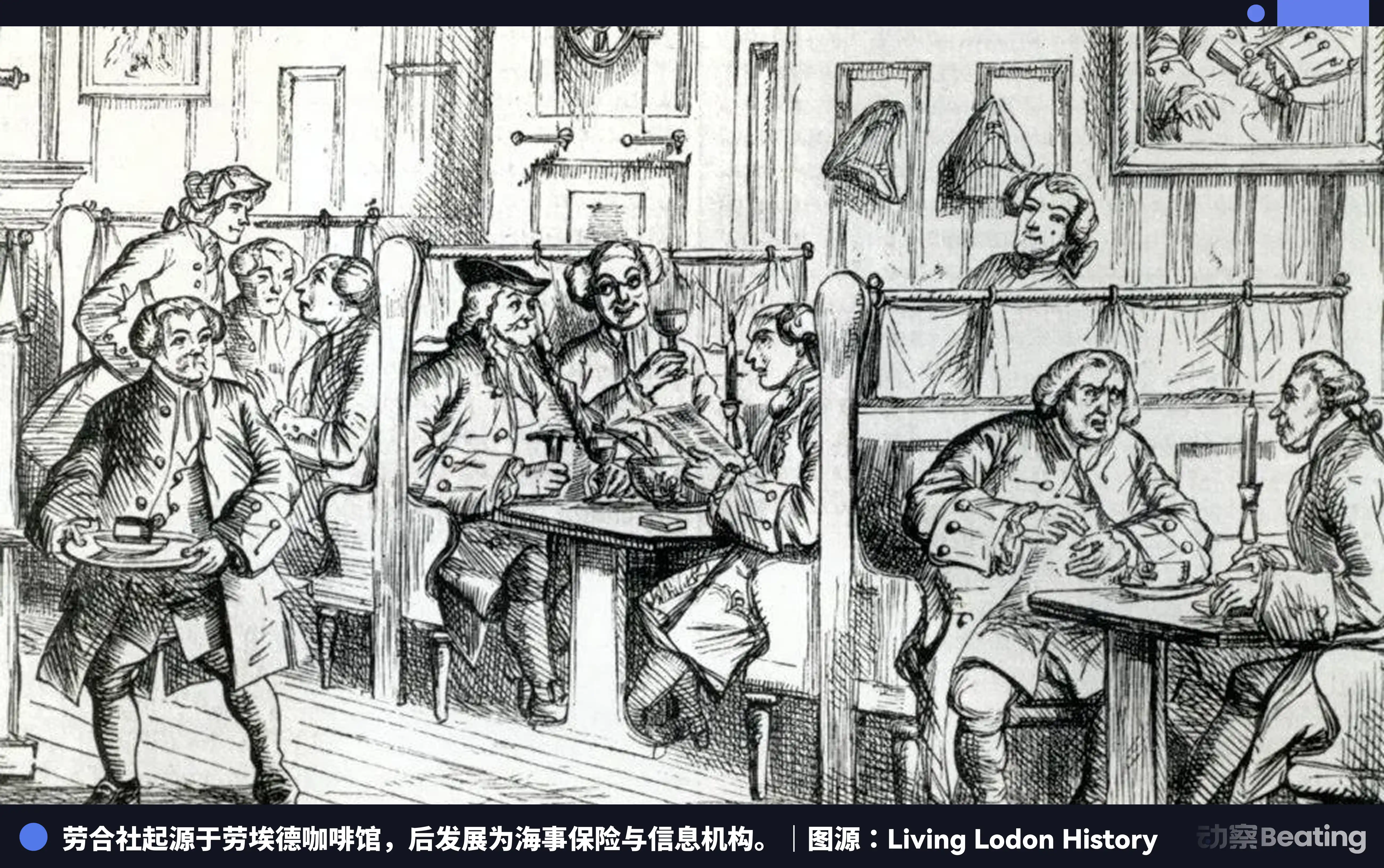
One coffee house, over three hundred years. And from the day this business was born, the five words written on its forehead have always been: Bad luck will find you.
This is not a curse, but a statement of fact. Houses will catch fire, people will fall ill, cars will crash, deals will sour, and you will face misfortune at the most inopportune times.
The Industrial Revolution arrived, machines took people's fingers, and thus, workers' compensation insurance was born. Your products might harm others, leading to liability insurance. The economic cycle turned unfriendly, giving rise to unemployment insurance. Life became increasingly complex, so much so that no one could grit their teeth and bear all misfortunes alone.
Insurance never expects people to tough it out. It operates under the direct assumption that you won't make it, so it prepares the money in advance.
In such an industry, the last thing one should do is admire a daredevil. Corgi, however, defied this logic. A company selling risk management, relying on a founder willing to risk it all to prove their reliability.
Asceticism is an Art of Valuation
But, in reality, this matter is not complicated. Don't think in spiritual terms; think in valuation terms, and everything will make sense.
AI has made companies increasingly agile. Previously, it took fifty people five years to dare to seek funding; now, five people can put together a demo and sit at the table. Corgi, with 177 people, achieved an annualized revenue of $40 million, truly impressive per capita output. The AI system streamlined the entire process from underwriting to policy issuance to claims. The efficiency is evident, visible to investors.
However, its valuation growth is still too exaggerated. In early May 2026, the valuation was $1.3 billion, doubling to $2.6 billion by the end of the month, doubling every three weeks, with total funding amounting to $269 million. A two-year-old insurance company now boasts a valuation surpassing many long-standing peers of several decades.
Valuation is built on top of the "future," and the present "future" is weightless. Something without weight cannot stand on its own; it needs something heavy underneath. Hence, the office mattresses were brought out, the lights remained on overnight, employees' tattoos were exposed, and even Nico's psoriasis and palpitations were brought up.
Asceticism has never been a management technique, not even a work attitude. Asceticism is a narrative art, especially in this era of narrative inflation. Shared offices claim to be "elevating human consciousness," ride-hailing apps say they are "reshaping the future of cities," and cryptocurrency traders say they are "rebuilding financial freedom."
In the AI era, inflation has become more intense. Technology is indeed doing things that were previously impossible, which has blurred the line between hype and action. Asceticism is the best disguise for a bubble. It brings an unfounded vision back to reality, making you feel like it's not just empty talk on a PowerPoint slide. Everyone has put their lives on the line, so it can't all be fake, right?
“I Do”
The most powerful skill of a startup is not about paying salaries, not about granting stock options, but about offering identity. It makes a 25-year-old feel like they are not just working but participating in something significant in their lifetime. Nico said he wants to recruit people who “want to do something important in life.”
It sounds nice and sincere. But if you turn it around, a system specifically selects those who tie their self-worth to work, replaces normal job security with a mission and purpose, and defines those who need sleep, weekends, or to go home and cook for their children as not committed enough. This system, is it really fulfilling young people's dreams, or consuming them?
Youth in the AI era are afraid of being left behind by the world, afraid of regressing if not progressing, afraid that one day they will wake up and find themselves to be relics of a bygone era.
So they uttered those three words, “I do.”
But there is much more behind those three words than they think. The imagination of wealth, the fear of falling behind, the anxiety passed down by this era. The choices made in the face of these things, can they be considered free will? I am skeptical.
Turning consumption into choice, anxiety into ambition, overdraft into love, and finally teaching you to say that most cost-effective sentence. As soon as the words come out, the cost of management drops to zero. You are no longer a worker in need of protection but a voluntary believer burning with passion. The boss doesn’t owe you overtime pay; you owe yourself a great future.
This set of rules has another function; it can screen people. It doesn't filter out those who lack the ability but those who live a normal life, who have children to pick up, elders to take care of, health that has hit a red light, and who still want to date, sleep in on weekends.
The people screened out will certainly not know these reasons; the only feedback they receive is that they are “not All In enough.”
We Must Imagine Sisyphus Happy
Camus wrote at the end of “The Myth of Sisyphus”: We must imagine Sisyphus happy.
The gods condemned Sisyphus to roll a rock up the mountain. As he neared the mountaintop, the rock would roll back down with a crash, and he would descend to start over, endlessly.
Camus said he was happy. Not because the stone reached the top, but because he knew the stone would definitely roll, yet he still chose to push it. No endpoint, still he persisted. The stone was his, the mountain was his, the absurdity was also his. To be conscious is to be free.
Silicon Valley also talks about Sisyphus, but it is completely different from Camus' meaning. The Sisyphus in Silicon Valley does not accept that the stone will roll back down the mountain. They believe that with enough effort this time, the stone will stay steadily at the top. They always say this time is different, always thinking that this time they will truly reach the summit.
Camus' Sisyphus owns his fate, while Silicon Valley's Sisyphus is owned by fate.
Nico has founder shares, started a business before the age of twenty-five, made the Forbes list, and been through YC. Even if he fails, he can still tell a story. But what about those twenty-three or twenty-four-year-olds who arrived in San Francisco with a suitcase, laid their mattresses on the office floor? When they fail, what can they reboot?
Insurance, by nature, acknowledges that failure is a probability, not a fault. It acknowledges that people will collapse, will have bad luck, will make the wrong decision at the wrong time. It acknowledges that some stones are destined to roll down the mountain, regardless of how much effort you put in.
This understanding carries a kind of kindness. It doesn't ask why you fell, it just lays out the mat before you fall. This is a kind of kindness that is seriously underestimated.
Corgi's technology is real, its efficiency is real. Policies issued within twenty-four hours, AI handling the entire claims process. If we only talk about these, it is a very good company.
But it insists on telling another story. A story of no sleep, of no fear of death, of overtime. It wants you to believe it is worth $2.6 billion not only because of its great product but also because the people here are more reckless than others.
We must imagine Sisyphus happy, provided that the stone is his own.
Welcome to join the official BlockBeats community:
Telegram Subscription Group: https://t.me/theblockbeats
Telegram Discussion Group: https://t.me/BlockBeats_App
Official Twitter Account: https://twitter.com/BlockBeatsAsia
