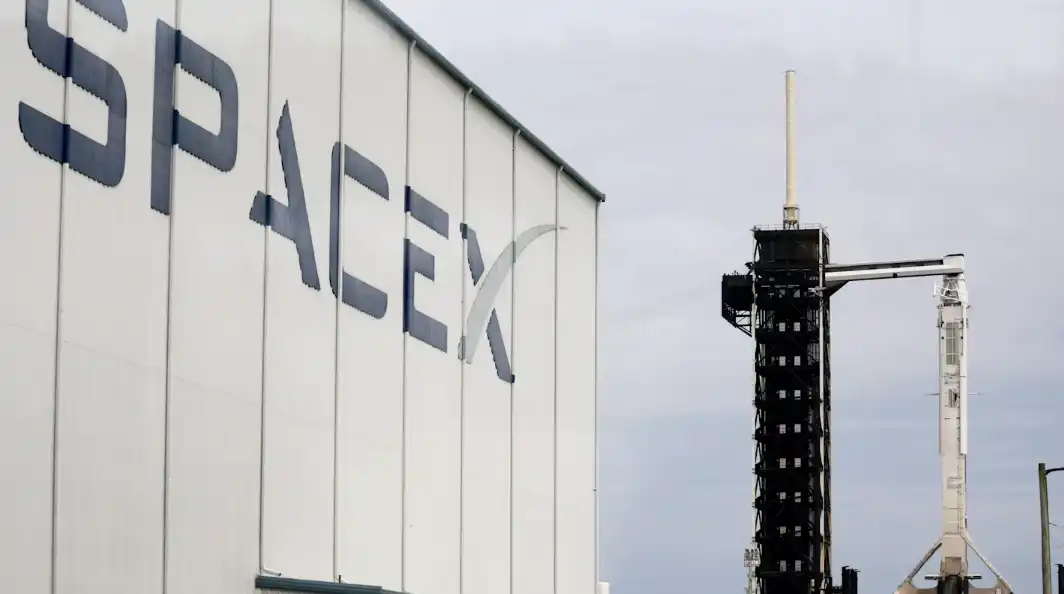
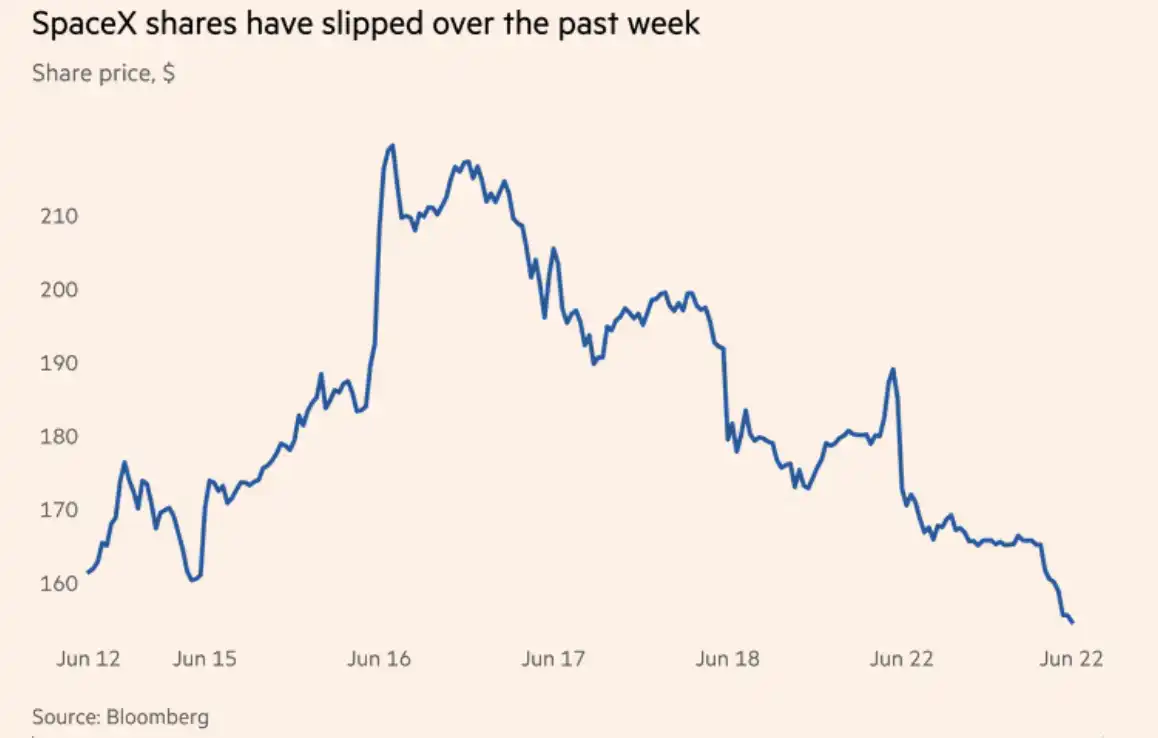
According to Dow Jones Market Data and media reports, SpaceX tumbled 16.4% to $154.60 on Monday, with a market capitalization of about $2.04 trillion. The company saw a single-day evaporation of around $400 billion. Just under two weeks ago, the company completed its IPO at $135 per share, raising approximately $750 billion, making it one of the largest IPOs in US history. At the start of trading, SpaceX was briefly pushed towards or even above a $3 trillion valuation, but on a day when US bond yields rose and tech stocks weakened, this newly minted tech giant was the first to face selling pressure.
This sell-off was not just profit-taking on a new stock. The story SpaceX is telling the public markets now goes beyond rocket launches and satellite internet to include xAI, X-related assets, Colossus data centers, and AI computing power leasing. Investors were willing to pay a high price for these future revenues, but as interest rates rose, these assets that may not generate cash flow for many years to come are often the first to be discounted.
IPO Buying Wave Ebbs, $400 Billion Market Cap Evaporates in a Day
According to company announcements and TechCrunch reports, SpaceX priced its IPO at $135 per share on June 11 and began trading on June 12, closing the first day at around $160.95. With approximately 5.556 billion shares issued, the company raised about $750 billion in its IPO, corresponding to a valuation of around $1.77 trillion.
In the initial trading days post-listing, the scarcity of large-cap tech IPOs, the Musk factor, and bundled AI assets continued to drive the stock price higher. Some market tracking data shows that SpaceX briefly touched higher prices in intraday or after-hours trading, pushing its valuation towards the $3 trillion range. While this figure does not precisely match the official closing market cap, it is illustrative of the intensity of the capital chase in the first week of trading.
Monday's decline changed this narrative. The closing price of $154.60 is still above the IPO price but far from the highs. Mike O'Rourke of Jones Trading told the media that those who wanted to buy the company had already entered in large numbers in the first few days of trading, and with weaker follow-up buying, the stock price became more susceptible to macro interest rates and market sentiment shocks.
The approximately $400 billion loss in market value in a single day quickly transformed SpaceX from the "largest IPO" into the latest example of a high-valuation tech stock under pressure. It remains one of the world's most valuable companies, but the public markets are starting to demand a clearer commercialization roadmap from it, rather than just accepting long-term visions.
Rising Interest Rates Dampen Future Growth Story
On Monday, the U.S. tech sector generally weakened. According to AP, the Nasdaq fell 1.3% as rising bond yields weighed on the stock market, with major tech stocks like Alphabet and Amazon dragging down the market. The two-year U.S. Treasury bond yield rose to around 4.23%, hitting a high range not seen in over a year.
The rise in short-term yields reflects market concerns about the Federal Reserve's policies reigniting. The AP report mentioned that Kevin Warsh, once appointed as Fed Chair, signaled a greater focus on inflation, and the June dot plot also showed an increase in the number of officials supporting rate hikes this year. Following the Trump administration's military action against Iran, energy prices and inflationary pressures reentered the trading landscape.
Although a rate hike is not a certain outcome, the stock market does not need to wait until the policy is actually implemented to adjust. For companies like SpaceX, current earnings contributions are limited, with valuations based more on assumptions of future growth over the coming years. The higher the interest rate, the lower the present value of future cash flows, making stock prices more sensitive to changes in yields.
SpaceX's uniqueness lies in the fact that it is no longer simply valued as an industrial or aerospace company. The price the market is willing to pay largely hinges on its ability to integrate AI assets, computing power infrastructure, and satellite networks into a new profit pool. As the interest rate environment shifts, this grand narrative will be more rapidly pulled back to cash flow and financing costs.
AI Business Supports Imagination But Also Brings Loss Pressure
SpaceX's currently most prominent growth story comes from AI.
Public filings and media summaries show that SpaceX acquired or merged with xAI in February 2026, incorporating X-related assets into its system through xAI. As a result, the company possesses models, social data entry points, and a large-scale data center layout, with the market beginning to see it as a combination of "space business + AI computing platform."
The cost is equally evident. SpaceX's IPO filing shows that the AI division operated at a loss of approximately $63.55 billion in 2025. The company's disclosed quantifiable total addressable market is about $28.5 trillion, with the AI-related market accounting for around $26.5 trillion. This figure supported the narrative of a high valuation at the time of listing, but it is not realized revenue.
During a loose market environment, investors are more willing to pay for super-large market assumptions. After the rise in interest rates, the questions become more direct: when will the AI business reduce its losses, when will computing power rentals generate stable income, and can data center capital expenditures be covered by customer contracts.
This was also why SpaceX saw a greater drop on Monday than most large-cap tech stocks. Its long-term story remains compelling, but the stock has now entered the everyday trading of a public market. The bigger the AI losses, the higher the valuation, the more pronounced the market's reaction to interest rates and commercialization progress.
Hashrate Leasing Faces Stress Test with at Least $200 Billion Bond Issuance
SpaceX is trying to turn its AI data centers into a more direct source of cash flow. An Axios report indicates that Reflection AI has reached a hashrate agreement with SpaceXAI to use its GPU cluster for additional training resources. This direction resembles the CoreWeave model, where a large-scale NVIDIA GPU cluster undertakes AI companies' training and inference needs, converting heavy capital expenditures into long-term leasing income.
This approach helps explain why investors are still willing to give SpaceX's AI business higher expectations. As long as AI companies continue to face a shortage of hashrate, companies with large GPU clusters may receive long-term orders. The question is whether leasing income can quickly cover depreciation, power, financing, and operating costs, which will require more contracts and financial data to prove.
Financial pressure is also looming. Reuters cited sources saying that banks are preparing to discuss a bond issuance of at least $200 billion as early as next week, to refinance a $200 billion bridge loan related to the xAI and X integration in March. If U.S. bond yields continue to rise, the issuance cost of these bonds may exceed the market's initial expectations upon listing.
This puts SpaceX to the test on both equity and bond fronts. Shareholders demand proof that its AI business can support a high market value, while bond investors will use stricter interest rates and credit conditions to assess expansion costs. For a giant company that has just entered the public market, any macro interest rate changes will be magnified in stock prices and financing terms.
SpaceX has not lost its long-term story. It still holds the scarce rocket launch capability, a satellite network, and expanding AI hashrate assets. Monday's sell-off reminded the market that while future AI revenue and massive market assumptions can underpin imagination, in a rising rate environment, cooling buying interest, and approaching bond issuance, the public market will more quickly question when cash flow will materialize.
Welcome to join the official BlockBeats community:
Telegram Subscription Group: https://t.me/theblockbeats
Telegram Discussion Group: https://t.me/BlockBeats_App
Official Twitter Account: https://twitter.com/BlockBeatsAsia
