As the week-long Strait ceasefire agreement expired, Iran once again aimed missiles at a commercial vessel, bringing a series of bad news: three rounds of airstrikes, oil waivers revoked, and the Strait closed again.
US-Iran Relations
On Monday last week, the crack widened. According to Axios, the Iranian military launched at least two missiles towards a commercial vessel crossing the Strait of Hormuz—three ships were attacked within hours, including Qatar's Nakilat-owned LNG carrier "Al-Rayyaan," with the engine room catching fire and all crew evacuated to starboard. Over the previous weekend, the Revolutionary Guard had warned southbound vessels via maritime radio: "Our missiles and drones are ready to fire at you."
That evening, as he was preparing to depart for Turkey, Trump, in the Oval Office, after being briefed by Rubio and Higges, asked his aides: Is Iran really willing to talk? The conclusion was "NO." He then publicly stated, "We either make a deal or do the job. We can destroy their bridges and crush their energy supply within an hour."
On Tuesday, July 7, the US military launched a "strong strike" against Iran, targeting air defense systems, coastal surveillance, anti-ship cruise missile sites, drone launch facilities, and ports, with the scale four to five times larger than ten days ago. On the same day, the Treasury Department revoked the general license allowing Iran to sell oil abroad. Oil prices surged by 5%, while spot gold fell below $4,100. Iran responded by striking Bahrain and Kuwait and condemned the US for "a serious violation" of Article 10 of the Islamic Memorandum of Understanding.
On Wednesday, July 8, at the Ankara NATO Summit, Trump, in front of Lüft, gave the peace agreement a death sentence: "As far as I'm concerned, this ceasefire agreement is over, it's just a waste of time." That evening, the US military launched a second round of strikes, expanding to missile and drone storage areas around the Arabian Gulf. Trump also floated more aggressive options: resuming naval blockade, targeting desalination plants and power plants, and provided his own oil price "valuation model": "Every time we hit Iran, oil prices will rise slightly, about $2."
On Thursday, as the nation mourned the former Supreme Leader Ali Khamenei who was killed on the first day of the war, his funeral took place in Mashhad, marking the end of the week-long national mourning. Trump, aboard Air Force One returning to the US, said, "Iran just called, they are very eager to make a deal—only I don't know if they deserve it."
On Friday, July 10, The Wall Street Journal uncovered the root of the conflict. Memorandum Article 5 "Iran will arrange for the resumption of strait shipping" was interpreted by Tehran as exclusive control over the strait, while Washington interpreted it as "immediate restoration of free navigation." Explaining this agreement, the US and Iran were "like being on different planets."
Over the weekend (July 11–12), three events escalated the US-Iran tension
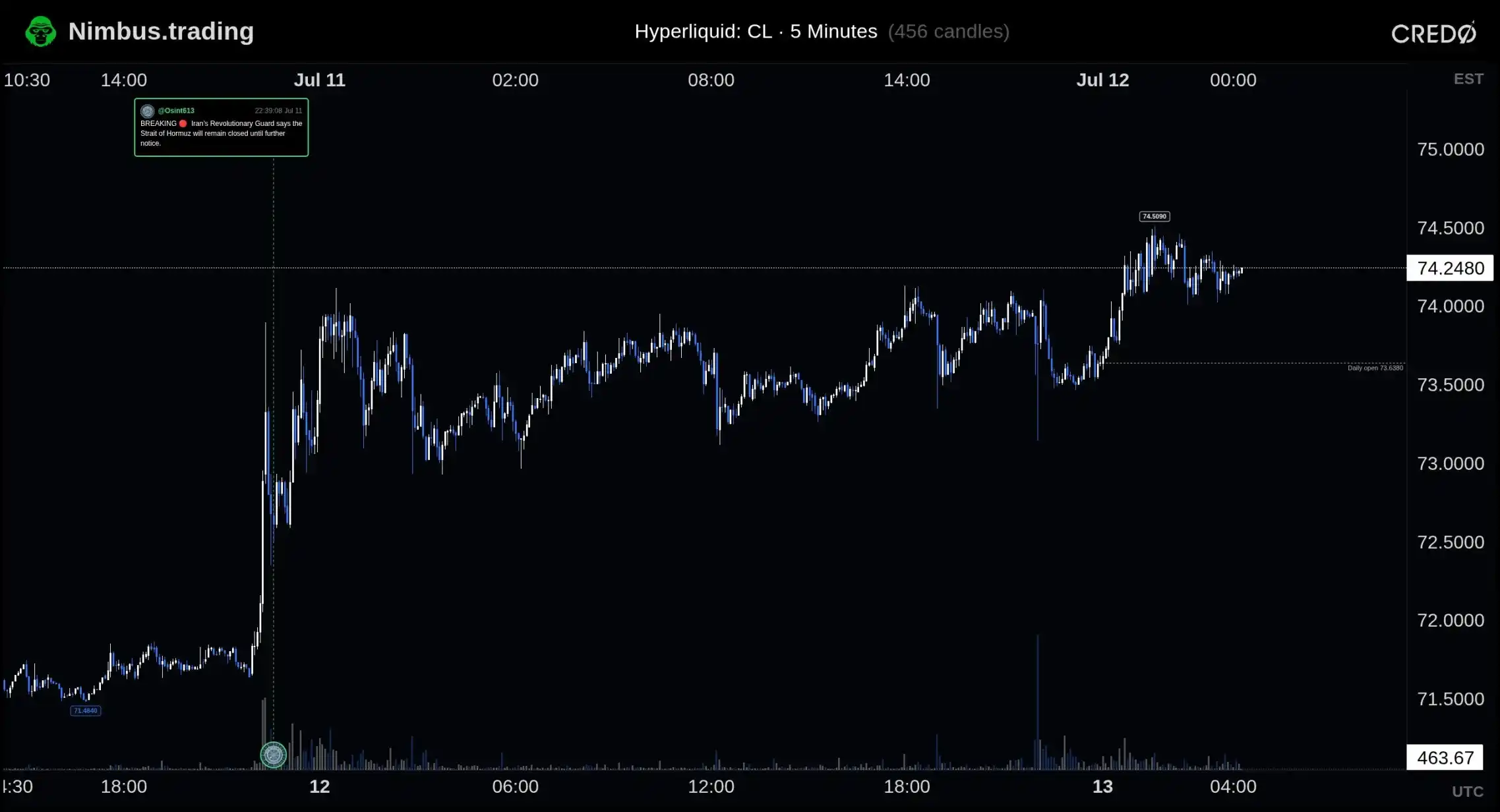
The Iranian Revolutionary Guard Navy announced that a ship, which had its "identification system turned off and refused to alter course," was warned and then seized after warning shots, leading to the closure of the Strait of Hormuz. The closure will remain in effect until the US ceases its intervention in the region. If the enemy repeats its actions, there will be a "strong response and striking of the enemy's new base."
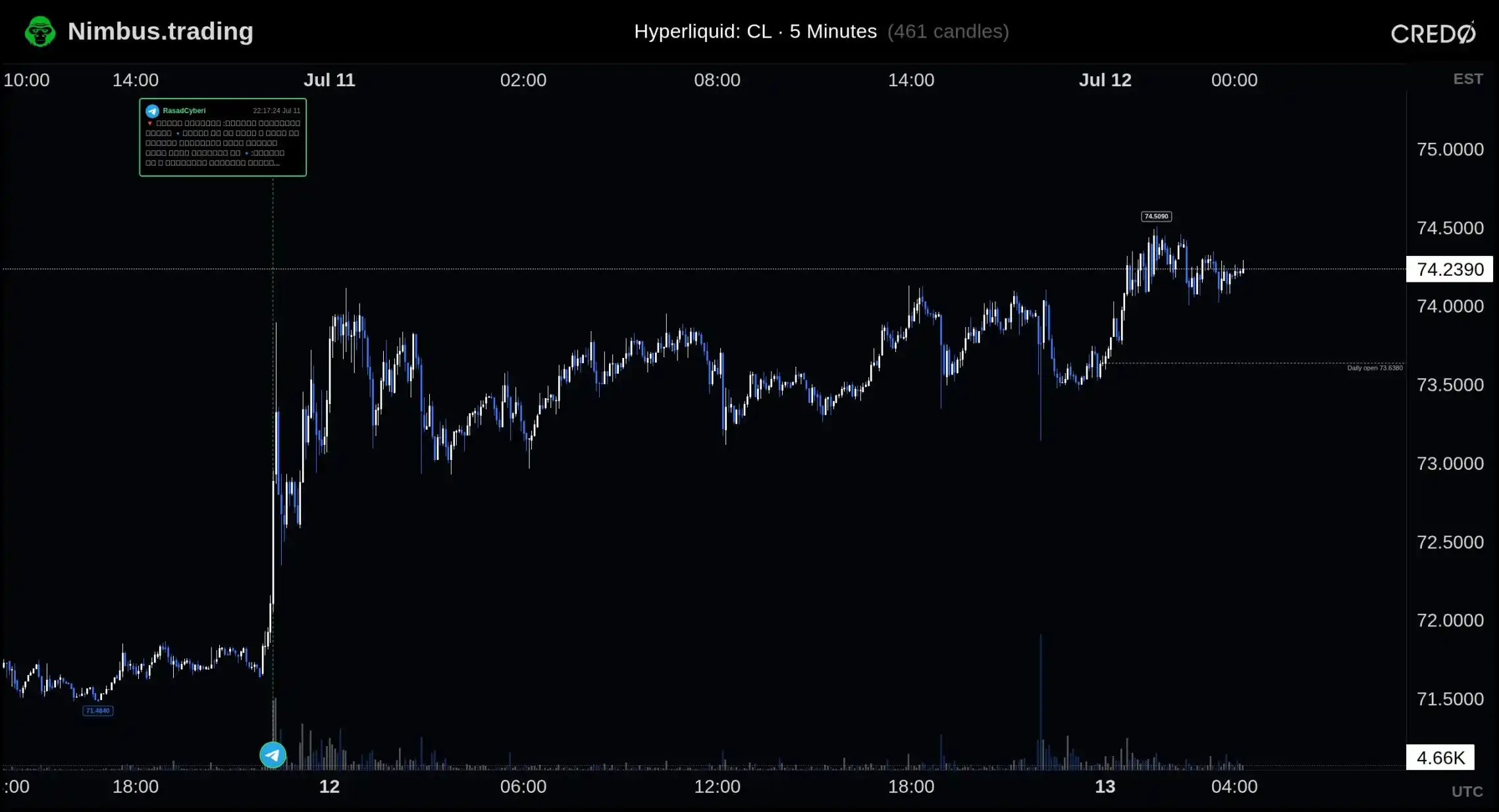
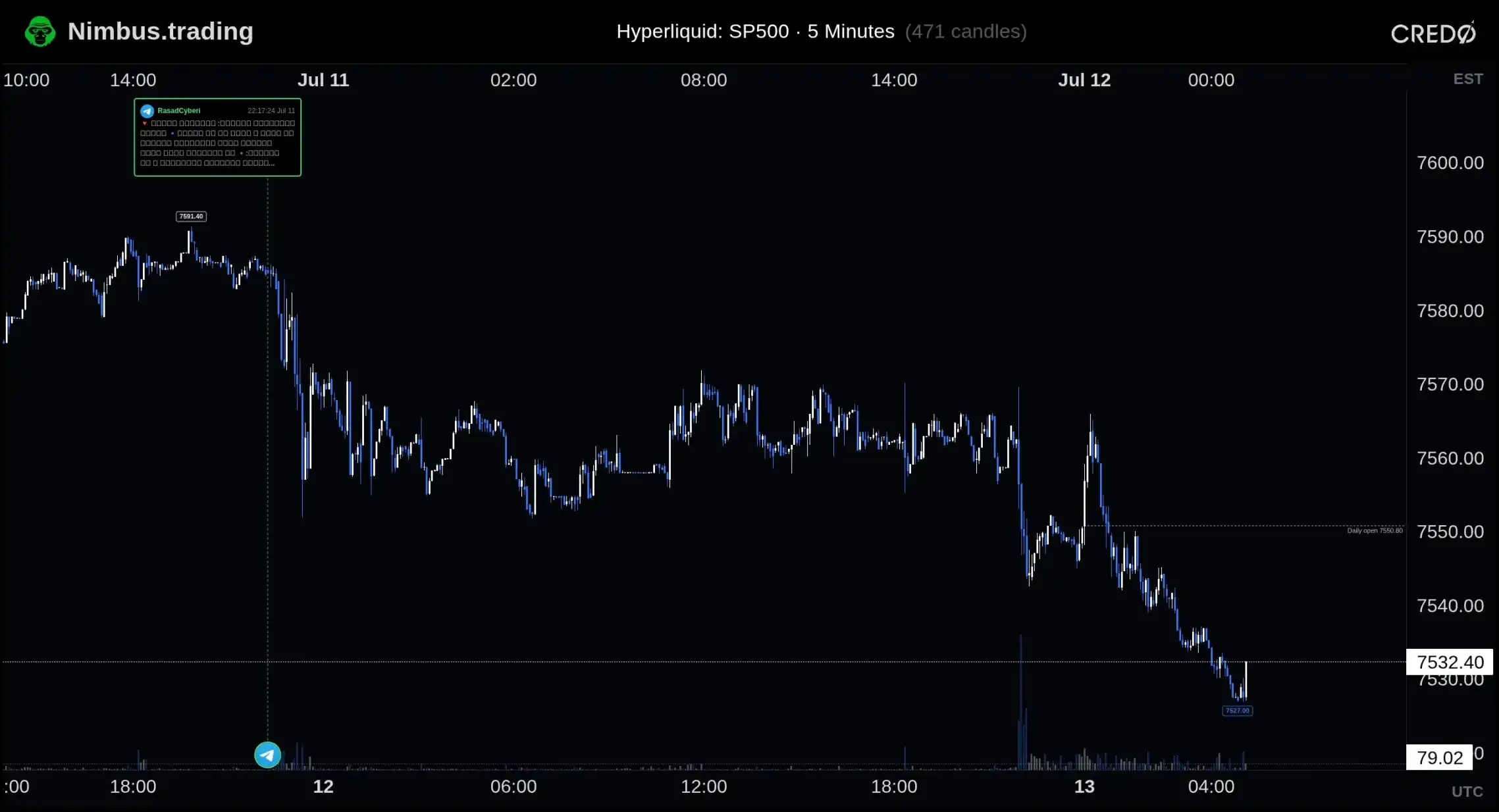
Traders on TradeXYZ promptly reacted, causing a brief 3% surge in Brent crude oil futures prices. The S&P 500 index fell by 0.4%. At this point, this news had only been circulating in Arabic on the internet, with mainstream Twitter accounts beginning to report on it after some time had passed. By then, TradeXYZ had already locked in a 1.5% gain in oil prices.
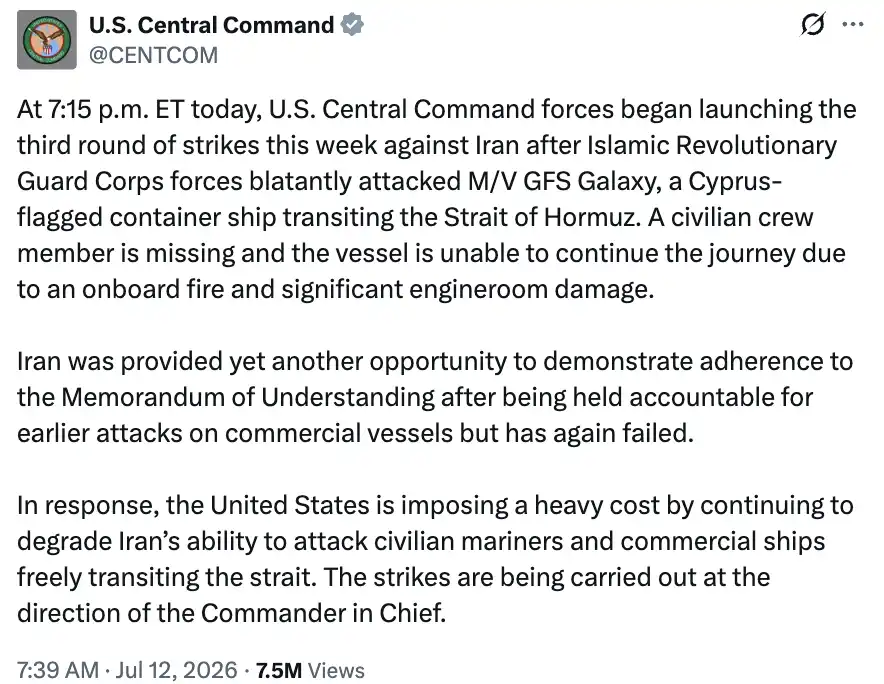
Over an hour later, US Central Command confirmed that, in response to the Revolutionary Guard's attack on the Cyprus-flagged container ship M/V GFS Galaxy (resulting in a missing civilian crew member and significant fire damage to the engine room), the US military launched the third round of strikes this week starting at 7:15 pm on the 11th.
The situation continued to deteriorate as Iranian officials stated their refusal to negotiate. Iran's Ambassador to the United Nations, Eslami warned that if the US continues to breach the agreement, Iran will no longer be bound by the memorandum.
This ceasefire appears to be another stage in the escalation of the situation rather than the beginning of a de-escalation.
Stocks
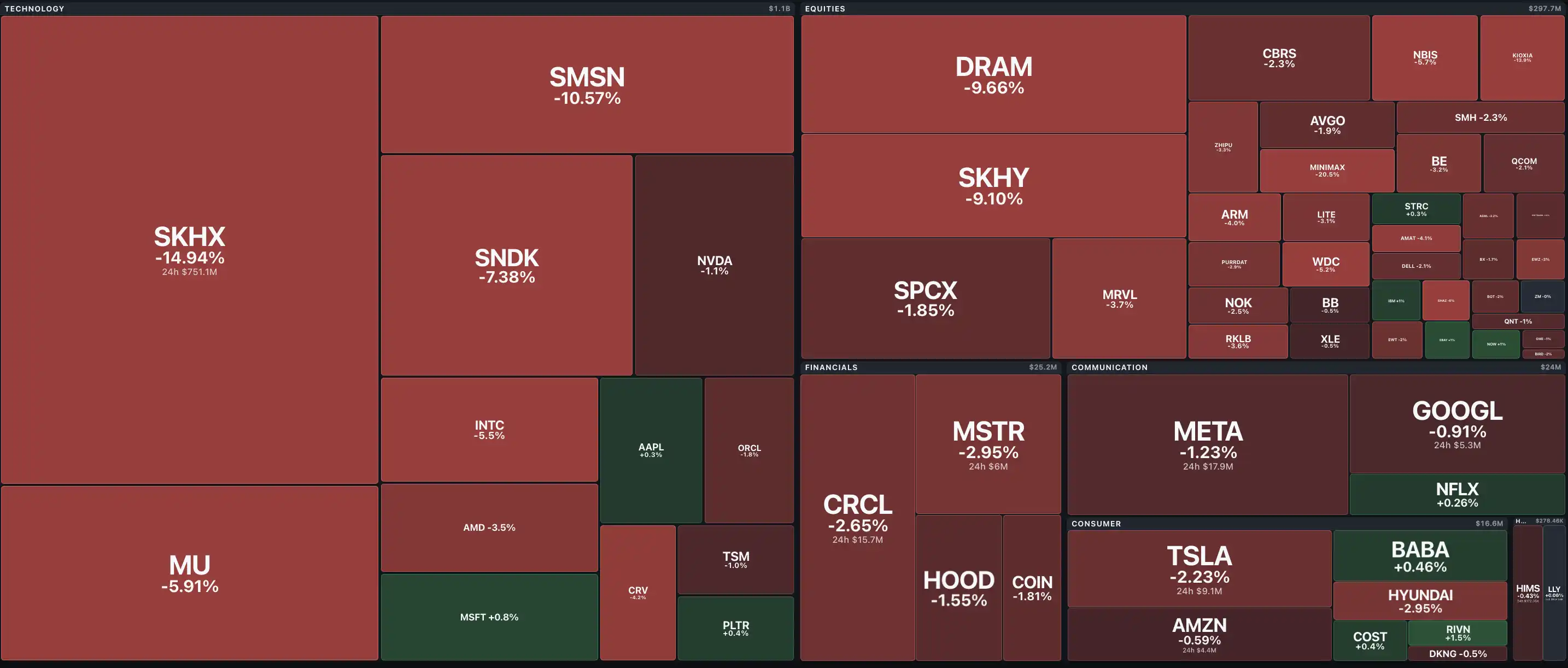
On Monday, influenced by the sharp decline in the South Korean stock market, AI industry-related US stocks on TradeXYZ experienced a widespread pullback, with the storage sector seeing the largest drop, and declines in the optoelectronic module, semiconductor, and Neocloud sectors.
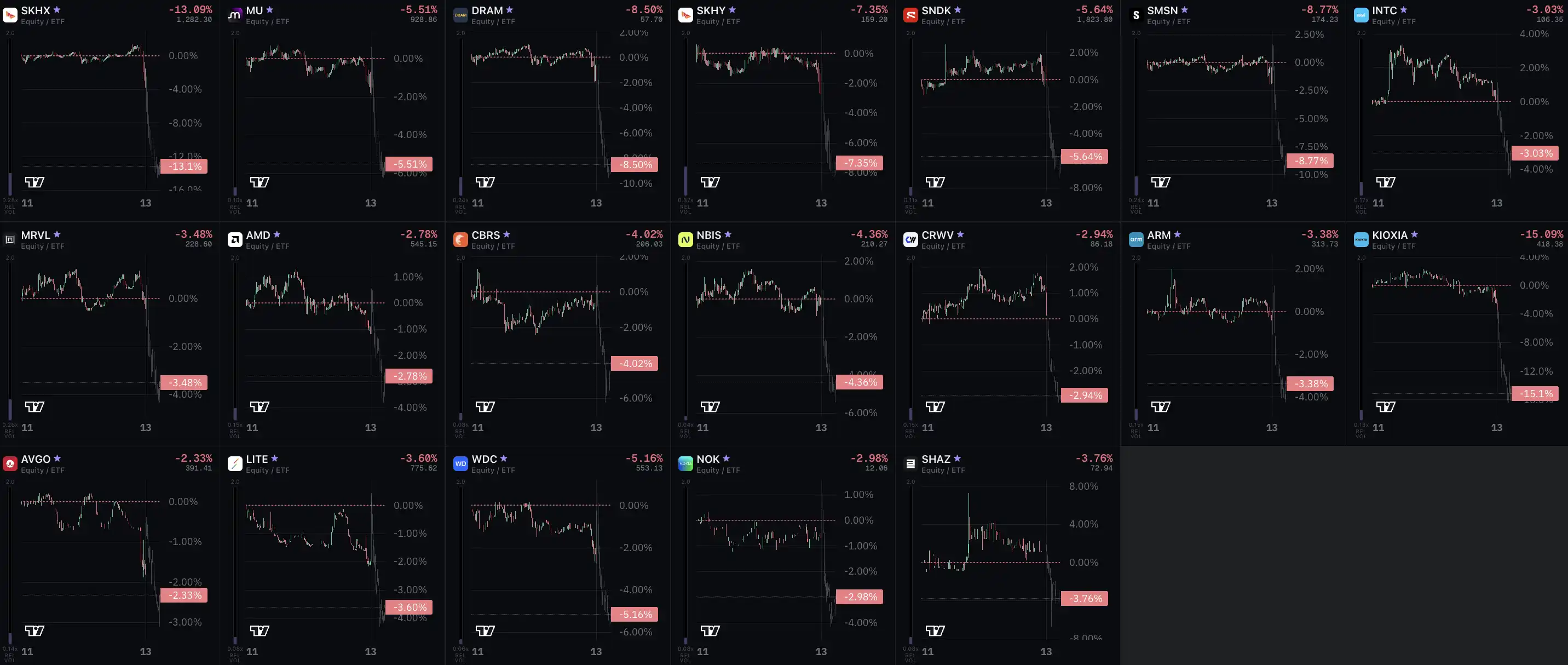
Among the several internet giants, those relatively resistant to the sell-off were AAPL -0.01% and GOOGL -0.46%. Overall, it continued the strength seen in the MAG7 last week.

Precious Metals
Over the weekend, gold and silver on TradeXYZ only saw a slight decline, but after the futures market opened this morning, they faced intense selling pressure: gold briefly fell by 1.4% to around $4,060, dropping by about $58 intraday, erasing the previous week's decline, while silver plummeted by 2.85%.
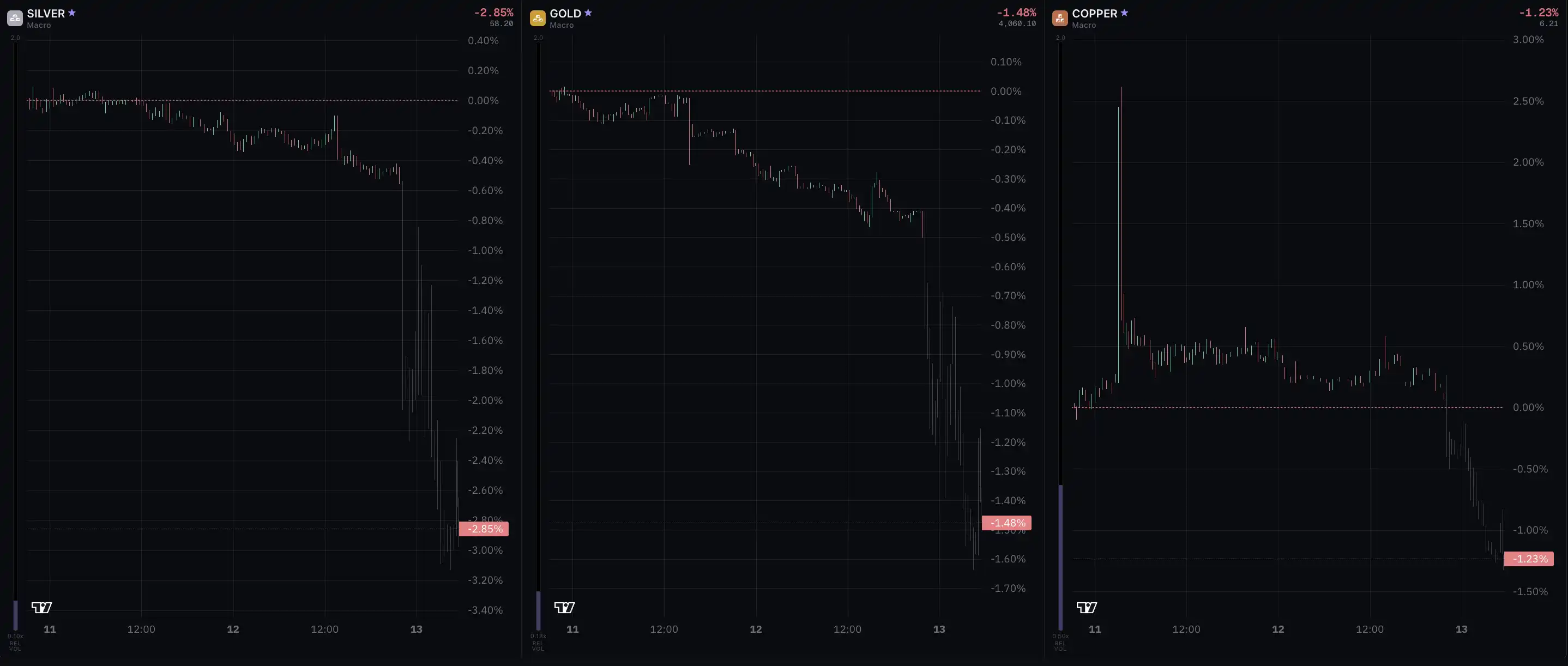
The escalating US-Iran tensions have forced energy prices to rise again. The market has reinforced its expectation of "using rate hikes to curb inflation," leading to an increase in real interest rate expectations and putting pressure on precious metals. Precious metals, along with US stocks and oil, have become the sounding board for the war.
Welcome to join the official BlockBeats community:
Telegram Subscription Group: https://t.me/theblockbeats
Telegram Discussion Group: https://t.me/BlockBeats_App
Official Twitter Account: https://twitter.com/BlockBeatsAsia
