According to a July 20 report by Investing.com, JPMorgan strategists, led by Mislav Matejka, assessed in their latest global market strategy that the AI and momentum stock pullback has entered a more mature stage. They advised investors to take advantage of summer volatility to buy the dip in semiconductors.
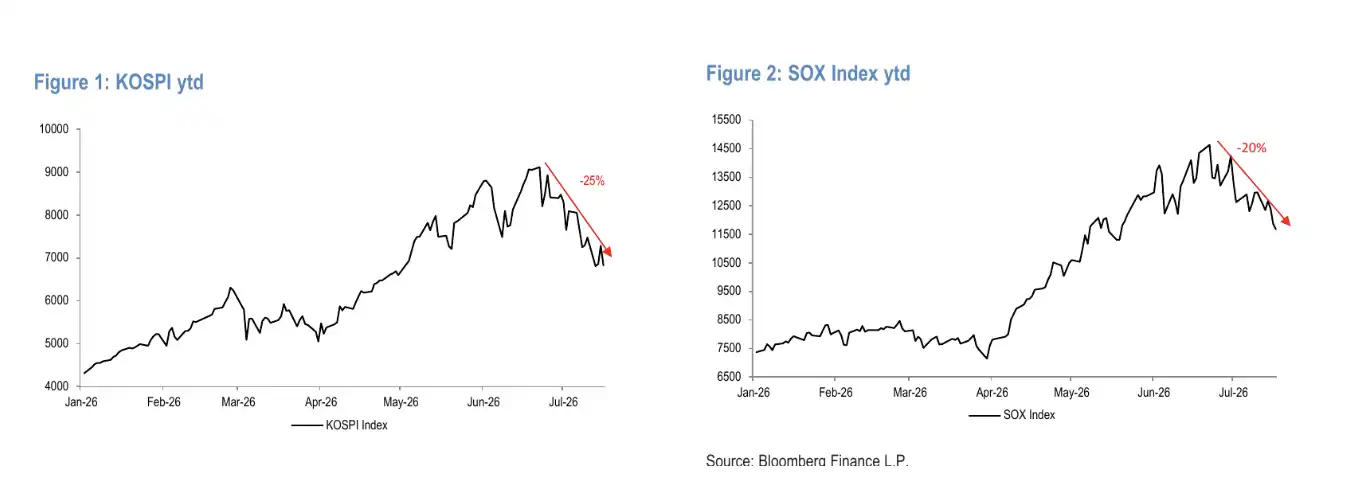
The key point of this report is not a simple judgment that "AI trading has collapsed." Over the past few weeks, AI-related assets have indeed experienced significant declines. The South Korean KOSPI has fallen by about 25% from recent highs, the Philadelphia Semiconductor Index (SOX) has fallen by about 20%, and stocks of AI-related companies like Samsung and Micron have experienced pullbacks ranging from 20% to 50%.
However, the broader market has not collapsed in sync. The MSCI World Index still hovers around its historical high, only 1% to 2% below, indicating that funds are more likely flowing out of crowded AI and momentum trades rather than a complete market exit.
JPMorgan's tactical assessment is as follows: technical overcrowding has eased, SOX's RSI is quickly approaching oversold territory, inflation readings are starting to retreat, and early earnings performance still provides support. With the cooling of AI stocks, semiconductors may instead enter a narrower buying window.
The harshest hit is in AI trading, but the overall market remains intact
This round of pullback first hit the previously most crowded assets.
The Korean stock market saw a deeper decline, partly due to the local market's sensitivity to storage, AI hardware, and leveraged funds. The report mentioned that market volatility in Korea was also amplified by the growth of leveraged ETFs. The SOX's approximately 20% decline reflects the profit-taking pressure on semiconductors as a representative asset in AI capital spending trades.
A Reuters report on July 17 also noted that the SOX has fallen over 20% from its late June historical high, and the Korean KOSPI has entered bear market territory, but the SOX is still up over 60% year-to-date. This indicates a sharp pullback but within the context of previous substantial gains.
The key is that the partial slump did not drag global stock indices from their highs. The MSCI World is still near its historical peak, the momentum factor has given back most of its gains for the year, and the technical position is not as crowded as before.
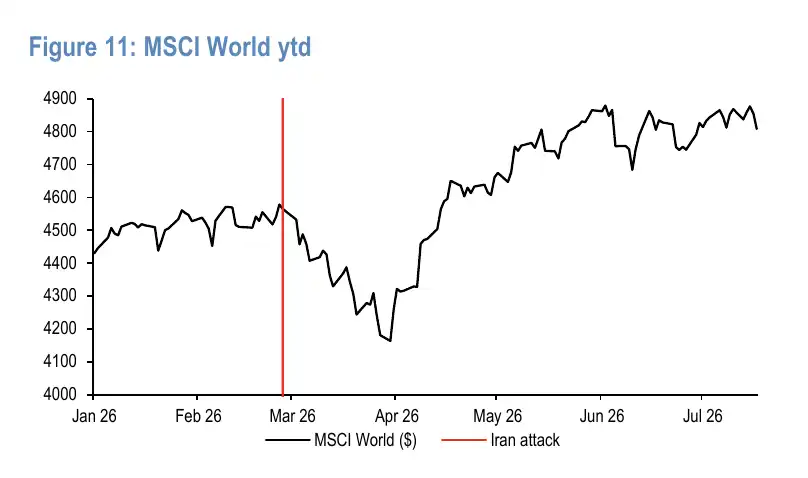
This leaves room for JPMorgan's assessment. The retreat of AI and momentum trading seems more like internal market rotation rather than a overall weakening of the global stock market. Funds are starting to move from a few AI leaders to a broader range of cyclical stocks, European stocks, and some previously lagging consumer sectors.
Semiconductors Still a Buy Because Earnings Expectations Haven't Collapsed
Semiconductors present the clearest tactical direction in the reports.
At first glance, the SOX has entered a technical pullback, with individual stocks experiencing significant declines. However, the gap between price performance and earnings performance is widening: stock prices are falling faster than earnings expectations, and the earnings side has not deteriorated significantly yet.
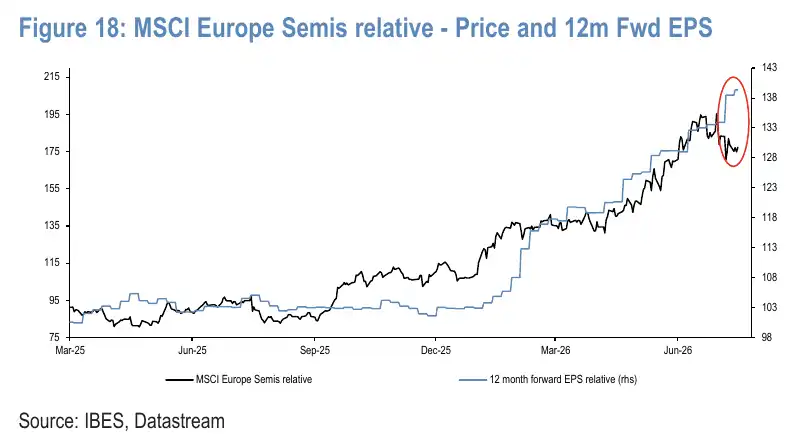
This is crucial for investors. If semiconductors are only experiencing a valuation and crowded trade pullback while earnings expectations still have support, the pullback will release the risk of previous overheating. Conversely, if AI capital spending, storage prices, and order expectations are all revised down simultaneously, the market will interpret this downturn as a weakening of fundamentals.
JPMorgan leans more towards the former explanation. The storage fundamentals are still seen as supportive, with the DRAM and NAND supply-demand balance expected to continue tight until 2028. AI data center capital spending in the past 12 months continues to be robust, and the tech team expects semiconductor industry revenue growth to be sustainable beyond 2026.
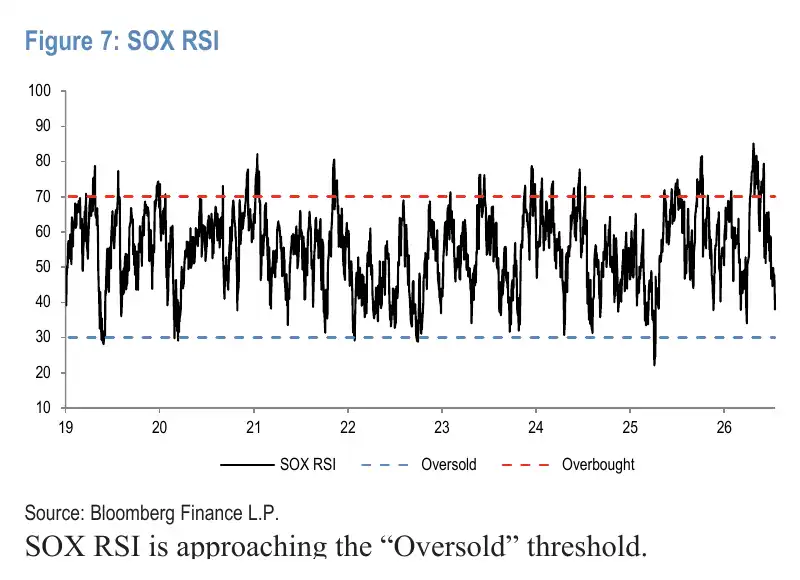
This is also the basis for the "summer accumulation of semiconductors" recommendation. It is not a bet on the AI frenzy surging indiscriminately again but a bet on parts of the hardware chain that were sold off earlier, still having profit support, tight supply and demand, and technical recovery potential.
The report also distinguishes between different AI-related assets. Hardware, storage, and semiconductors are on the "buy on dips" side, followed by the hyperscale cloud providers. Software, business services, media, and other companies that may be affected by AI substitution are still in a more cautious position.
Inflation Cooling Off and Earnings Performance Leave Room for Rotation
The macroeconomic environment and earnings are also providing a cushion for risk assets.
The data released by the U.S. Bureau of Labor Statistics on July 14th revealed that the month-on-month CPI in June decreased by 0.4%. In May, it rose by 0.5%, and in April, it rose by 0.6%. Calculated based on the three-month period from April to June, the seasonally adjusted annualized growth rate was approximately 2.8%, showing a significant slowdown compared to the previous three months.
The report attributed part of the inflation slowdown to the decline in oil prices. Brent crude oil prices fell by about 25% on a quarterly basis, weakening the contribution of the energy component to inflation. Unlike the interplay of energy shocks, wage growth, and inflation expectations in 2022, the current wage growth has decelerated, the ISM Manufacturing Index has shown some improvement, and inflation expectations remain relatively stable.
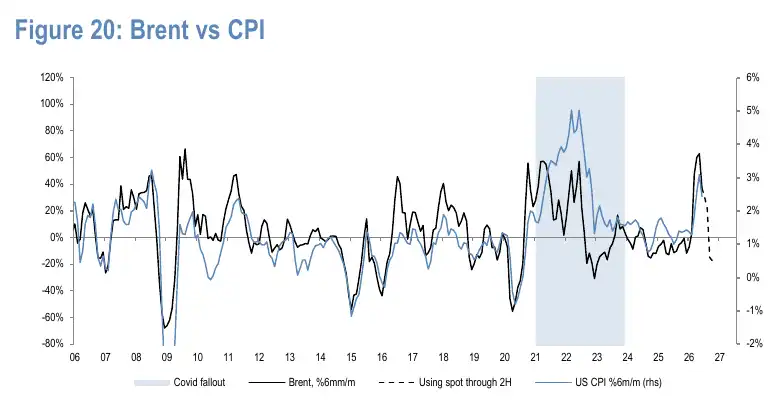
The direct impact of the easing inflation pressure is to alleviate the suppression of stock valuations by bond yields, making investors more willing to shift from defensive stocks to cyclical stocks.
The earnings season has not reinforced a bearish view either. The original report stated that in the early second-quarter earnings reports, the proportion of U.S. and European stock EPS and revenues beating expectations exceeded the historical average. As the "97%" in the public metric corresponds more to companies that reported in the first quarter, it cannot be directly translated into the overall beat rate for the S&P 500 in the second quarter. This article only retains the assessment of "strong early performance."
For semiconductor stocks, this means there is still a hedge between price corrections and earnings support. For the broader market, earnings resilience has reduced the risk of AI stock declines spreading to a full stock market correction.
Funds Start to Overflow, European Stocks and Cyclicals Take the Baton
Another implication of the report is that market leadership is expanding.
Previously, the global stock market was highly reliant on a few U.S. tech giants and AI-driven sectors. However, recent performance indicates that cyclical stocks, European stocks, and some low-base sectors have started to participate in the uptrend. The report states that European cyclical stocks are leading defensive stocks by approximately 5 percentage points, and U.S. cyclical stocks are leading defensive stocks by about 7 percentage points.
European stocks have also received more earnings revision support. The report mentions that Eurozone EPS revisions have been accelerating for 15 consecutive weeks, narrowing the gap with the U.S. Energy, IT, Industrials, Materials, and other primary sectors have shown improvement in the revision trend, supported by fiscal stimulus and export recovery.
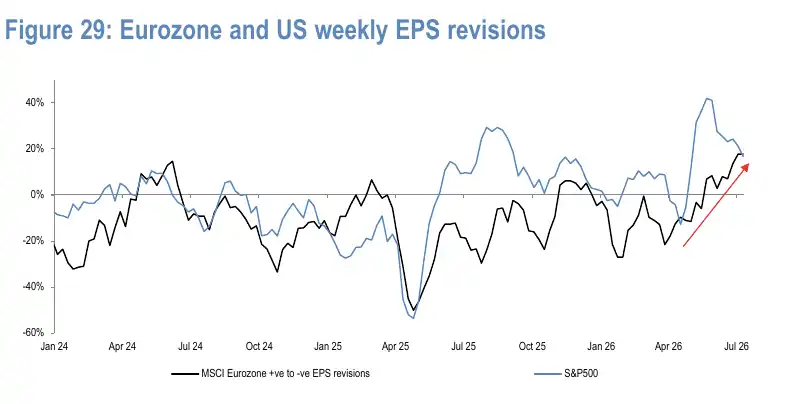
This explains why JPMorgan did not interpret the AI pullback as a market turning bearish. As long as earnings revisions are no longer concentrated in a few tech stocks, but spread to more sectors and industries, the overall market may stay stable during the AI trading downturn.
However, this rotation still has its limits. Although global market breadth has improved, it is not yet very broad. The consumer sector has recently started to participate in the rebound from a low base, and whether this can continue depends on whether income, employment, and actual consumer demand keep up.
Semiconductor Buying Opportunity Established, Provided Three Risks Remain Under Control
The most easily misunderstood aspect of this report is to view "increasing semiconductor exposure" as unconditionally bullish on AI.
A more accurate statement is: AI trading has already alleviated some crowded risks, semiconductor fundamentals have temporarily not been disproved by stock price declines, inflation and earnings reports have supported risk assets, so the pullback has provided a tactical opportunity.
This assessment is based on three premises.
First, oil prices cannot spiral out of control again. The current cooling of inflation is partly driven by the quarterly decline in Brent. If geopolitical conflicts continue to escalate in the second half of the year, pushing oil prices back up, inflation and rate pressures may once again suppress stock valuations.
Second, mega-scale data center capital expenditures must not weaken. Revenue expectations for semiconductors, especially in the AI hardware chain, still rely on continued investment from cloud providers and internet giants. If capital expenditure guidance begins to be revised downward, market confidence in AI hardware demand will quickly change.
Third, supply risks beyond 2028 must not disrupt expectations prematurely. The tight balance of DRAM and NAND is expected to continue until 2028, but if additional supply is released earlier than expected, the profit resilience of the storage cycle will be weakened.
Therefore, JPMorgan's conclusion is not an immediate reversal after the burst of the AI bubble, but a narrower tactical judgment: in a scenario where the overall market is still near its high, early earnings performance remains strong, and inflation has temporarily eased, semiconductors have become a buying opportunity in the summer volatility. Whether this assessment can continue depends on whether oil prices, AI capital expenditures, and storage supply can maintain the current assumptions.
Welcome to join the official BlockBeats community:
Telegram Subscription Group: https://t.me/theblockbeats
Telegram Discussion Group: https://t.me/BlockBeats_App
Official Twitter Account: https://twitter.com/BlockBeatsAsia
