On the afternoon of October 15, on the Sam's Club App, that 1.13-kilogram bag of salt-roasted pistachios had a grayed-out page. The status bar read four words: "Restocking." Below it, a line of small text—each member is limited to 2 items per 30 days.
99.9 yuan. Last December, the same bag was 89 yuan.
Yesterday, a comment appeared in the reviews section: "Bought two bags and flipped them straight to a scalper, made a quick 50 yuan."
Two days later, bulk proxy orders began appearing on second-hand platforms. Sam's pistachios, 125 yuan per bag, 245 yuan for two bags, with notes reading "Only two bags per 30 days, first come first served." Buyers were there too. Posts like this could be seen on social platforms: "Buying pistachios, paying 40 yuan over list for two bags per order" and "Buying Costco pistachios at 20 yuan over list per bag."
By the scalpers' own math, they make 20 to 30 yuan per bag. With a member's two-bag monthly quota, flipping them nets forty or fifty yuan.
It's not just Sam's Club—another well-known membership supermarket, Costco, is the same. The 1.36-kilogram Kirkland pistachios are listed at 179.88 yuan, 149.9 yuan for members, limited to 1 item. Some consumers say that a few months ago they could buy 10 bags every 7 days; now it's 2 bags.
Nanjing, a handmade Italian gelato shop.
The owner restocks pistachio kernels every half month. In August, the variety he usually bought jumped from 69.9 yuan per 500 grams to 109.9 yuan.
Since the start of this year, fluctuations around that price have typically been about 10 yuan. A direct increase of 40 yuan, he said, is truly unprecedented.
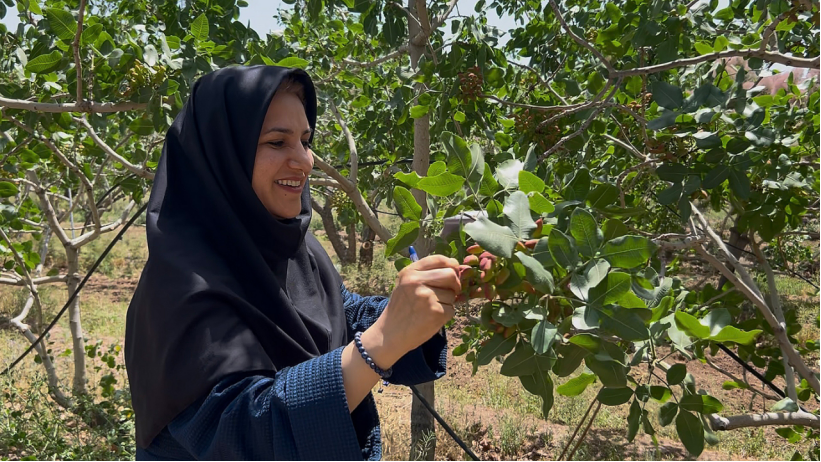
He went to ask his supplier. The supplier said the raw materials were from Iran, then added: "The farms in Iran that produce pistachios have been bombed."
A 143-Year-Old Building
October 17, Saturday.
Limoges, a small city in south-central France. The city hall caught fire.
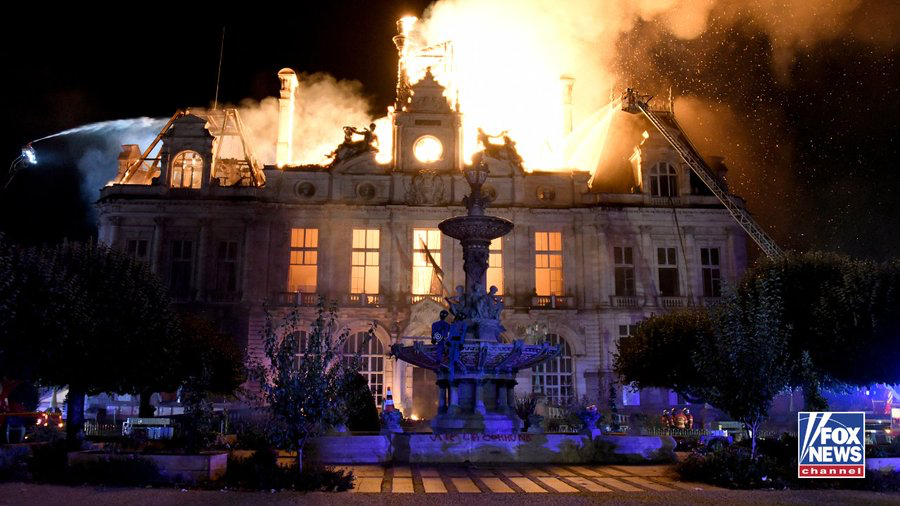
This is a building completed in 1883, with a 143-year history, inspired by the Paris City Hall, and a protected historic monument. Someone broke in and set it on fire. The fire started from the roof, the 43-meter-high bell tower collapsed, the roof fell to the next floor, and two-thirds of the front facade was burned away.
A 143-year-old building is left as a shell. The outer walls still stand, but the inside is empty.
On this day, 550,000 people took to the streets in France, including 110,000 in Paris.
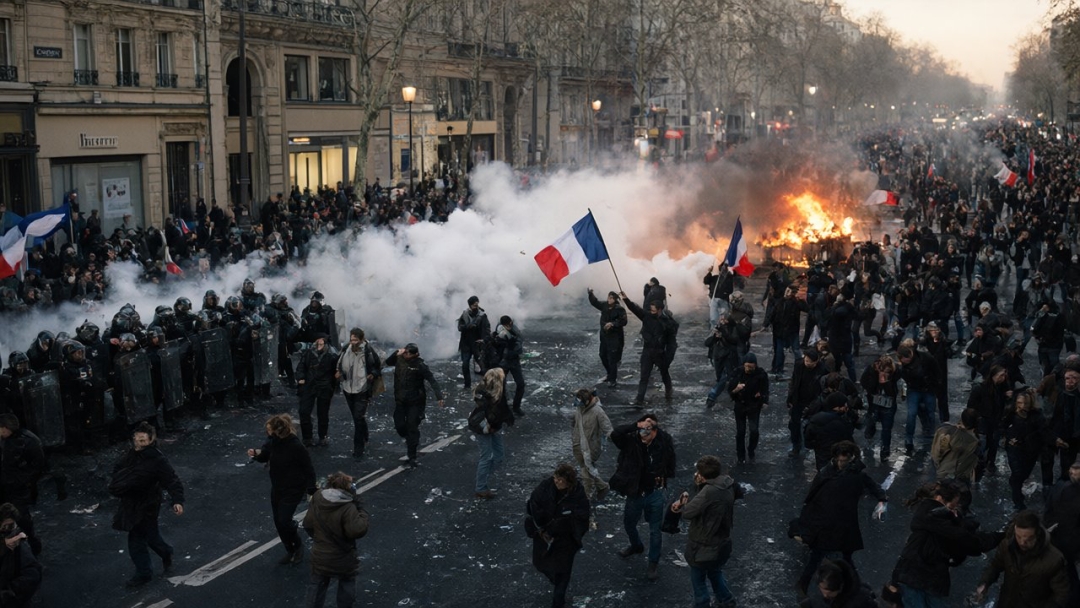
Near the Champs-Élysées, some people burned cars, and some smashed shop windows. More than a dozen metro lines were suspended, and multiple stations were closed. The Louvre limited the number of visitors that day, and the Musée de l'Orangerie was open only to visitors with reservations.
City halls in Lille and Marseille were broken into and vandalized. A branch of the Lyon tourism office was set on fire and then looted.
In downtown Bordeaux, dozens of shops were damaged. Windows were smashed, and shop doors were spray-painted with graffiti. One shop owner stood at the entrance holding a long pole, trying to keep people out.
The manager of an anime shop in Nice blocked the entrance and held firm, and was kicked by someone. That shop sold anime merchandise, and a room full of paper goods and plastic items was emptied very quickly.
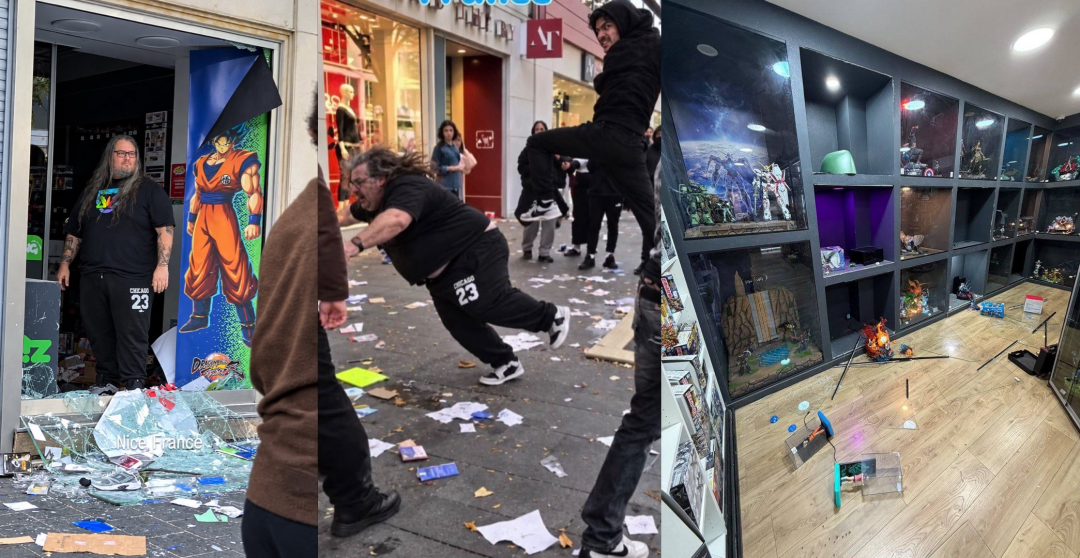
LV, Hermès, and CELINE stores were looted, and the Apple Store was also hit. Multiple Carrefour stores were robbed, and the company later said some of them might close permanently.
More than 2,000 people were arrested. More than 600 police officers, gendarmes, and firefighters were injured. Hundreds of businesses suffered severe property damage.
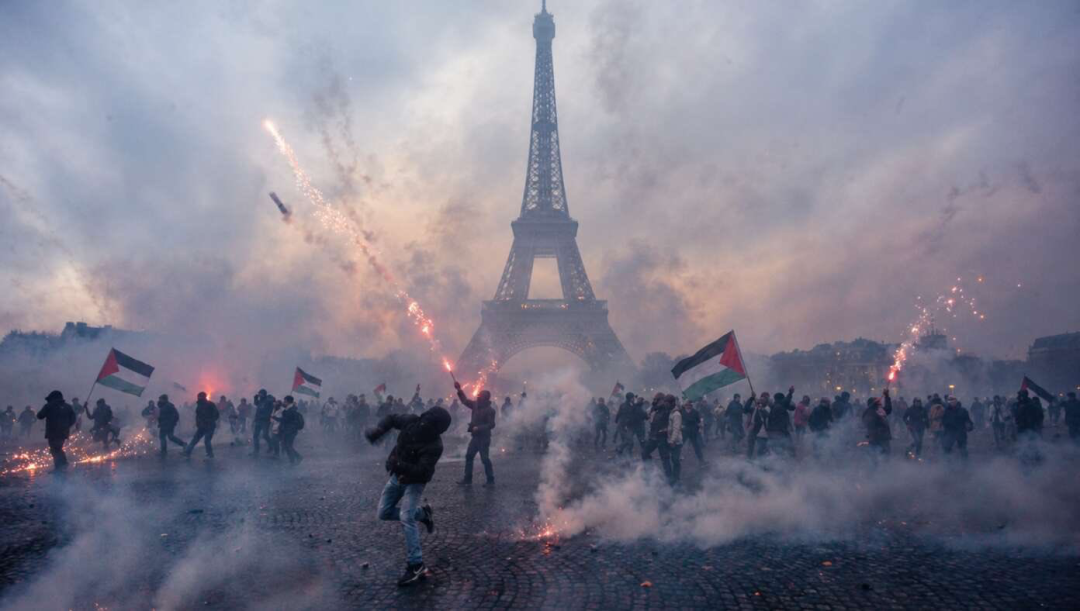
It was not only France that was burning.
On the same day, in Milan, Italy, people threw stones and firecrackers at police, and about 50 people were taken away; in clashes near the Bologna train station, 36 law enforcement officers were injured. In Brussels and Liège, Belgium, police used water cannons, and 45 people were arrested in Liège. In Lisbon, Porto, and Coimbra, Portugal, people were protesting rents and fuel. In Albania, it began on the 13th, and by the 17th it had lasted five consecutive days, with 167 people arrested and 132 police officers injured.
Seemingly unrelated events are all butterfly effects: one butterfly flaps its wings, and wind blows in several places on Earth.
Hormuz is today’s butterfly.
Thirty-nine kilometers
Hormuz, at its narrowest point 21 nautical miles, about 39 kilometers. The Persian Gulf has only one outlet, and it is this one.
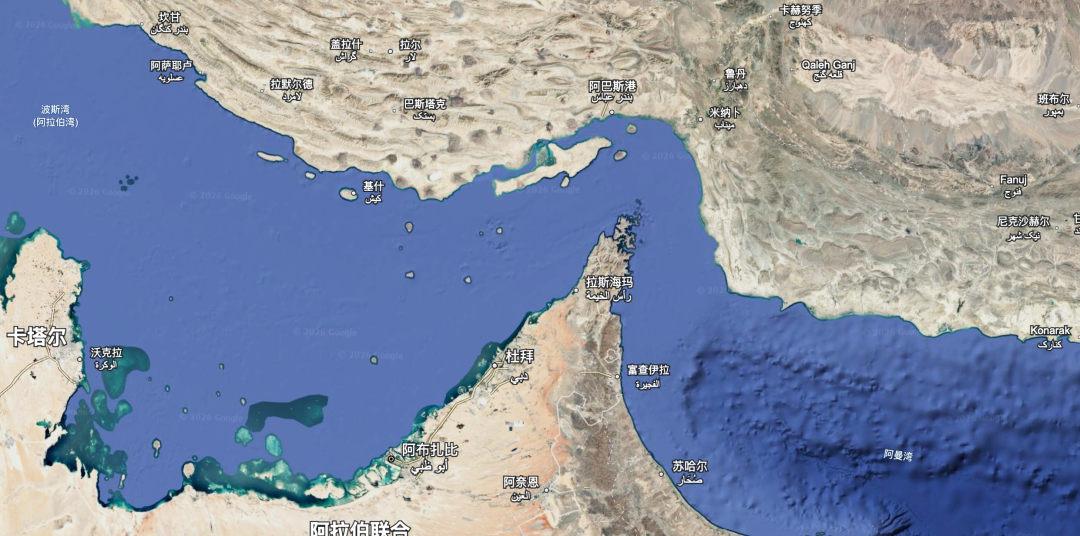
Iran’s ports are inside it. Pistachios are loaded onto ships at Bandar Abbas and must pass through it.
So Iran’s pistachio exports to China fell from 27,947 tons to 4,631 tons, down 83%.
Bombing one or two pistachio farms may not have that much impact; the pistachios that are still alive also cannot be shipped out.
Of course, what also cannot be shipped out is oil.
The oil of Saudi Arabia, the UAE, Kuwait, Iraq, and Qatar all goes out from here. About one-fifth of global oil trade and nearly one-fifth of liquefied natural gas must pass through here.
It is busy every day. What is more troublesome is that it has no substitute.
Under normal circumstances, the oil that must leave through the strait every day is about 20 million barrels. Going by other routes, even at full capacity, can only reach at most about one-quarter of the volume of Hormuz.
And this strait is closest to Europe.
A considerable portion of Europe’s diesel comes from Middle East refineries. Europe’s natural gas must compete with Asia for the same batch of ships—China, Japan, South Korea, and India are all bidding in the same market. Europe’s own oil fields have long been mostly depleted.
So once it closes, Europe’s diesel jumps first. €2.2 per liter, €110 per tank.
Freight burns diesel, cold chains burn diesel, tractors and harvesters burn diesel, and the trucks that transport fertilizer to the fields also burn diesel. Once diesel rises, the shipping costs of everything in supermarkets rise together.
The already struggling European old-timer, upon seeing rising oil prices, couldn't hold it together and started to break down.
Portugal, Lisbon, Spain. Housing prices have more than doubled since 2017, and rents for new leases have nearly doubled.
A 26-year-old biology PhD student receives a monthly scholarship of €1,300. The apartment she and her partner currently live in costs €716 per month in rent. The renewal offer could exceed €1,200.
She said she is the first in her family to pursue a PhD, and despite reaching this level of education, she still can't afford to pay. "Right now, housing in Lisbon is the problem."
In the same city, a 62-year-old teacher said living costs are outrageously expensive and rising sharply. He now has to keep an eye on one thing: what will happen to his mortgage when the interest rate adjusts next month. "I'm very worried."
Wages in Italy and Portugal have barely moved in a decade.
None of this drove Europeans to street riots and looting, but rising oil prices became the last camel to crush Europe.
The gray "restocking" notice on the Sam's App and the collapsed bell tower in Limoges are separated by 10,000 kilometers and a 39-kilometer-wide waterway.
On the Chinese side, it's about eating one less bag of pistachios.
But on the European side, the loss is a 143-year-old building, the freedom of two thousand people, and over six hundred injured police officers.
Welcome to join the official BlockBeats community:
Telegram Subscription Group: https://t.me/theblockbeats
Telegram Discussion Group: https://t.me/BlockBeats_App
Official Twitter Account: https://twitter.com/BlockBeatsAsia
