Don't want to sell crypto just yet, but need to fund a stock purchase?
If you hold BTC and have your eye on a U.S. stock ETF, your first thought might be: do I have to sell my BTC first to buy stocks? The usual approach involves moving funds across crypto platforms, banks, and brokerages, possibly with currency conversion and waiting for settlement.
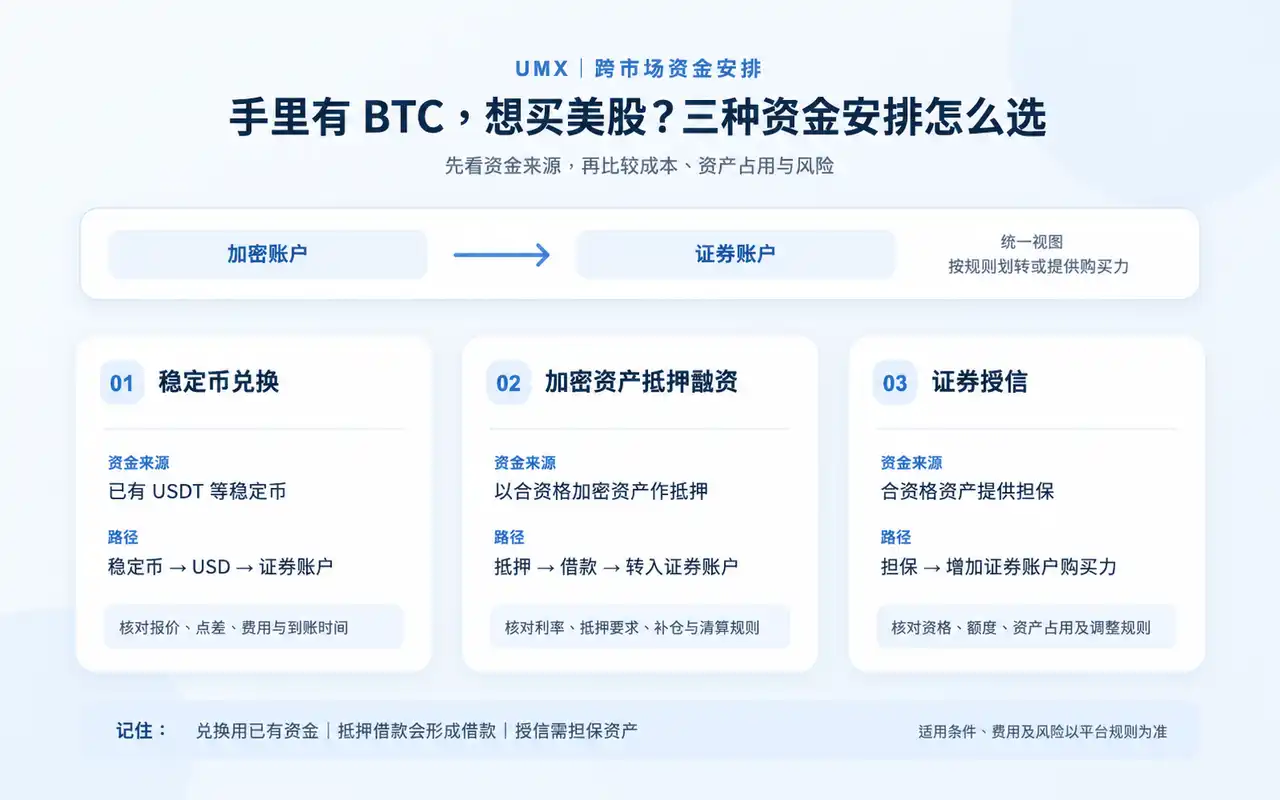
UMX puts crypto assets and securities trading on the same platform and offers several ways to arrange stock-buying funds: stablecoin conversion and transfer, borrowing against crypto collateral, or applying for securities credit using eligible crypto assets.
According to UMX, the product design was also inspired by founder Li Lin and his family office's experience managing their own assets, as well as client demand for cross-asset fund allocation. For investors, all three approaches address the question of how to arrange funds, but they differ in funding source, cost, and asset commitment. Below, we walk through the same stock-buying scenario one by one.
Buying $20,000 in U.S. stocks: how to choose among three funding arrangements?
Assume the account holds $100,000 equivalent in stablecoins and 1 BTC, and you plan to buy $20,000 of a U.S. stock ETF but don't want to sell BTC for now. The following is only a simulated scenario and does not represent BTC's current market price or actual available credit. Whether and how much you can use depends on account eligibility, collateral asset valuation, and the platform's risk parameters at the time.
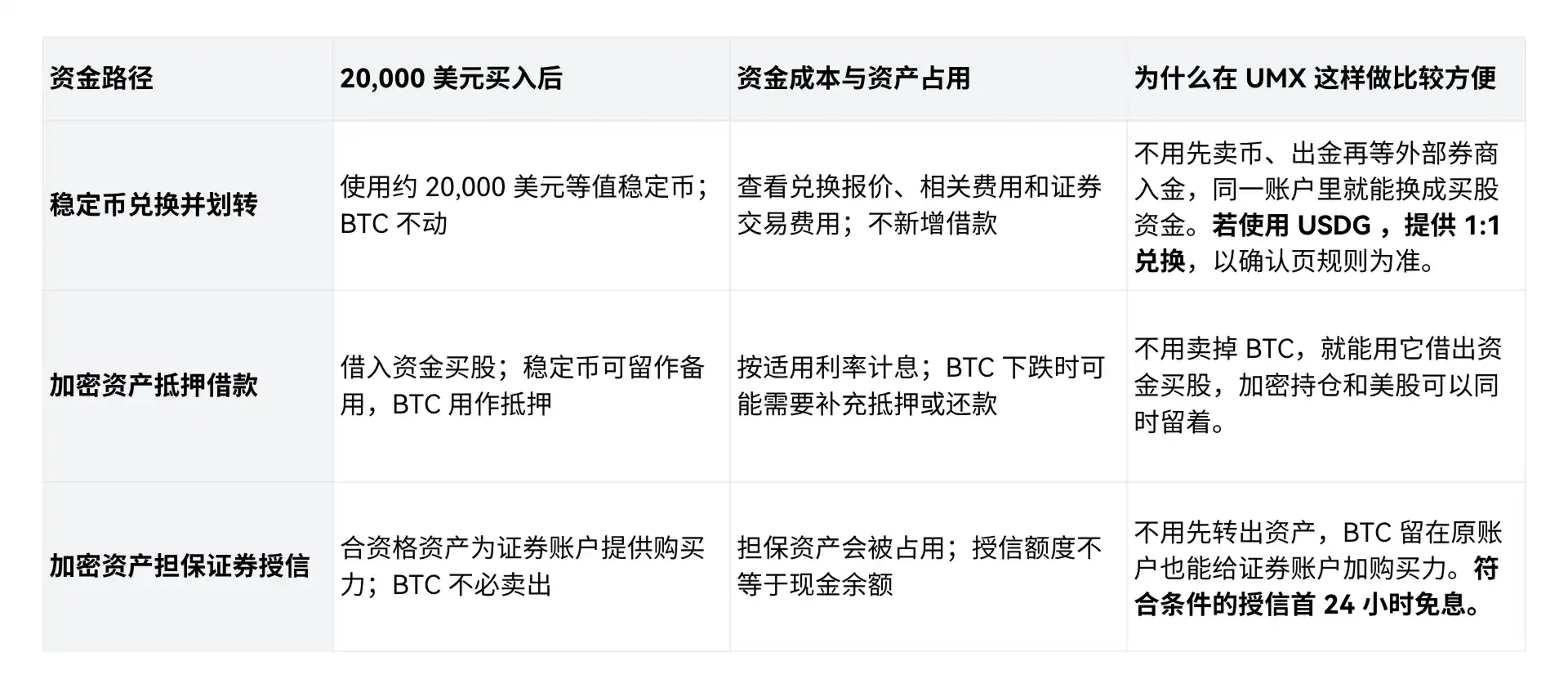
Option 1 | Convert stablecoins to USD and buy directly
If you already planned to use some stablecoins to buy U.S. stocks, converting and transferring is a relatively straightforward arrangement. Once USD enters the securities account, it can be used to buy stocks; BTC is unaffected and no new borrowing is created.
Before proceeding, check the exchange rate, spread, fees, and estimated received amount on the conversion page, then add securities trading fees. If using USDG and the account page offers a 1:1 conversion option, the rules shown on the confirmation page prevail.
This path suits those willing to use existing stablecoins and who want to avoid borrowing and collateral arrangements. After buying stocks, the stablecoin balance available for other transactions will decrease accordingly.
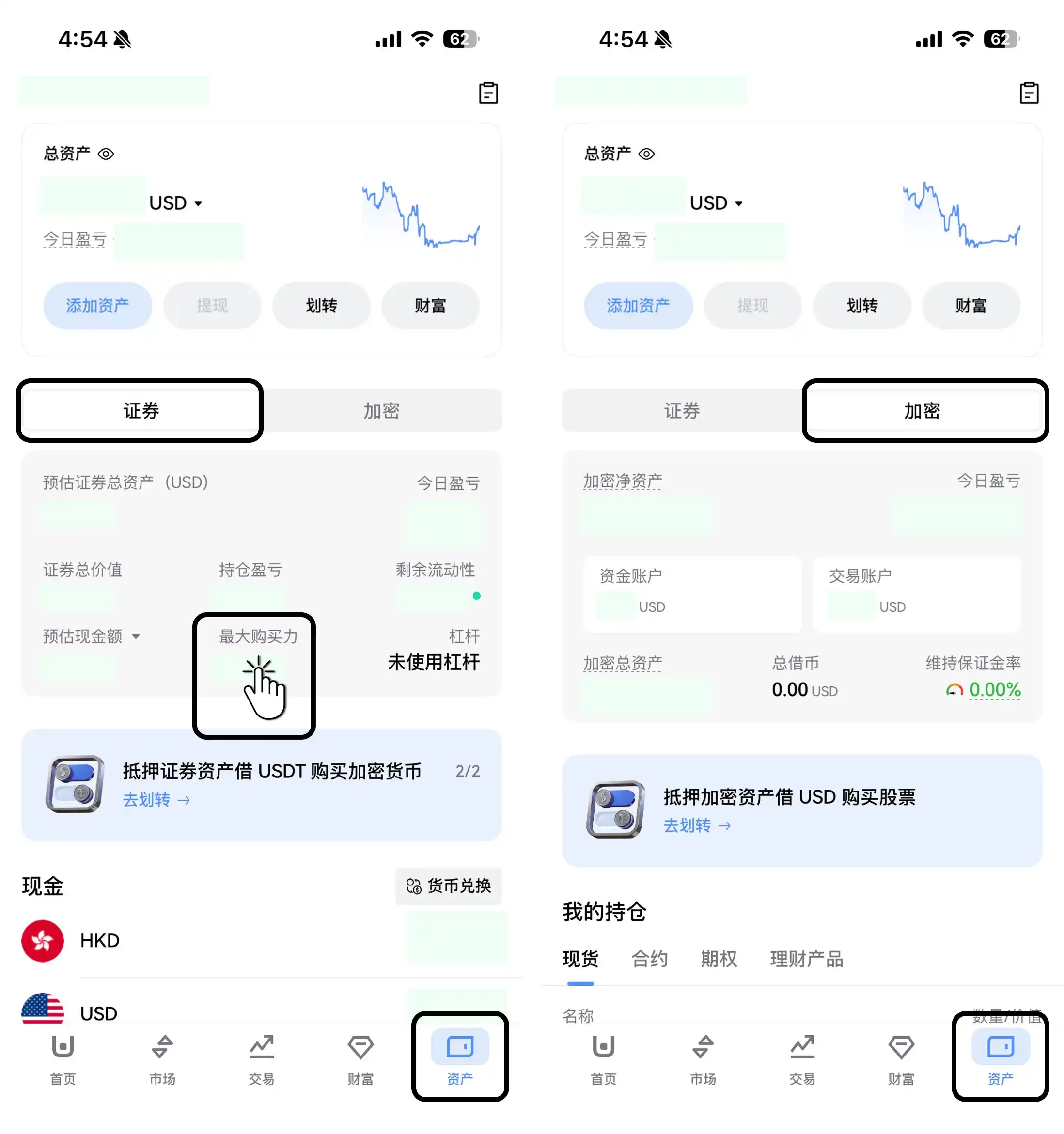
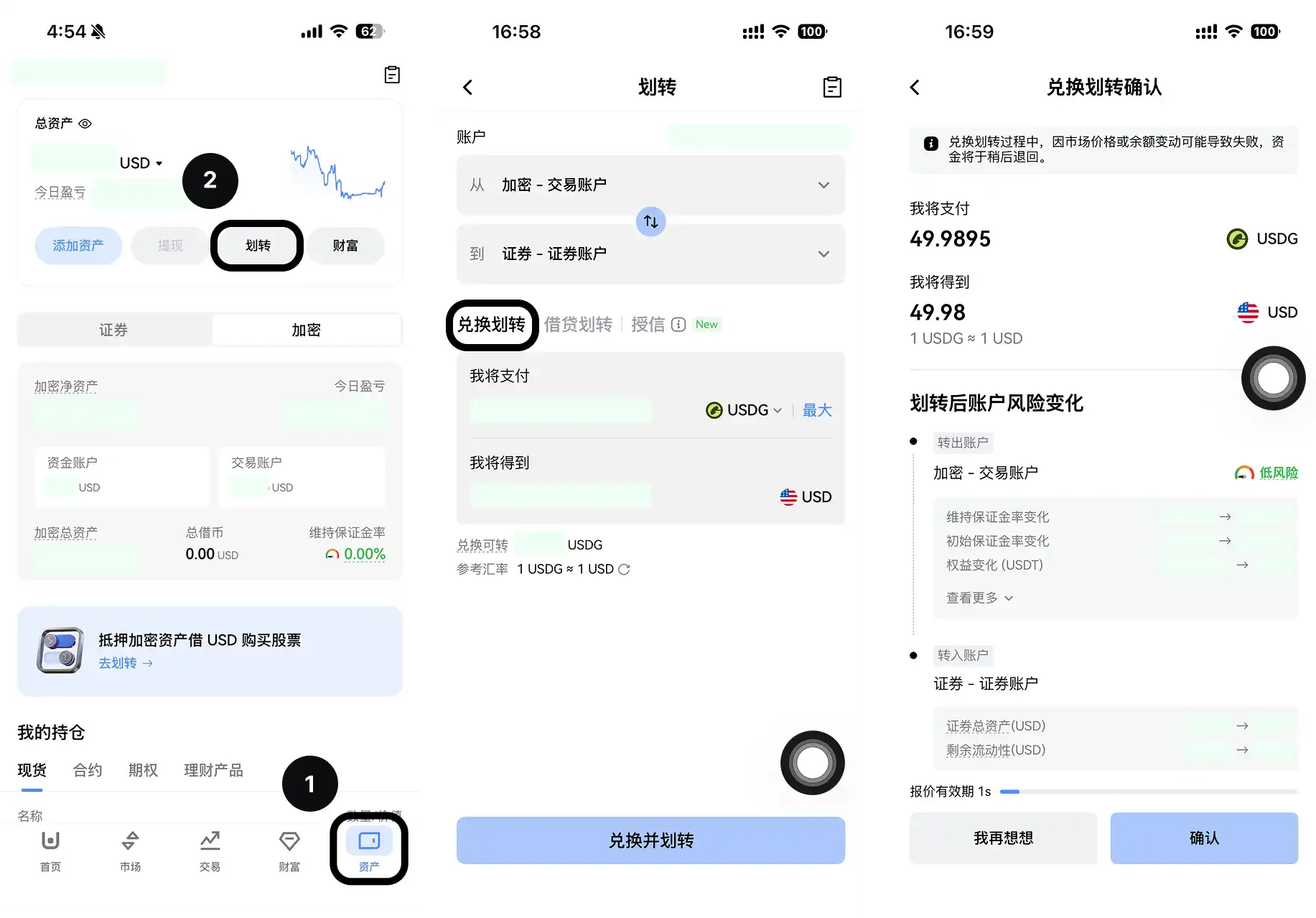
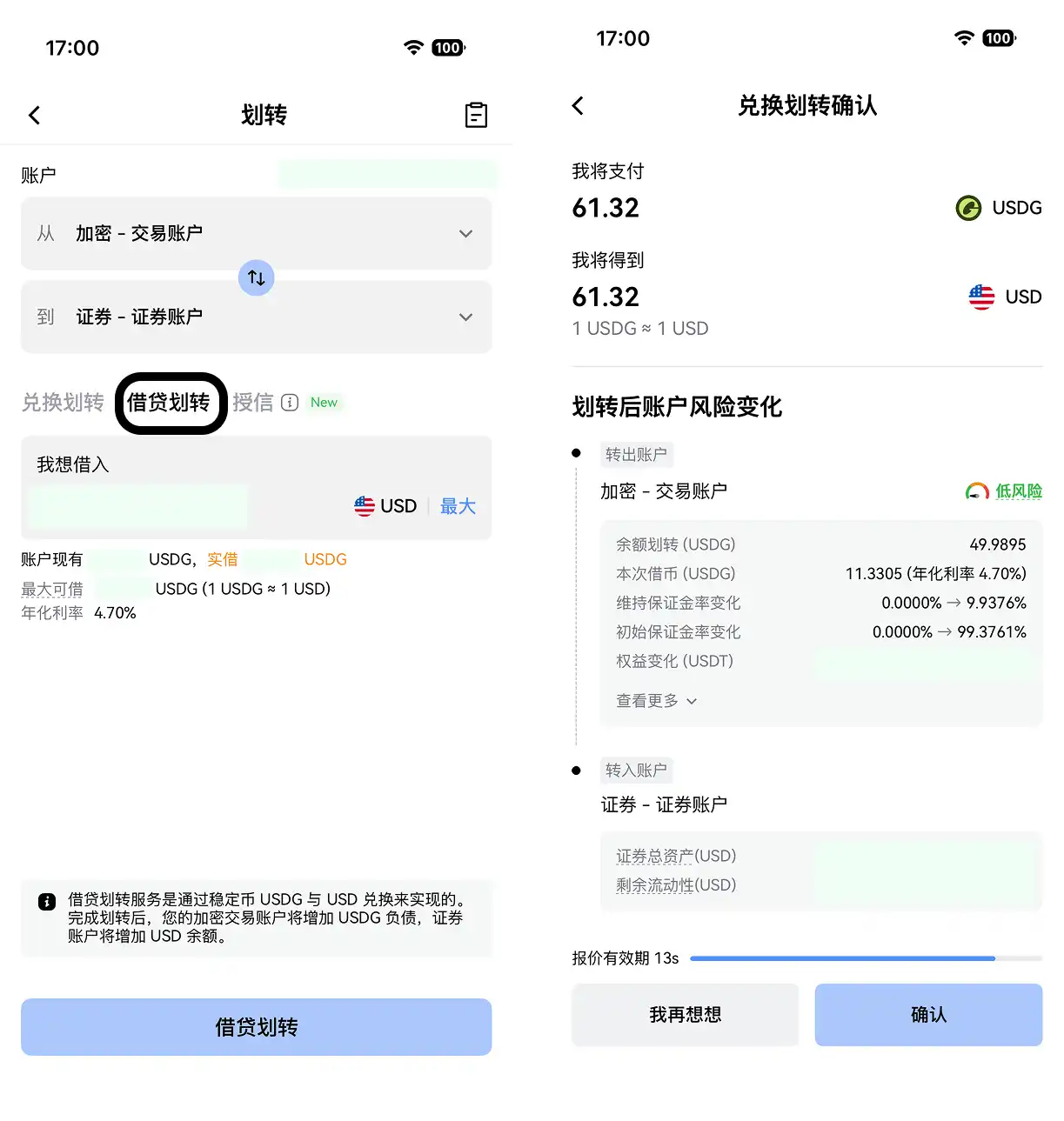
Option Two | Borrow against BTC, keep stablecoins as a reserve
If you want to keep your stablecoins, you can check whether your account supports using eligible assets such as BTC and ETH as collateral to borrow and buy stocks. Which assets are supported and how much you can borrow are subject to what is displayed on the account page.
This path keeps the stablecoins in your hands, but BTC will be used as collateral, and the loan will accrue interest. If the collateral asset declines in value or risk parameters change, you may need to add collateral, repay the loan, or have your assets handled according to the platform's rules.
Before proceeding, review the interest rate, repayment requirements, and risk disclosures, and consider whether you can withstand price volatility in the collateral asset.
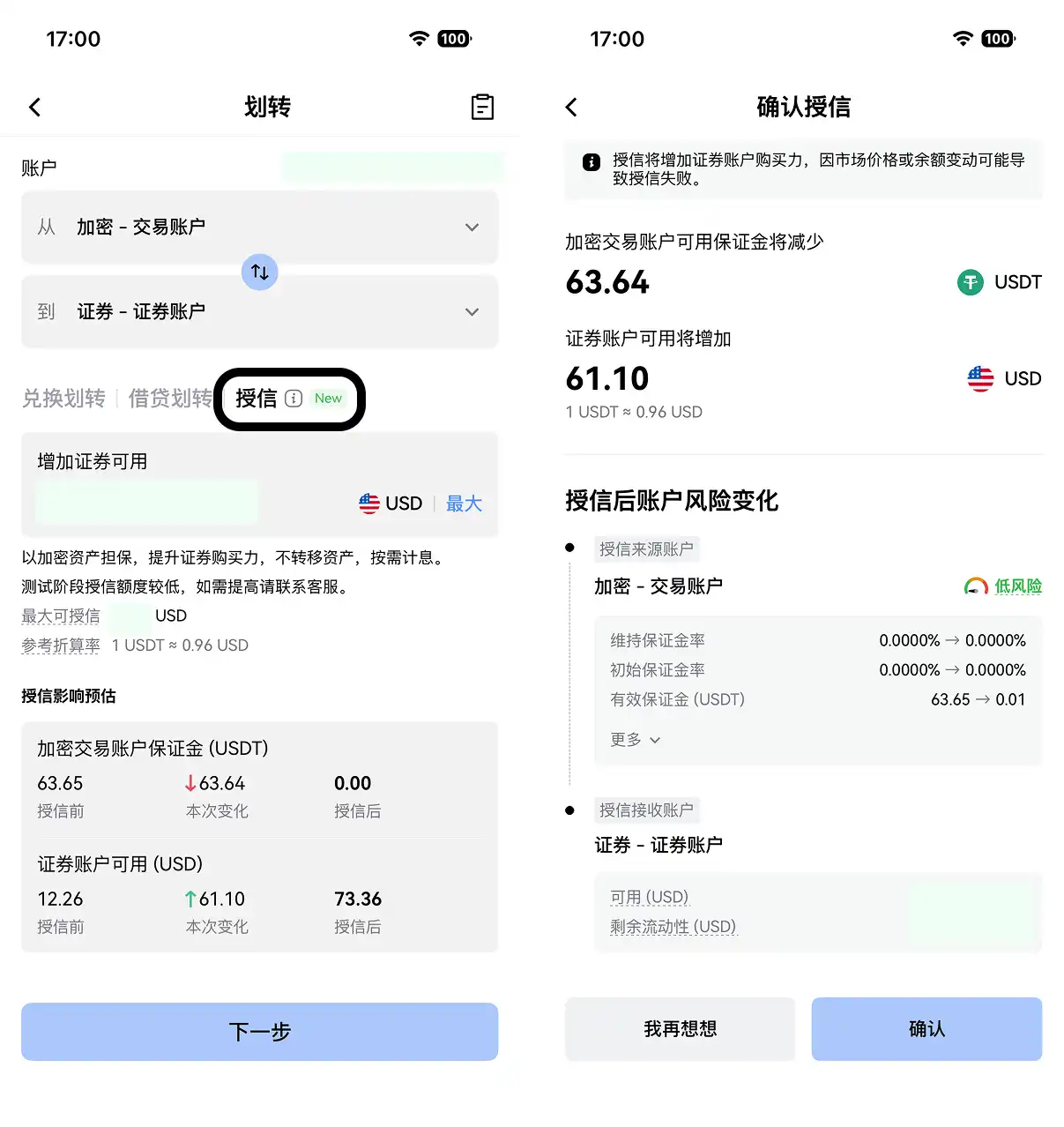
Option Three | Use BTC as collateral for securities credit to increase stock-buying power
Credit financing uses eligible crypto assets to provide collateral support for a securities account, increasing the purchasing power available for buying stocks. It differs from a collateral loan in the funding path: the former uses collateral assets to support the securities account limit, while the latter involves borrowing funds and then arranging them to buy stocks.
Convenience aside, remember: collateral assets will be locked up, and the credit limit does not equal cash in the account. Before confirming, verify the estimated increase in purchasing power, the collateral assets occupied, the applicable interest rate, and whether the limit will change with asset prices or account risk.
If the account meets the "first 24 hours interest-free" conditions, interest is subsequently calculated at the VIP0 USD financing annual interest rate of 5.74%. Taking $20,000 used for 7 days as an example, no interest is charged during the interest-free period, and interest is then calculated according to the page rules. Under this set of example conditions, compared with interest charged for the full 7 days, the interest is approximately 14.3% less. The actual interest rate, interest-free eligibility, and interest calculation period are subject to the account page, and other fees are charged separately.
Compare capital efficiency, and also consider capital cost
The difference among the three methods lies not only in whether stocks can be purchased, but also in how many stablecoins remain after purchase, whether BTC is occupied, and whether interest needs to be paid.
If you want something simple and direct, consider exchanging existing stablecoins; if you want to retain stablecoins, you can compare collateralized borrowing and securities credit. The former depends on interest rates, repayment, and collateral requirements, while the latter depends on collateral asset occupation and credit rules.
This simulated purchase of $20,000 can be compared across three cost items:
● Exchange cost: Verify the stablecoin exchange quote, exchange rate, and related fees.
● Financing cost: Estimate based on the loan amount, applicable annualized interest rate, and actual usage time.
● Asset occupation cost: Confirm whether the BTC used for collateral or credit can still be freely deployed.
Cross-market accounts can reduce some external transfers and waiting, but the actual savings must be compared item by item using quotes and fees at the same time and for the same amount.
Beyond U.S. stocks, Hong Kong stocks can also use these funding arrangements
UMX has also opened grayscale experience for Hong Kong stocks and ETFs. Eligible users can check whether they can obtain purchasing power through stablecoin transfers, crypto asset collateral financing, or securities credit arrangements; if the securities account already has USD, they can also check the option of exchanging to HKD before buying. Whether specific markets, underlying assets, and features apply to your account is subject to what is displayed on the page.
Before buying, first see whether the account can withstand volatility
The three methods suit different funding arrangements: stablecoin exchange is direct but uses up existing stablecoins; collateralized borrowing can retain stablecoins but requires interest payments and bears collateral risk; securities credit may increase stock purchasing power but occupies collateral assets and must comply with credit and risk control rules.
When comparing, first ask yourself three things: How much cash will you still need to put up when buying stocks? Which assets will be tied up as a result? If the price of the collateral assets or securities falls, is there still any buffer in the account?
The purchasing power displayed on the page is only part of the funding arrangement. Before use, you should also confirm account eligibility, supported assets, conversion quotes, interest rates, fees, conversion ratios, credit limits, as well as top-up, repayment, and liquidation rules.
Welcome to join the official BlockBeats community:
Telegram Subscription Group: https://t.me/theblockbeats
Telegram Discussion Group: https://t.me/BlockBeats_App
Official Twitter Account: https://twitter.com/BlockBeatsAsia
