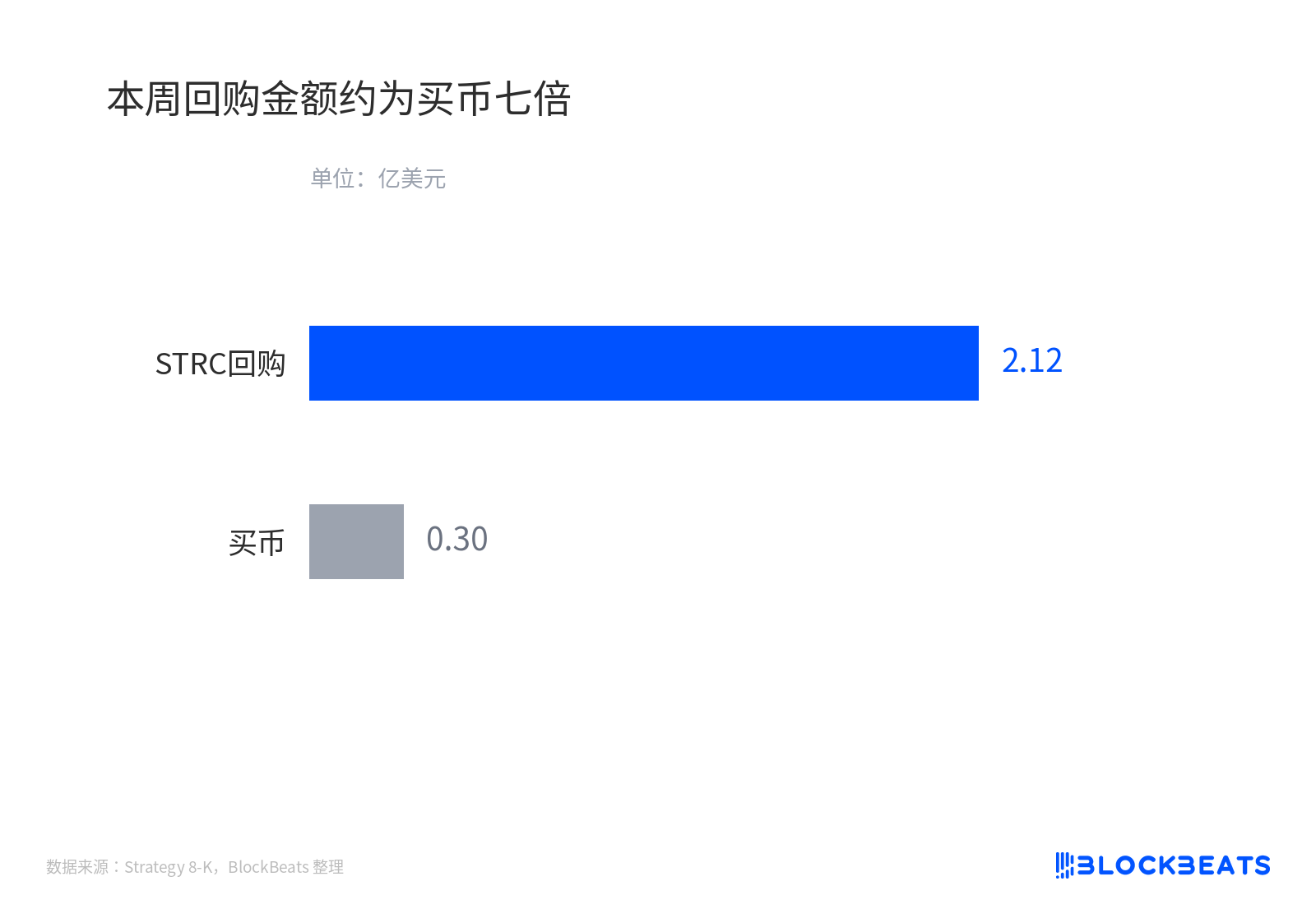
During the week of November 16 to 22, Strategy bought 457 bitcoins at an average price of $64,898, spending approximately $29.6 million. In the same week, it repurchased 2.18 million shares of its own STRC preferred stock for $211.8 million, about seven times the amount spent on bitcoin purchases.
STRC is a perpetual preferred stock designed by the company to fund bitcoin purchases. It has no maturity date, carries an annual dividend of about 12%, and aims to trade stably near its $100 par value like cash. It ranks ahead of common stock for dividend distributions and liquidation proceeds.
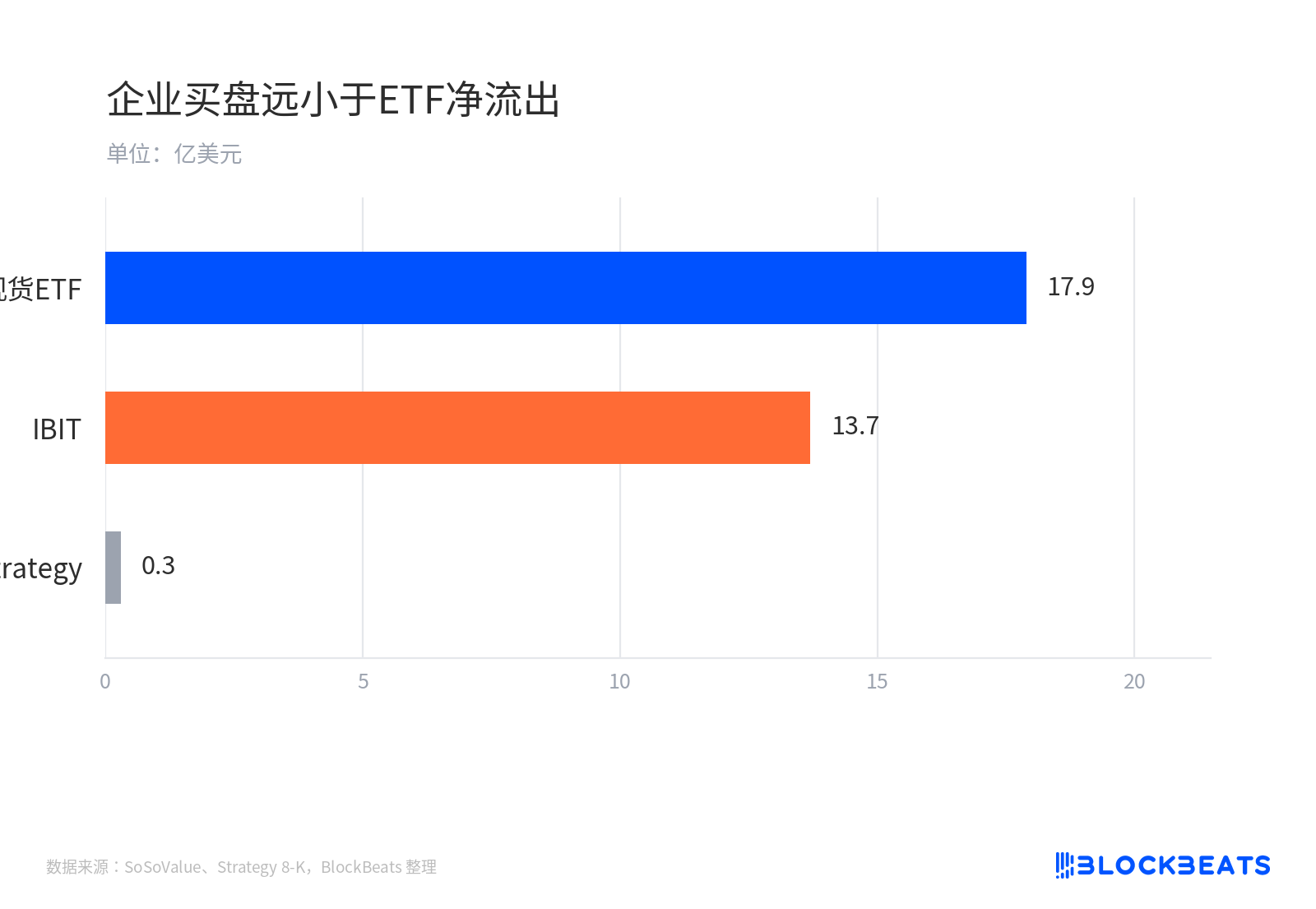
In the same week that bitcoin fell to a more than two-year low and U.S. spot bitcoin ETFs saw $1.79 billion in net outflows, Strategy chose to buy fewer bitcoins and aggressively repurchase preferred stock. Saylor described this as proactively optimizing the capital structure, while some in the community questioned whether Strategy is transforming from a bitcoin-buying company into a preferred-stock defensive company.
Where the money went this week
First, the funding sources. Of the $211.8 million repurchase, $147 million came from at-the-market common stock offerings, and another $64.8 million came from company cash. The average repurchase price was about $97, below the $100 par value. The $29.6 million for bitcoin purchases came entirely from offering proceeds.
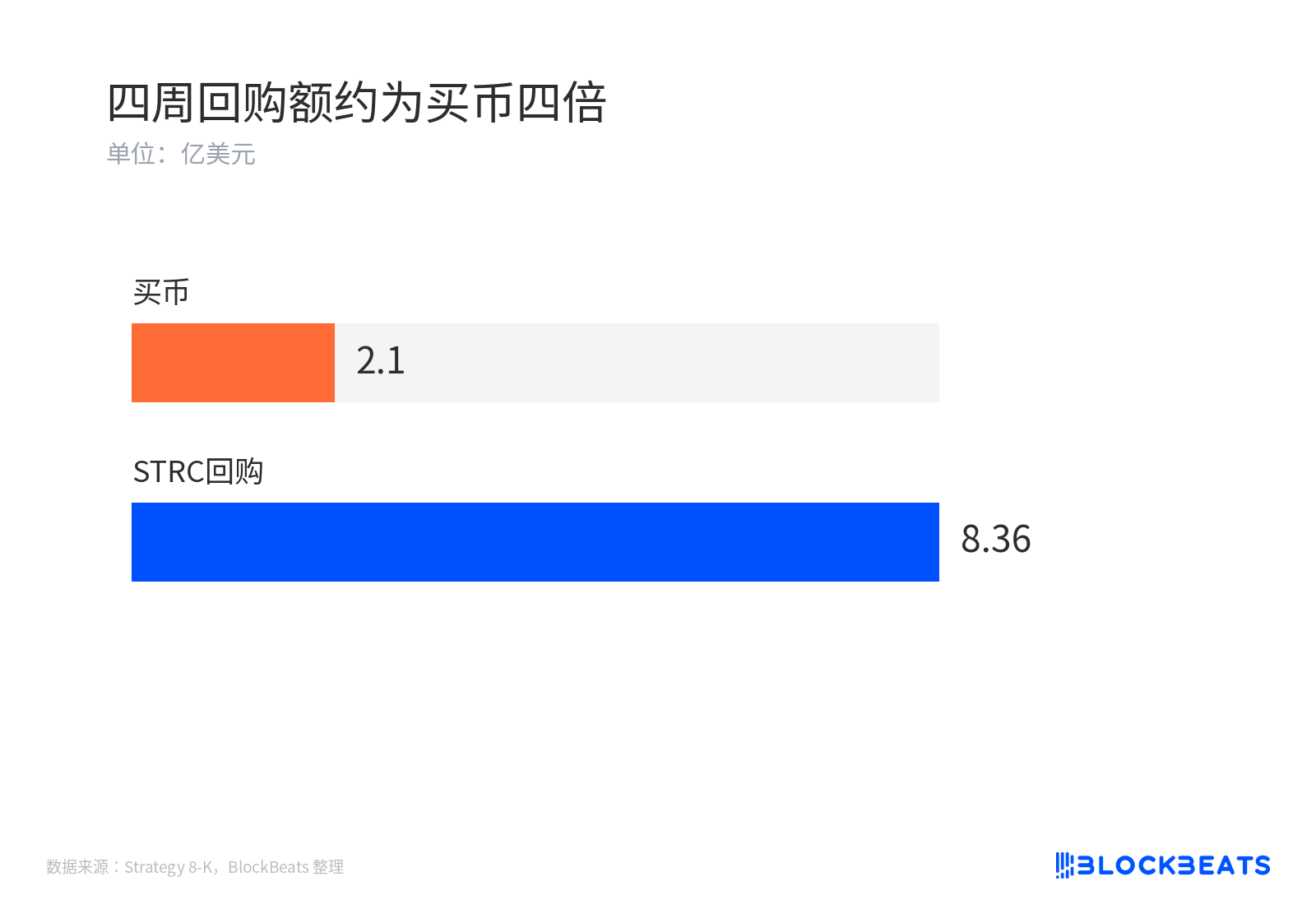
From the same batch of financing, most went into preferred stock repurchases and a small portion went into bitcoin. Over the past four weeks, bitcoin purchase volumes slid from 811, to 1,036, to 485, and down to 457 this week, while repurchase amounts consistently remained several times the bitcoin purchase amounts.
The company's 8-K filing also disclosed two authorization adjustments. The board raised the repurchase authorization cap for digital credit securities from $3 billion to $4 billion, with this quota mainly used to support the preferred stock price and ensure dividend payments.
Another authorization allows up to $1 billion to be converted from dollar reserves to dollar cash, with more flexible uses that can be directly applied to buybacks or coin purchases. As of November 22, the company held 851,305 bitcoins, with a cumulative cost of $64.23 billion.
Why STRC Is More Urgent Than Buying More BTC
STRC is Strategy's digital credit instrument for financing coin purchases. Its price needs to stay close to $100, and dividends must be paid on time for the market to continue buying it. As bitcoin declined and the credit market contracted since May, STRC has fallen below par value.
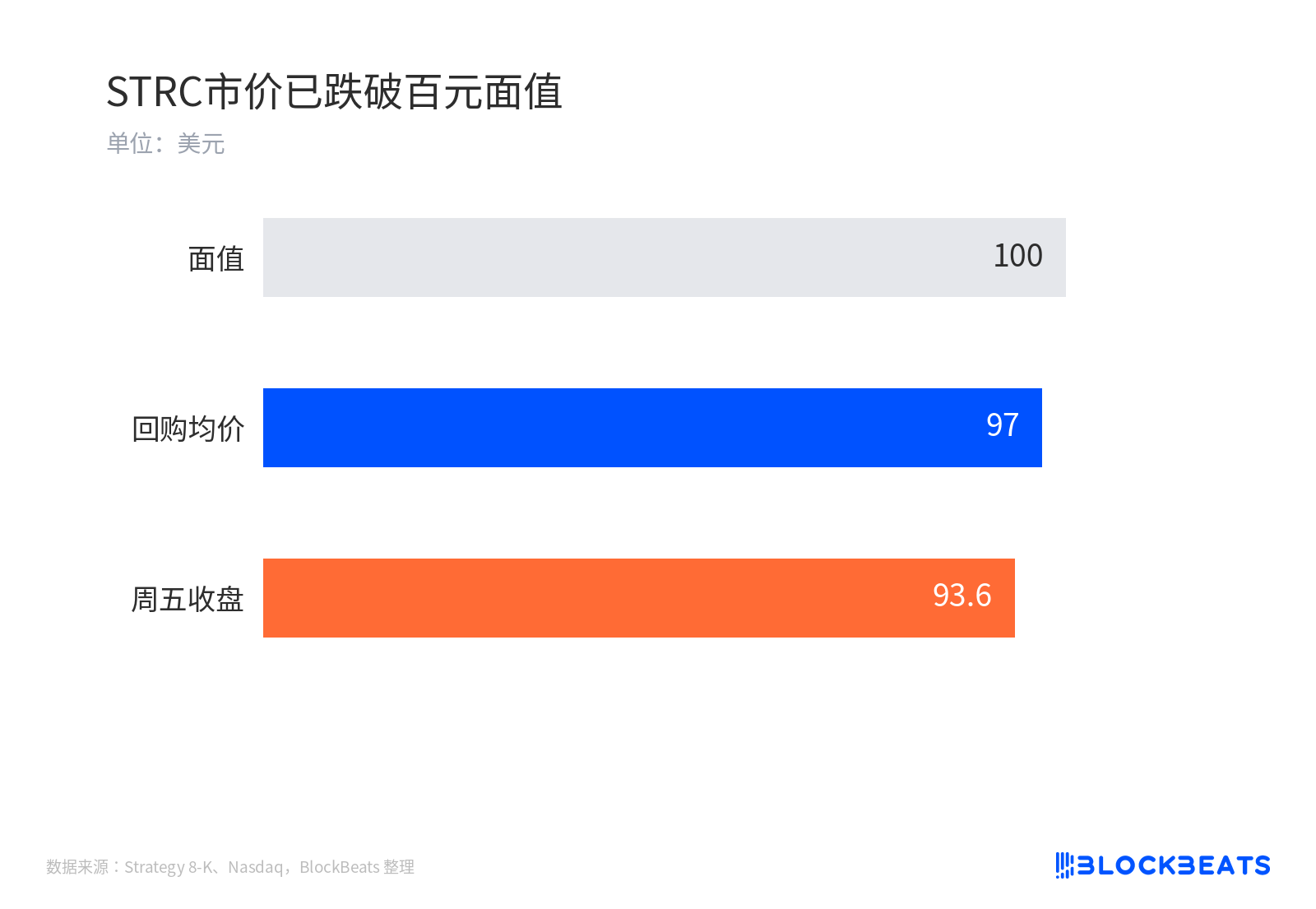
The cost of losing price support is not just about face. It ranks ahead of common stock in receiving payments, and once the market doubts payment ability, the company's future financing costs will rise, and the cycle of buying coins through additional issuance will also be affected.
So the essence of this buyback is to repurchase a perpetual claim that pays about 12% annual dividends at a price below par value, while reducing claims that rank ahead of common stock.
According to Saylor, the company has reduced $2.9 billion in outstanding credit in recent months, cutting annualized dividends by $353 million. He also claimed this transaction increased net reserves by $183 million and increased the number of bitcoins per share by 6 satoshis (a satoshi is the smallest unit of bitcoin).
Under the assumptions of 10% annualized bitcoin return and 40% volatility, the company's model shows STRC's credit spread narrowing by 2 basis points to 71 basis points. Credit spread can be understood as the additional yield compensation the market requires for STRC; narrowing means the model judges it has become safer. However, this is an internal estimate, not a traded quote.
Saylor's Ledger and the Community's Questions
Management's framework is clear. Buying back preferred stock at a discount is equivalent to deleveraging, reducing future dividend expenses while increasing the bitcoin content per share. CEO Phong Le said during the November 20 investor Q&A that the company had repurchased approximately $3 billion of STRC at prices between $95 and $99.
There are also voices of doubt. Some X users and individual analysts believe that the shrinking scale of coin purchases for four consecutive weeks, while buyback amounts have consistently been several times the coin purchases, indicates that the narrative of unlimited coin buying has given way to prioritizing the preservation of financing instruments. In their view, measured in Bitcoin, the opportunity cost of this buyback is not low.
The two interpretations are not entirely opposed. A more realistic assessment may be that stabilizing the preferred stock financing engine first during a credit contraction period is a necessary step to maintain the ability to continue buying coins in the future, at the cost of a slower pace of short-term accumulation. In the same week, ETFs saw net outflows of $1.79 billion, with BlackRock's IBIT alone seeing outflows of approximately $1.37 billion. The timing of weakening corporate buying and institutional retreat overlapped precisely.
Where the $1 billion in cash goes and the true price of STRC
The strategic narrative must ultimately land on observable variables. After that $1 billion was converted to cash, if it continues to flow toward STRC buybacks, it indicates that credit defense is still ongoing. Only when it is reinvested back into coin purchases can we speak of expansion after contraction.
Another unanswered question is the true market pricing of STRC. Currently only a $97 average buyback price is public; the current outstanding scale and secondary market transaction prices are missing, and the 71 basis points is merely an internal estimate. Whether the preferred stock price has truly stabilized will depend on the next round of trading data.
The pace of coin purchases itself is also a variable. Whether the reduction to 457 coins for four consecutive weeks means the company is waiting for the market to stabilize, or whether the premium arbitrage of issuing shares to buy coins is no longer economically worthwhile—the existing materials lack MSTR's market cap and mNAV (the multiple of market cap relative to net Bitcoin holdings), making it impossible to judge.
Without resolving these variables, proactive optimization and forced defense remain two interpretations of the same set of facts. On November 23, MSTR closed up 8.5% at $84.40, and at least on that day the market was willing to believe the former first.
Welcome to join the official BlockBeats community:
Telegram Subscription Group: https://t.me/theblockbeats
Telegram Discussion Group: https://t.me/BlockBeats_App
Official Twitter Account: https://twitter.com/BlockBeatsAsia
