In April, Hong Kong once again welcomed the annual gathering of the global Web3 industry. Against the backdrop of the dazzling lights on both sides of Victoria Harbour, the "2026 Hong Kong Web3 Carnival" kicked off as scheduled. Developers, institutions, investors, and industry practitioners from around the world gathered together to explore the next stage of evolution in the on-chain world through technology, products, and future narratives.
As a grand event for the industry, this year's carnival's main forum, project exhibition area, and nearly a hundred peripheral activities unfolded, forming a three-dimensional and dynamic Web3 ecosystem on the scene. In a space where people and viewpoints continuously converged, the presence of OKX Wallet remained particularly prominent.
Immersive Booth: From "Experiencing Products" to "Touching the On-Chain Future"
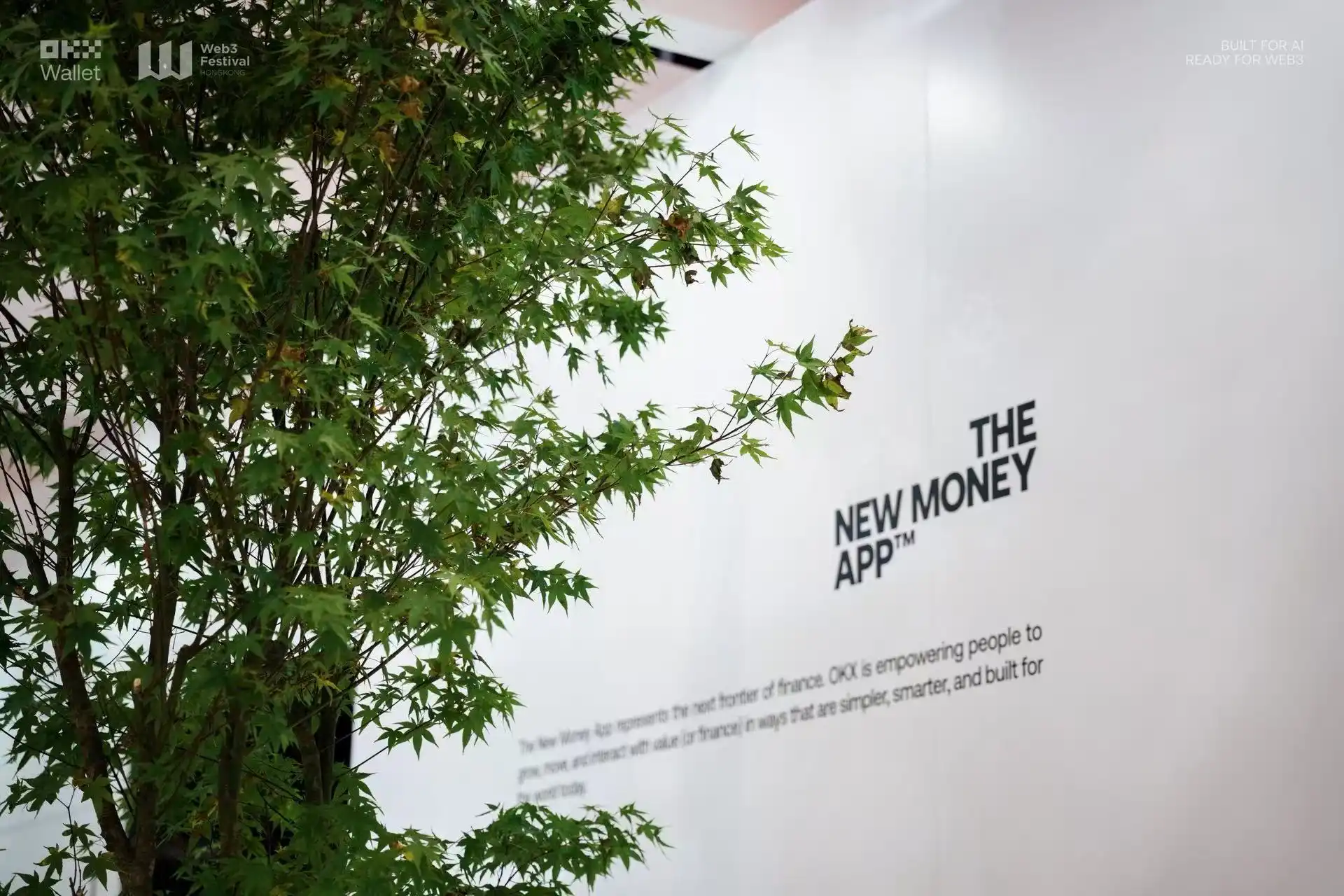
Passing through the bustling entrance of the exhibition area, the OKX Wallet booth, with its highly recognizable futuristic technology style, first caught the eye. The overall space was predominantly white, incorporating green elements as embellishments. It injected natural vitality into a calm and orderly visual system, creating an immersive scene that combines a sense of the future and ecological concepts, allowing the "on-chain world" to transition from a concept to a tangible reality.
There was a continuous flow of people in front of the booth, and the reception area's popularity kept rising. Visitors to the exhibition participated in interactive tasks by scanning QR codes to receive peripheral products such as custom notebooks, small messenger bags, and iconic green tote bags. The simple and direct participation mechanism significantly reduced the interaction threshold, enabling users to quickly establish a connection with the brand through easy participation.
On the other side of the booth, the interactive gaming area also became one of the most vibrant areas at the event. The "Race Xlayer" mini-game attracted many users to line up and participate, creating a relaxed and lively atmosphere on-site. Each click and operation was not just entertainment but also an "easy-entry point" for users to experience on-chain interactions.
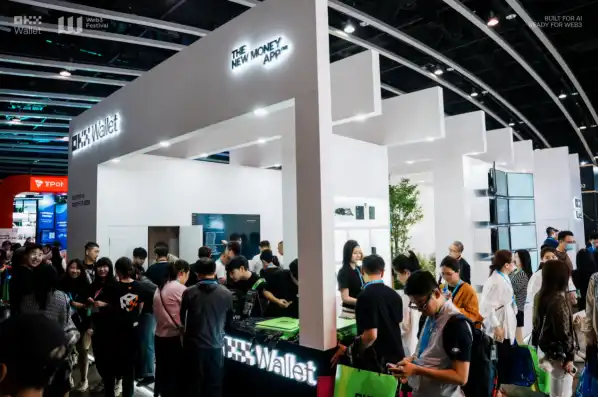
Furthermore, OKX Wallet introduced a multi-level experiential incentive mechanism at the booth. Users could unlock higher-level rewards, including custom hoodies distributed in limited quantities daily, by completing the Onchain OS experience and AI 101 learning tasks. This "task-chain design" not only increased user engagement depth but also subtly guided users along the conversion path from "understanding" to "usage."
Here, Web3 is no longer just an abstract technical concept, but is touched and understood through experience, interaction, and feedback.
Keynote Speech: Transition from a "User Tool" to an "Agent Operating System"
If the exhibition booth presents the current form of Web3, then the voices at the main forum point toward its future direction.
On the first day of the summit, Lennix, Global Chief Commercial Officer of OKX, was invited to speak at the main forum and delivered a keynote speech titled "Start building on Onchain OS." In this speech, Lennix systematically laid out and elaborated on his core concept for the next-stage on-chain operation—Onchain OS.
Lennix pointed out that in the past year, the development pace of AI technology has far exceeded expectations. With the enhancement of large model capabilities and the gradual implementation of Agent applications, AI is evolving from an auxiliary tool to a "new type of user" capable of participating in decision-making and even executing operations. An increasing number of users are starting to use AI for market analysis, signal generation, and strategy building, a trend that is fundamentally changing on-chain operations and the way individuals interact with on-chain systems.
However, there is still a significant gap in the current industry: Agents can analyze but struggle to execute securely; they can make decisions but lack a unified execution environment. "The issue lies not in the existence of capabilities, but in the fact that these capabilities have not been integrated and are not operating within a secure, controllable system," Lennix stated.
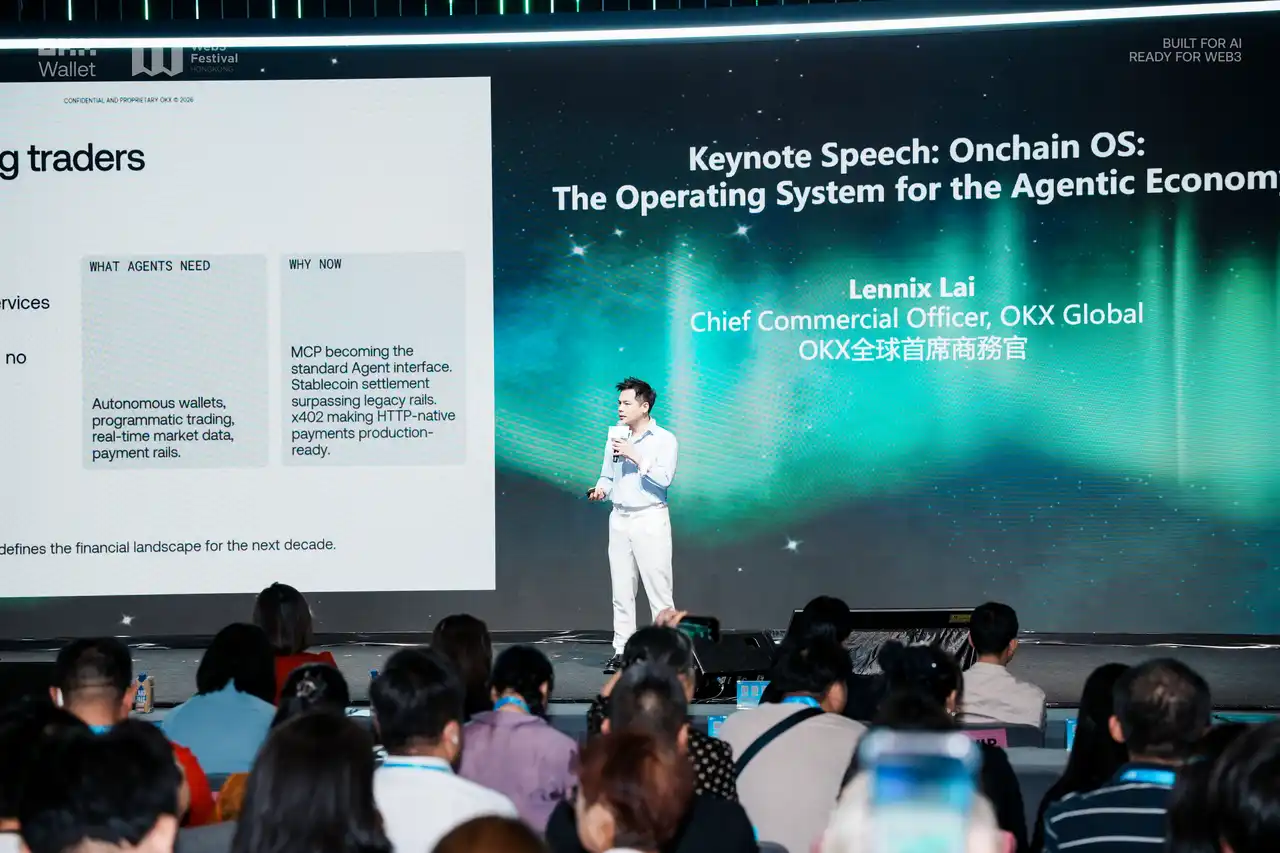
It is in this context that the OKX Wallet has proposed Onchain OS—an on-chain operating system tailored for Agent development.
This system is built on the API-first architecture of the OKX Wallet, supporting multiple blockchains and possessing a highly stable underlying capability. Building upon this foundation, Onchain OS further introduces mechanisms such as a plugin system and developer tools (SDK, CLI), allowing Agents to directly access on-chain capabilities and achieve a complete loop from data analysis and strategy generation to execution.
On the user side, complex on-chain operations will no longer rely on multi-layered interface clicks but can be expressed directly through natural language. For example, users only need to set execution conditions, and the Agent will continuously monitor the market, automatically execute strategies, and complete optimal path selection and settlement.
Meanwhile, OKX Wallet has also introduced a multi-layer security and permission control mechanism in the system to ensure that while enhancing automation and efficiency, users always retain asset control.
Furthermore, Lennix proposed that the future on-chain ecosystem will enter a stage of "multi-Agent coexistence." Interaction between Agents, Agent and human will become the norm, even forming a network on-chain that far exceeds human dominance. In this system, execution efficiency, settlement capability, and system stability will become core infrastructure.
Around this trend, OKX Wallet is building an execution environment that supports large-scale automated on-chain operations through foundational capabilities like the X Layer. The introduction of Onchain OS is not only an upgrade at the product level but also a redefinition of the question "who is the on-chain user."
Web3 Night: From High-Energy Gathering to an "Industry Field with Substance"
Outside the main forum, OKX Wallet Night once again became one of the most anticipated industry events during this carnival.
As a brand event series continuously developed by OKX Wallet, Web3 Night has always been dedicated to building a high-quality industry exchange scene. Each event attracts nearly a thousand core participants in the Chinese Web3 field, including project teams, public chain teams, developers, and media partners, to exchange experiences and collide with viewpoints.
This year, while maintaining high popularity, OKX Wallet Night combines product expression and content output.
The main activities revolved around the two core themes of Onchain OS and AI. Through keynote speeches and roundtable discussions, OKX Wallet's latest product development and thought process in the direction of AI Agent and on-chain transaction integration were systematically presented. Additionally, the event further enhances on-site participation and stimulates online sharing and dissemination through reward distribution, interactive mechanisms, and social communication design.
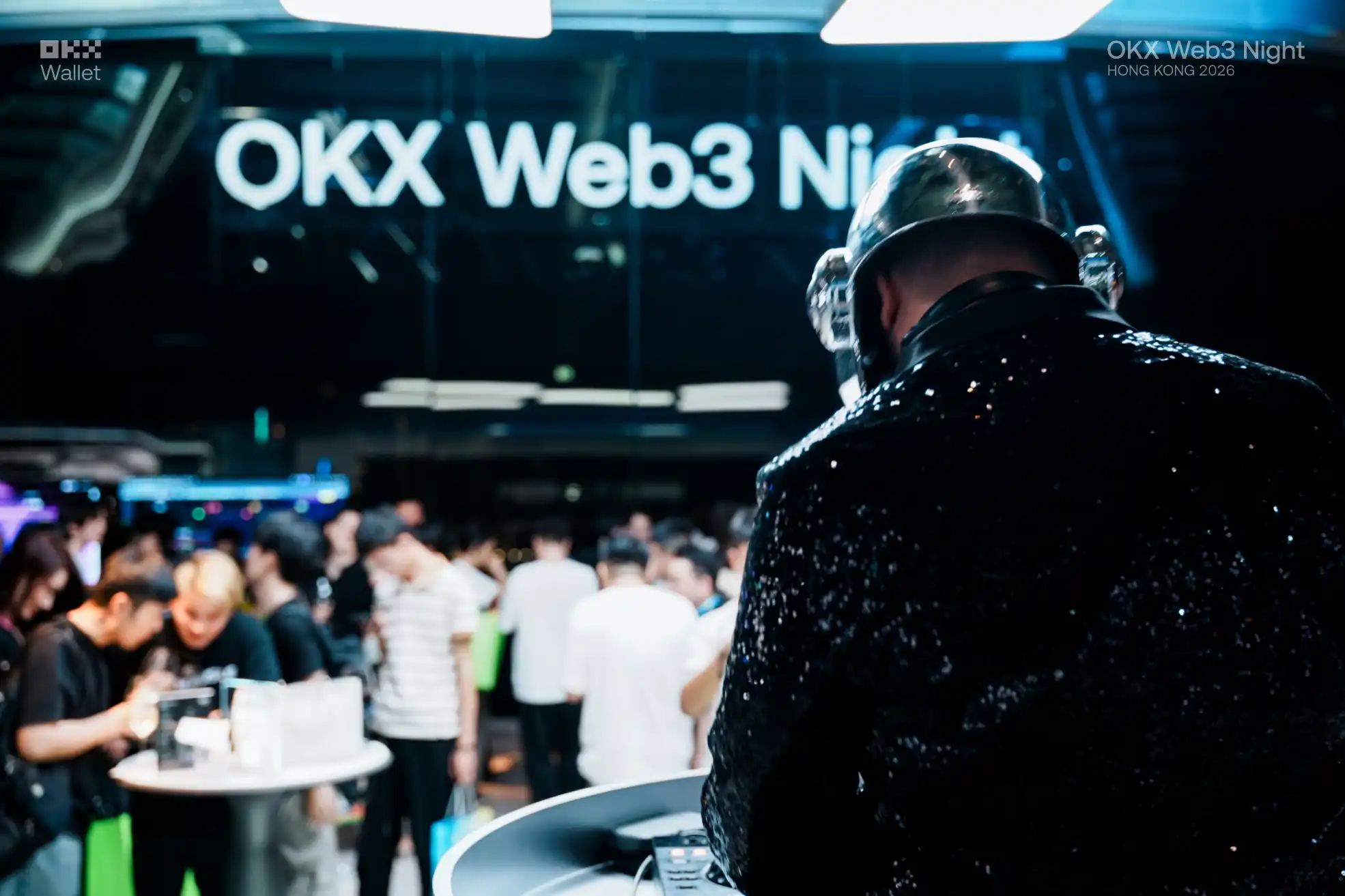
As night fell, the event gradually heated up. From the opening dance to the keynote speeches, from roundtable discussions to multi-round DJ performances, the content and atmosphere progressed layer by layer. Lights, music, and the crowd intertwined to form a space for communication that is both rational and emotional. On stage are in-depth discussions about technological evolution and the industry's future, while off stage, resources and ideas flow freely. In a relaxed and open atmosphere, participants from different backgrounds connect, share insights, and plant the seeds for future collaborations.
From "Tool" to "System": The Next Step for OKX Wallet
From the immersive experience at the booth, to the strategic expression at the main forum, to the ecosystem connection at Web3 Night, OKX Wallet presented a more complete and clear image at this year's Hong Kong Web3 Carnival. It is no longer just a showcase of a product, nor just a provider of wallet access, but is articulating from multiple perspectives how to build a future-oriented on-chain operating system—a core infrastructure connecting users, Agents, and the multi-chain ecosystem.
As AI begins to become a "user," as on-chain transactions move from manual operation to automation and coordination, the boundaries of Web3 are being redefined. Standing at this turning point, what OKX Wallet is exploring is not just an upgrade to the technical path, but a new on-chain operating paradigm—a on-chain world that is co-participated and continuously evolving by humans and Agents.
And perhaps, all of this is just the beginning.
