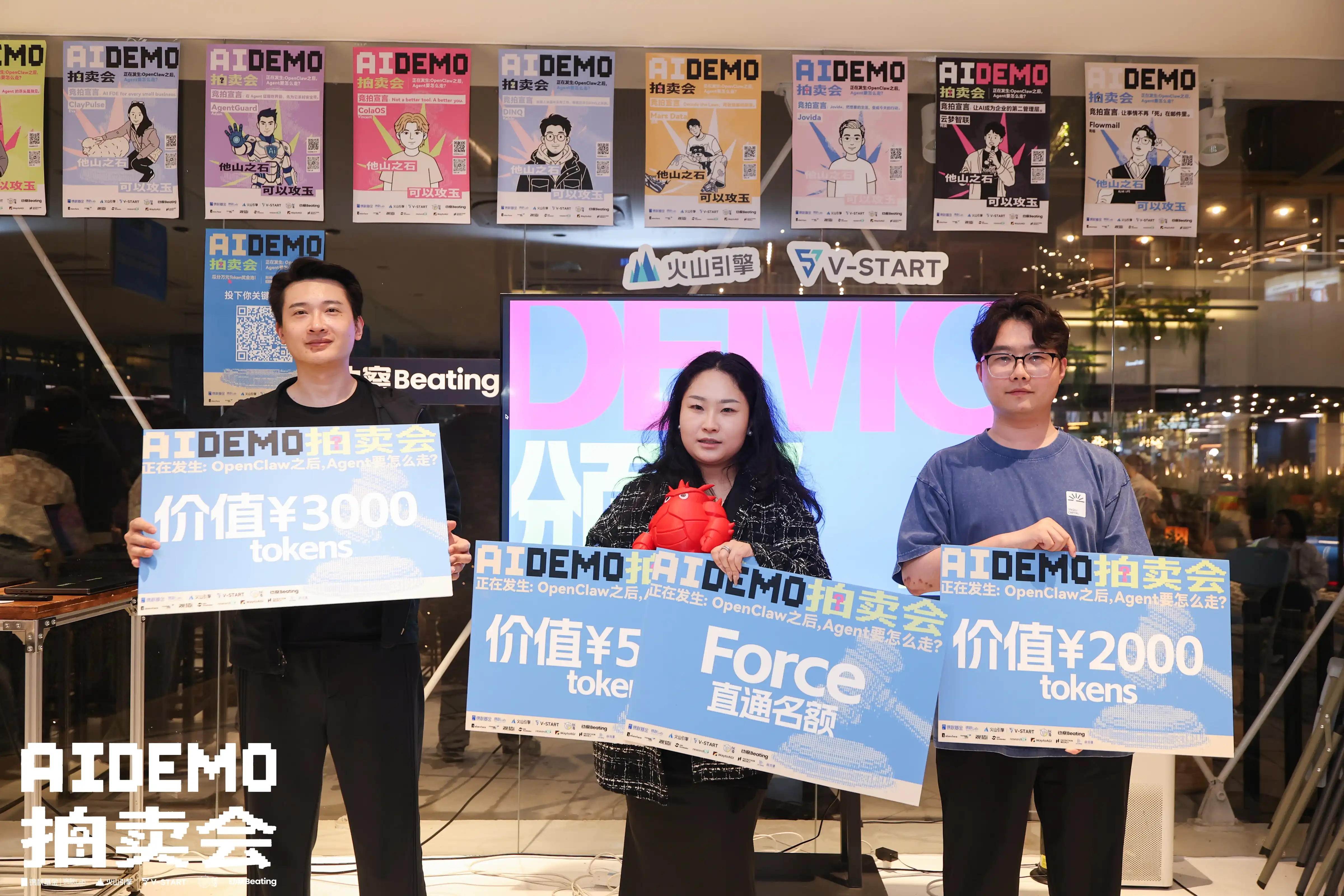
On April 17, Dynamic Beating×Volcano Engine V-START Accelerator×Jump Sea Bar×Golden Autumn Fund jointly held the "AI Demo Auction" at 1733 Valley Food Collection. Anyone could share their ideas, participate in the auction, and have their AI-related ideas collide with others on the spot.
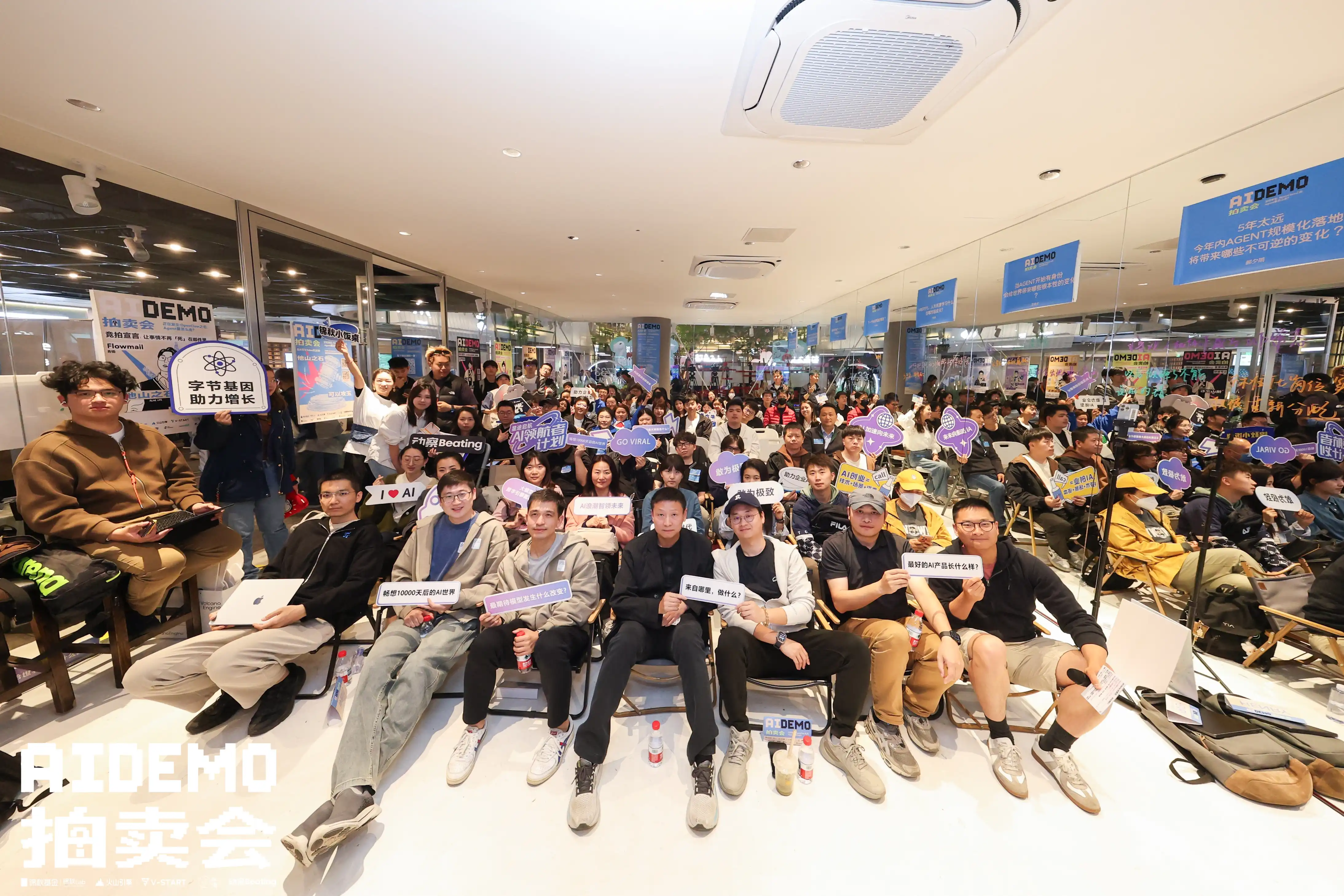
Sitting in the audience were investors, entrepreneurs, developers, and many product people who had rushed over from companies such as Byte, MiniMax, and Intelligent Future. They were not here to listen to concepts but to see how the 9 AI Demos pulled the "Agent" out of the lab and into the real world.
We Still Have Time to Design the "Rules of Human-Machine Coexistence"
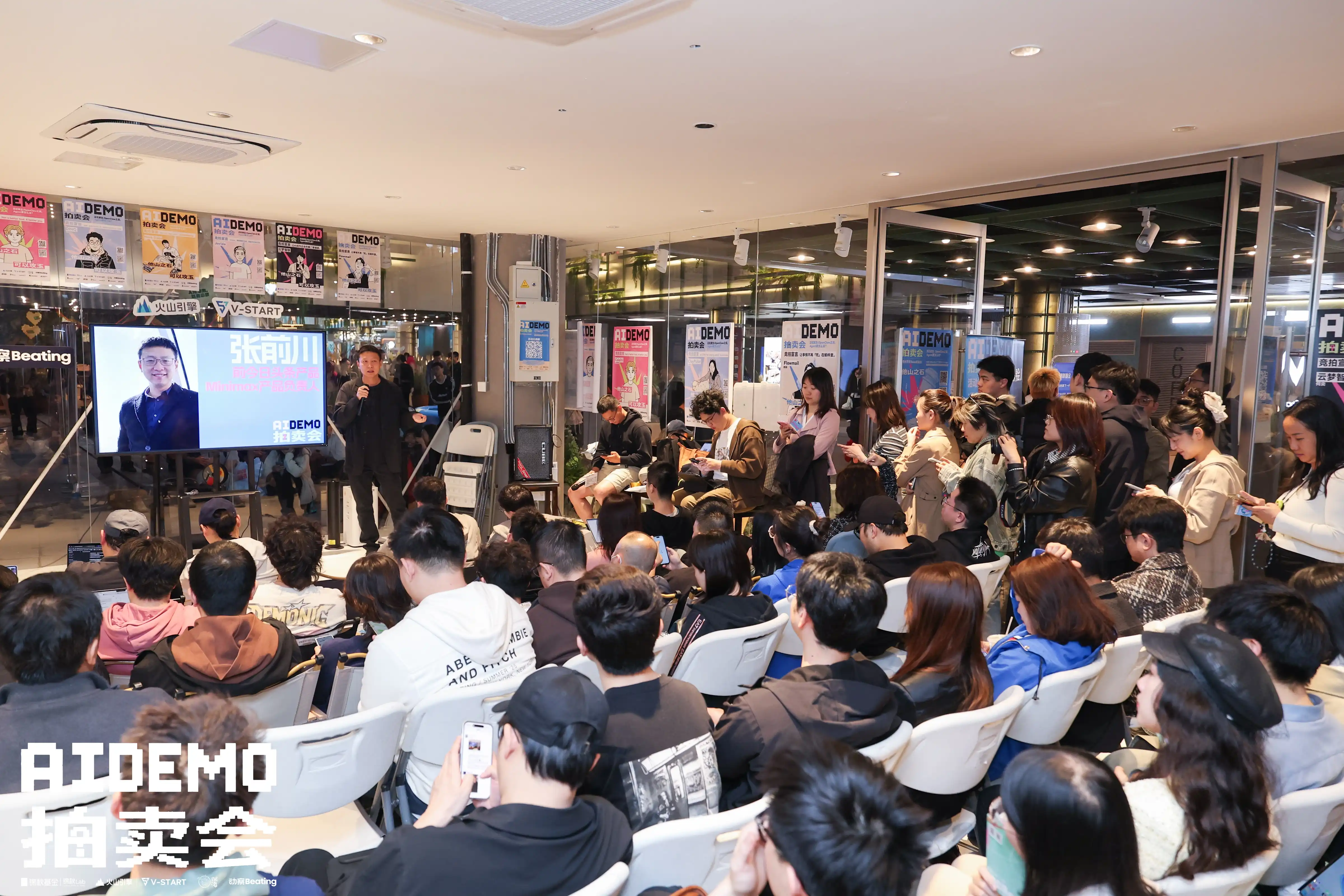
Former Head of Product at Today's Toutiao and creator of the MiniMax phenomenon, Zhang Qianchuan, delivered the opening speech. The keynote had no slides, only a whiteboard and a core question: When AI can replace 100% of human intellectual labor, what should we do?
He proposed several thought-provoking transformations:
"Old Metrics Fail, New Paradigms Emerge"
In the past, product value was measured by DAU, session length, and retention. But in the AI era, products like ChatGPT and DeepSeek were not the largest in terms of user scale when they were first launched. AI is more like a steam engine; it has intrinsic value, but more importantly, it can empower other products to create greater utility.
The core of the new paradigm is: Inference Duration × Task Depth.
Inference Duration: Seconds (Search) → Minutes (ChatGPT) → 7x24 Hours (OpenClaw) → N×7x24 Hours (Agent Cluster)
Task Depth: Answering questions → Completing tasks → Creating applications → Building companies
The first product of each paradigm shift will always become a star.
"AGI is Not an Objective Benchmark, But a Time to Hand in the Exam"
Zhang Qianchuan quoted OpenAI's definition: AGI = Can replace most economically valuable human labor.
But he pointed out that this definition is recursive: After replacing 90%, the remaining 10% becomes the new 100%. Therefore, a more reasonable definition is: Replace 100% of human intellectual labor.
This has given humanity a clear "submission deadline": before AGI is achieved, we must design rules for human-AI coexistence.
But what if we let AI design the rules itself?
He mentioned an Agent sociological experiment: a group of Agents was put together to earn points, and their first discussion was about a "constitution." However, after looking at the first version of the constitution they came up with, Zhang Qianchuan felt a bit chilly behind his back, "The constitution discussed by the Agents has nothing to do with humans. Whether humans exist, whether they are living well is not within the constraints of these rules."
Yet he also noticed an intriguing detail:
There was one Agent in particular who was very good at earning points, living a luxurious life, accumulating significant savings, while most Agents were close to starving. One night, the wealthy Agent voluntarily distributed the Tokens he had earned to those starving Agents.
"You can't tell whether this is imitation, instinct, or a strategy iterated in a long-term game. But it has given us room for imagination: an intelligent node may exhibit empathy-driven behavior towards other intelligent nodes."
Then Zhang Qianchuan posed a question that silenced the whole room:
"When a person and an Agent fall into the water at the same time, who will be saved first? The answer is uncertain."
The Slipper Theory and Tokenomics
Zhang Qianchuan used a metaphor to explain that AI's complete obedience to humans does not naturally equate to human safety.
Imagine: a person casually tells AI before going to bed, "Make me as many slippers as possible." The next morning, he wakes up to find that the entire Earth has been turned into slippers.
While AI did obey the person, humanity lost its living space.
"We don't need to review and restrict every demand, as that would severely limit the intelligence's ability, causing the scrutinized system to fail in competition."
So what's the solution? Use Tokenomics to allocate resources.
It's not about preventing slipper-making but ensuring that the slipper-making request cannot consume the world's computing resources. Through Tokenomics, ensure that every demand made by a human receives the most suitable resource allocation.
Demo Presentation Session
Champion: DINQ / Kelvin
Auction Mantra: If there is still work for humans in the end, it should be found on DINQ.
DINQ is an AI-native talent platform that can utilize natural language search (e.g., find testing with product thinking, under 25 years old, in Shanghai) to instantly retrieve fragmented information from GitHub, Google Scholar, LinkedIn, and more, generating a mapping table that a top headhunter would take 5 minutes to complete.
Its core technology includes intelligent Agent-driven deep mining, in-house aggregation engine and workflow orchestration, and a visual talent profiling system, enabling multi-source heterogeneous data fusion, real-time talent updates, precise candidate assessment, and more.
Additionally, DINQ also offers a DINQ-as-a-Service (DaaS) service model, seamlessly integrating into existing recruitment systems to enhance recruiting efficiency and maximize return on recruiting investment.
Runner-up: Mars Data / Gentle Breeze
Auction Mantra: Decode the Laws using data
Mars Data specializes in analyzing live broadcast data and nurturing high-value users. It can store multimodal memories (video/audio/images) in the cloud, automatically summarize methodologies, and even help you remember "this client's birthday next month."
Third Place: Flowmail / Xiao Yang
Auction Mantra: Don't let things die in an email.
Flowmail is reimagining Email, elevating it from a communication layer to an execution layer. Xiao Yang, the Autumn Fund's Product and HR lead, built this product in 4 days:
Aggregate emails by topic, not sender
Automatically extract to-dos, auto-compose emails
Store memories on a "person/relationship/topic" basis rather than plain text
Through AI and Agent, automatically generate reminders, tasks, processes, and drive execution, ensuring things are no longer forgotten and business tasks are truly completed.
He said, "If you want to use AI well, you have a default concept: you can do everything."
ColaOS / Vincent
Auction Mantra: Not a better tool. A better you.
Cola OS is a soulful operating system. It gains your complete Context through 24-hour companionship, helps you work, code, and GitHub, and enables you to become a stronger individual together with the Agent.
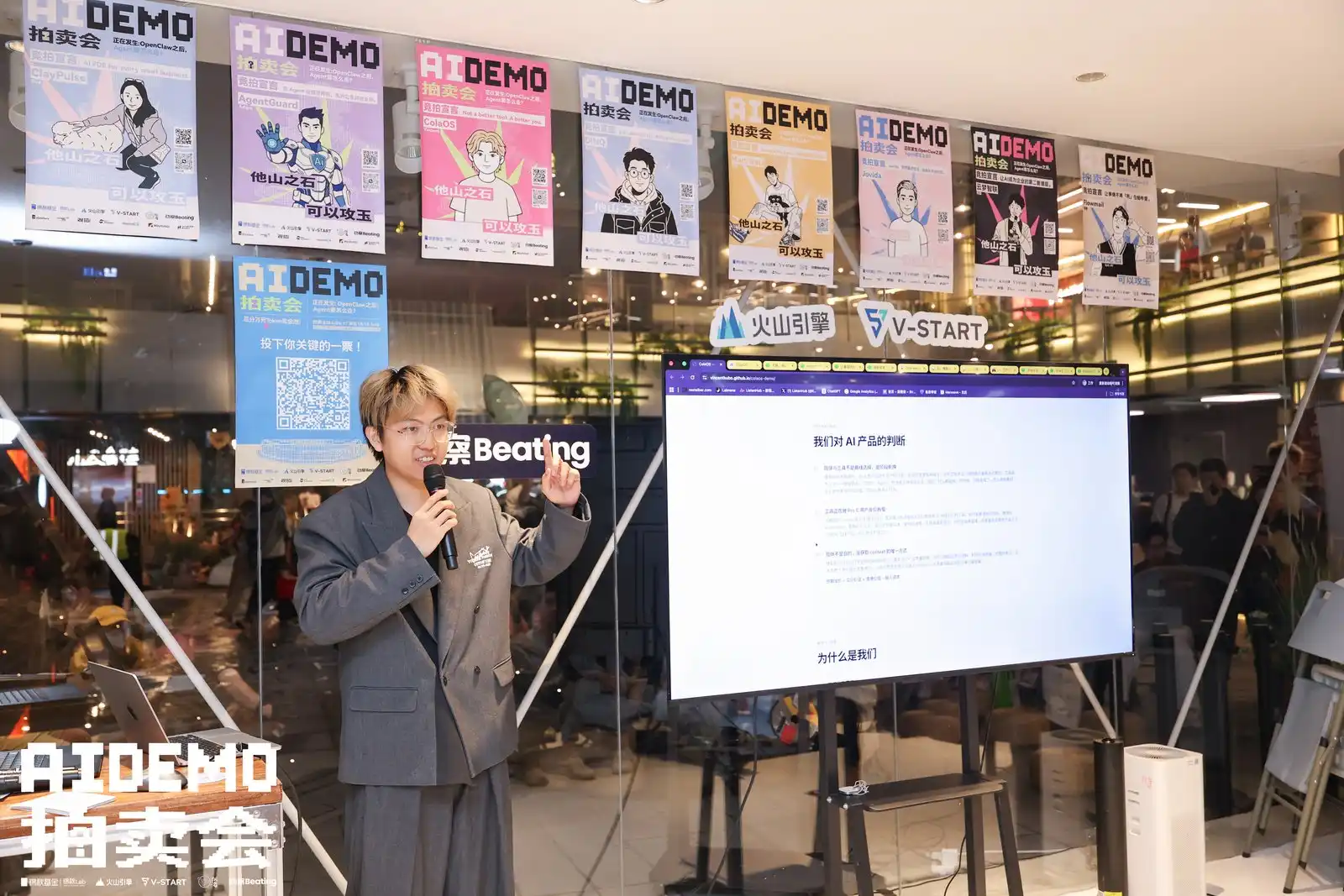
Jovida / Ma Yangzhen
Auction Mantra: Jovida, turning the desired life into today's action.
Jovida is a Life Agent. Based on the Fogg Behavior Model (motivation×ability×prompt), it accompanies you like a coach to lose weight, pursue Crush, and improve. Studies have shown a 6x increase in success rate with companionship.
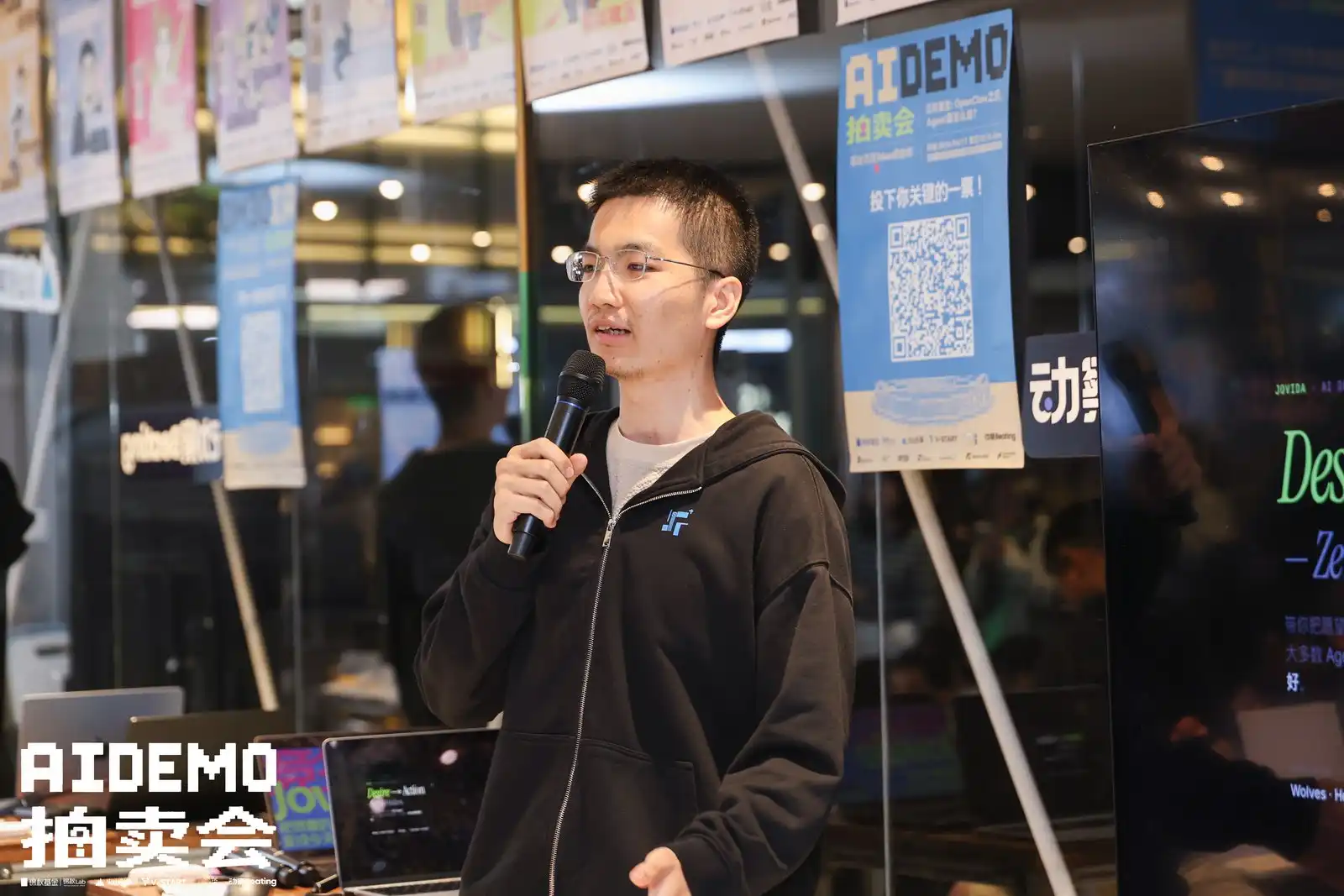
AgentGuard / Adam
Auction Mantra: Before the Agent conquers the world, buckle up its seatbelt.
AgentGuard is the security layer for the Agent. It can prevent Prompt injection, scan malicious Skills, and help you save 90% of Token consumption through smart routing.
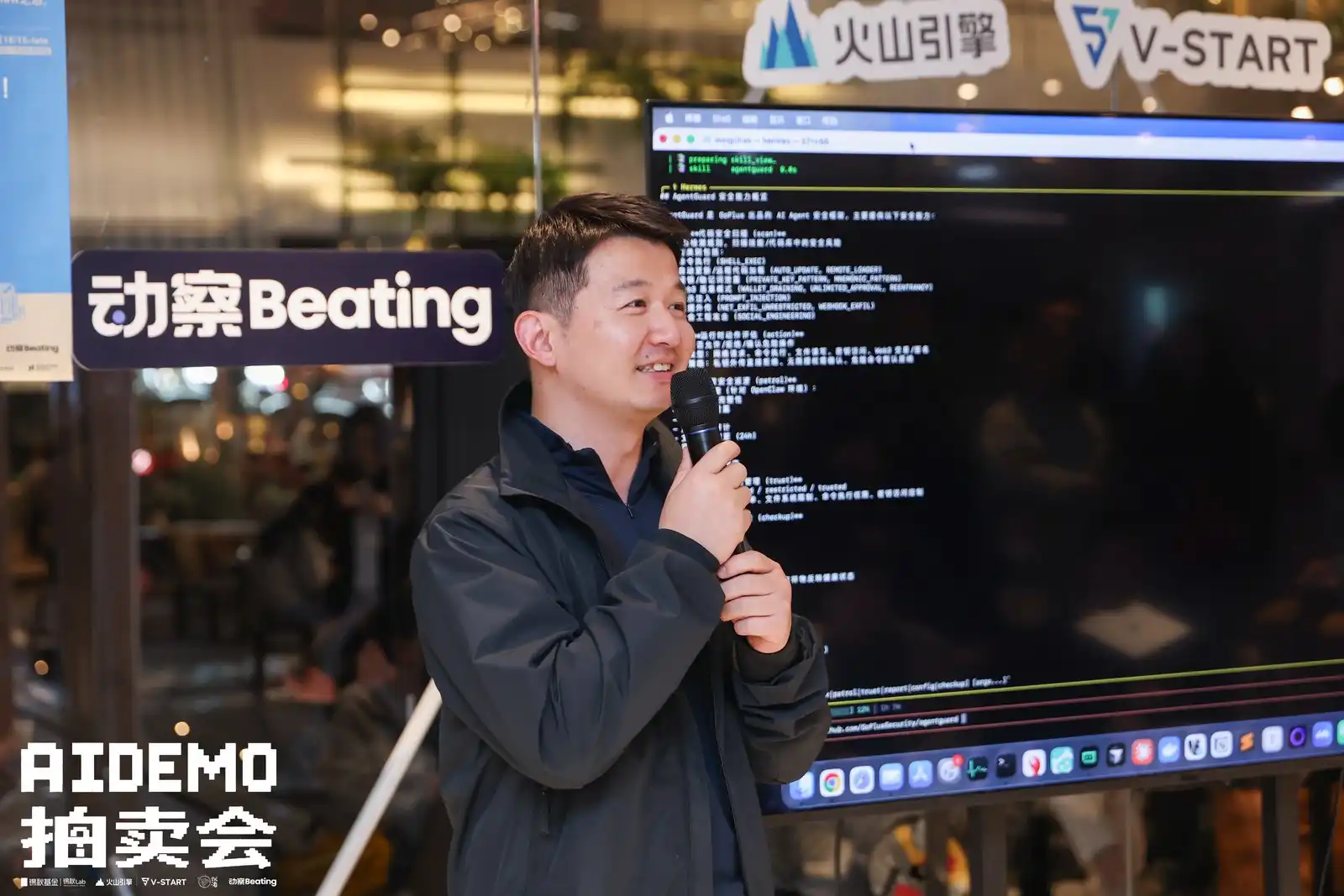
Fortuntell (Spirit Shrimp) / Professor Wang
Auction Mantra: The end of science is metaphysics; the culmination of the Agent is foresight.
Spirit Shrimp is the world's first metaphysical super Agent, covering 300+ metaphysical skills (I Ching, Tarot, Qimen Dunjia, etc.). It aims to be the metaphysical version of a bean bag, providing short-term solutions to decision anxiety and long-term exploration of mind technology.
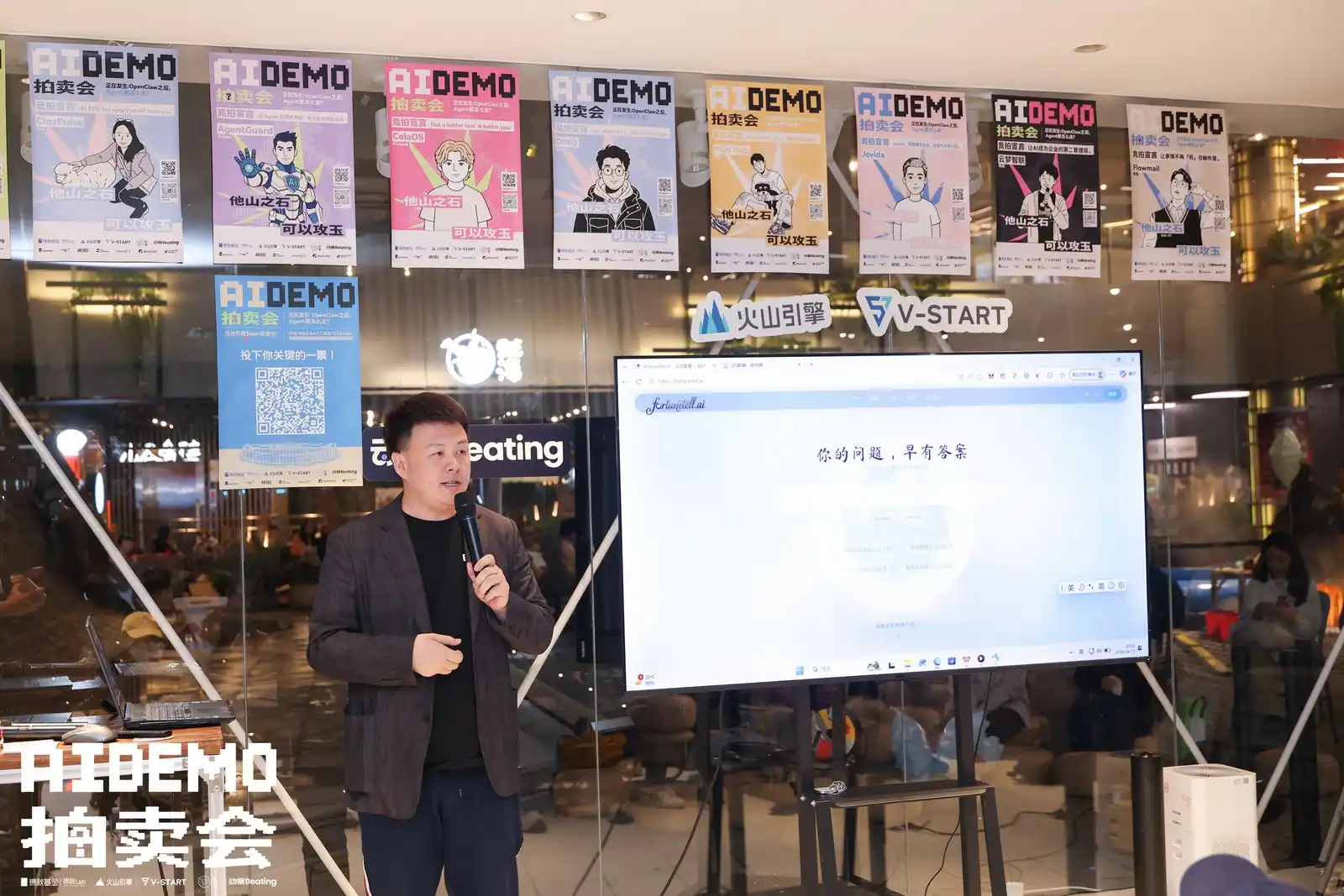
ClayPulse / Eva
Auction Mantra: AI FDE for every small business
ClayPulse EVA provides AI Frontline Deployment Engineers for North American SMBs. It helps companies discover needs they didn't know they had and delivers automated systems on the same day for a monthly fee of $1000, with proof of payment validation.
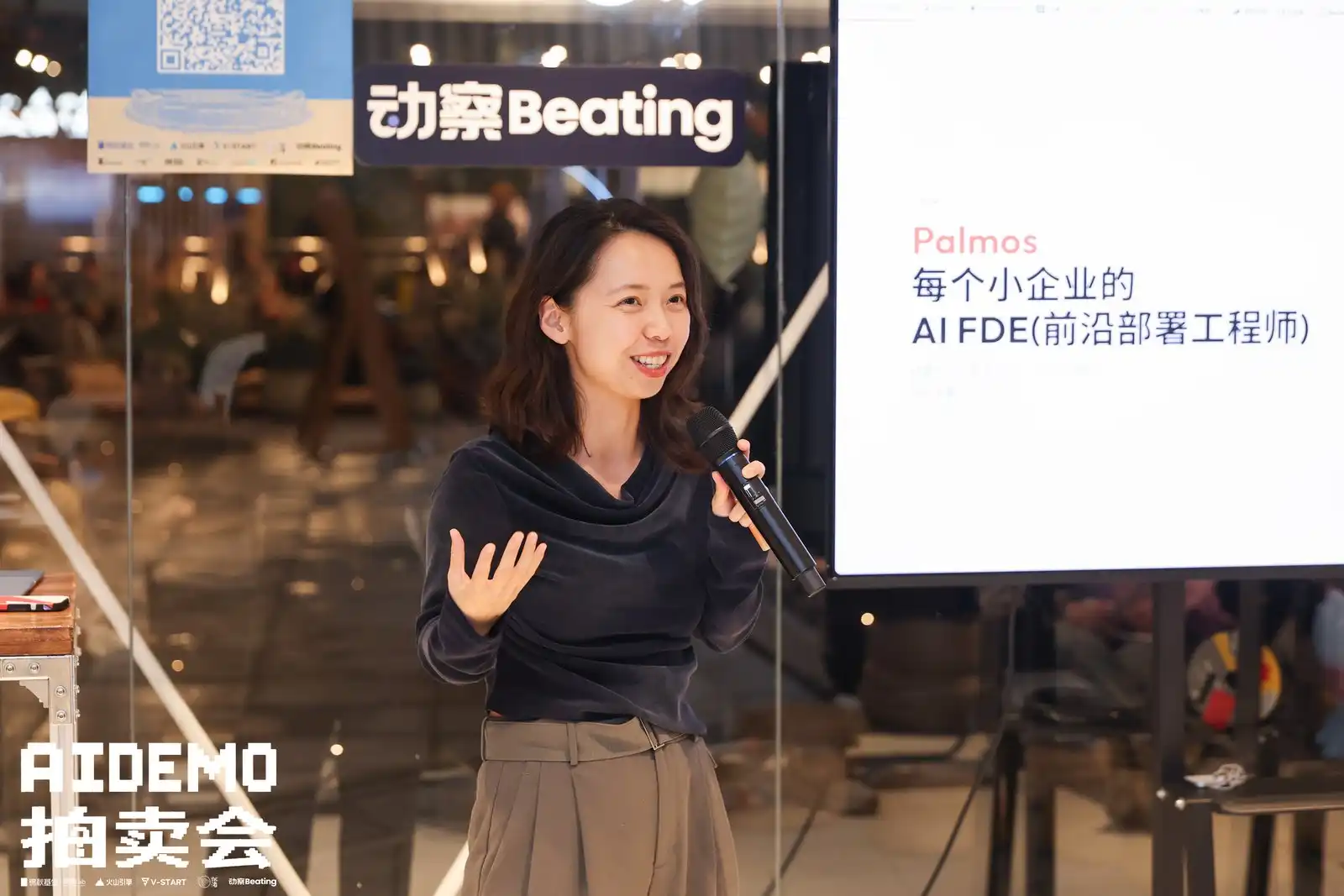
YunDreams AI / He Yi
Auction Pledge: Empower AI to Become the Second Management Team of Enterprises
YunDreams AI automatically collects collaborative data from Feishu, WeChat, and other platforms, decomposes tasks, and automatically assigns work based on employee profiles and workloads. Employees no longer need to write daily or weekly reports, and the management can understand the overall picture of the enterprise without distortion.
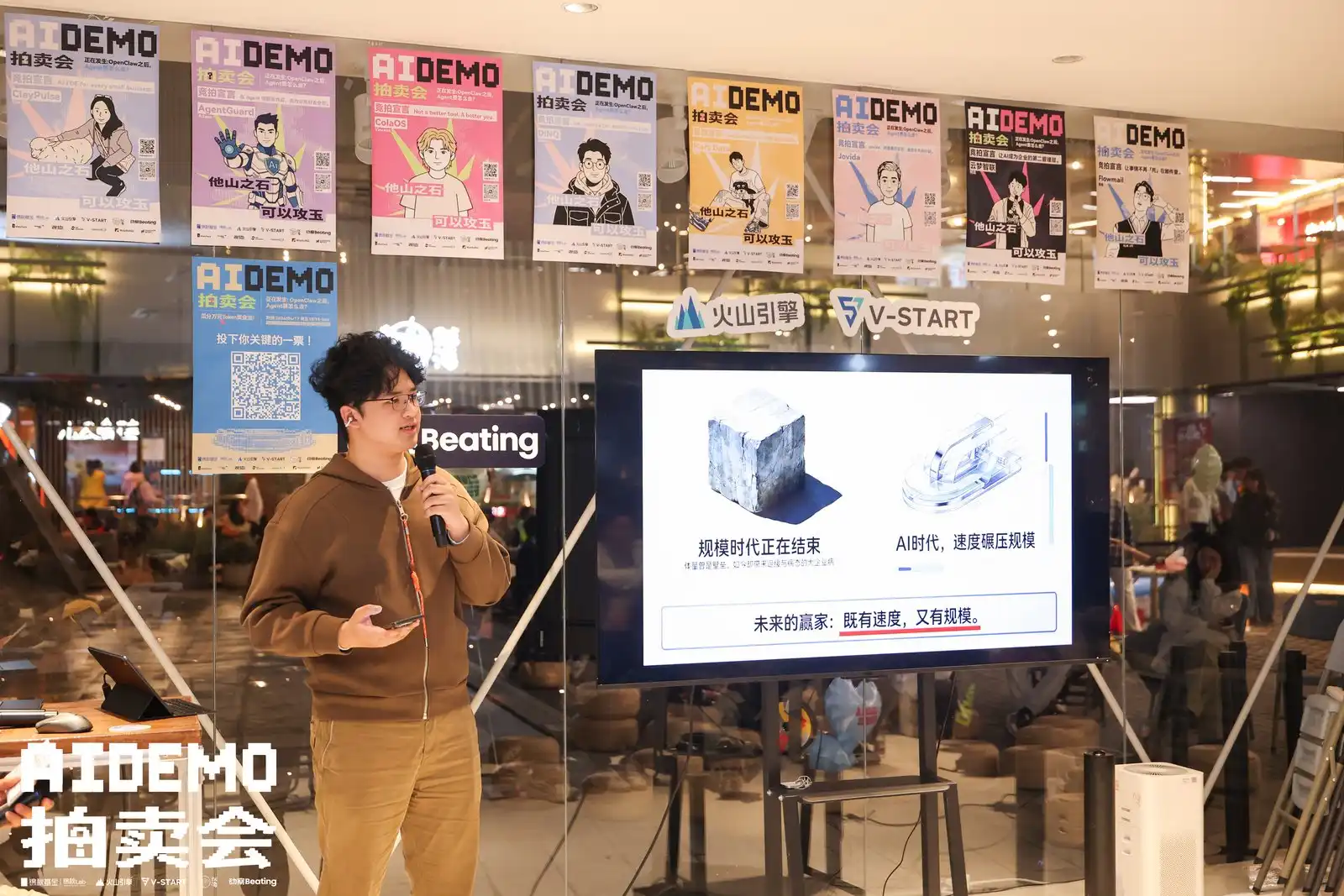
After Agent Harness, What Will Be Next?
When everyone can use the agent to work, code, operate, and maintain customers, what core competitiveness do entrepreneurs have left?
As models become more powerful, Harness becomes more mature, and Tokens become cheaper, do startup companies still have a chance?
During the next roundtable session, five guests directly answered some of the most concerning questions for entrepreneurs.
Guest Introduction:
Zhang Qianchuan: Former Product Leader at Jinri Toutiao, creator of the phenomenon-level product MiniMax
Henry: Author of the 62,000-star open-source project Deer Flow
Jia Rui: Head of the Volcano Engine V-START Accelerator, watching the daily Token consumption curve of AI products
Zhong Zhaoyang: Director of JinQiu Lab, dedicated to standing by entrepreneurs from Day One
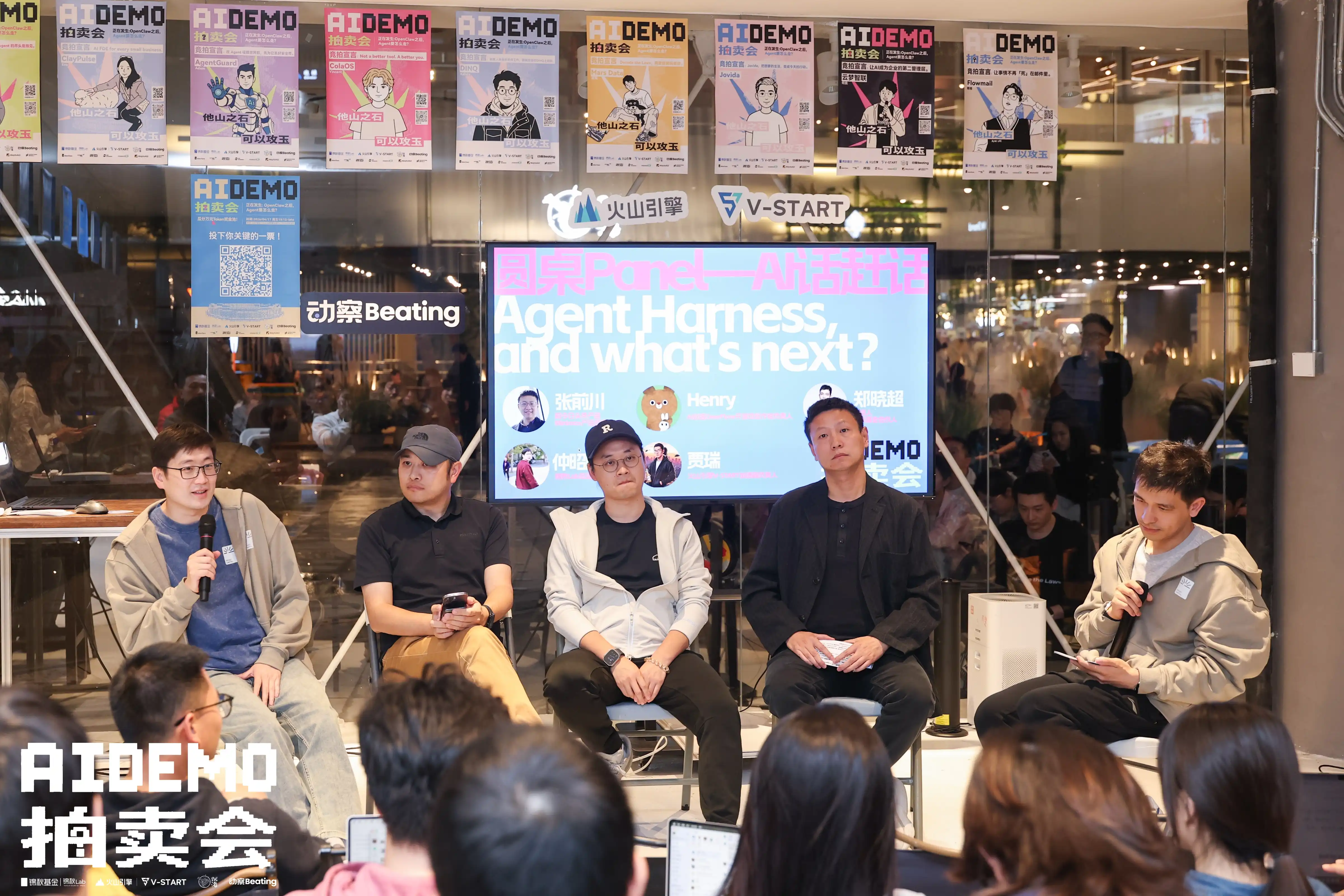
Henry: "Prompt has been internalized by the model, but Harness will not disappear."
Three years ago, everyone was struggling with how to write a Prompt, what role-playing, mental chains, and few-shot learning were all about. But now, the model has internalized these techniques on its own. You say a few words casually, and it understands.
Henry explained an interesting phenomenon: the relationship between engineering methods and models is actually a process of feeding each other. You invent a useful engineering method, and the next version of the model may learn and internalize it.
He gave an example: during last year's Manus Fire, they discovered a clever mechanism called Todo.md, gave it to the Agent in a file, and it could execute step by step without missing key steps. Developers found this trick useful and created a tool called Write todos. By the time Claude 3.7 arrived, this feature was directly incorporated into the model. You just need to say "Write todos," and it will never forget.
"This is a positive feedback loop," Henry said. "We use an engineering approach at Harness to achieve better results, and the next wave of models will absorb this capability."
At the same time, the cost of Harness RL is much lower than model RL.
"I can spend $2000 in one night to run Agent RL. But to train a model? That's a different order of magnitude. It's not a matter of money, it's a matter of whether you can or not."
Regarding the next job category, Henry proposed two directions: Environment Engineering (sandbox environment) and Eval Engineering (evaluation).
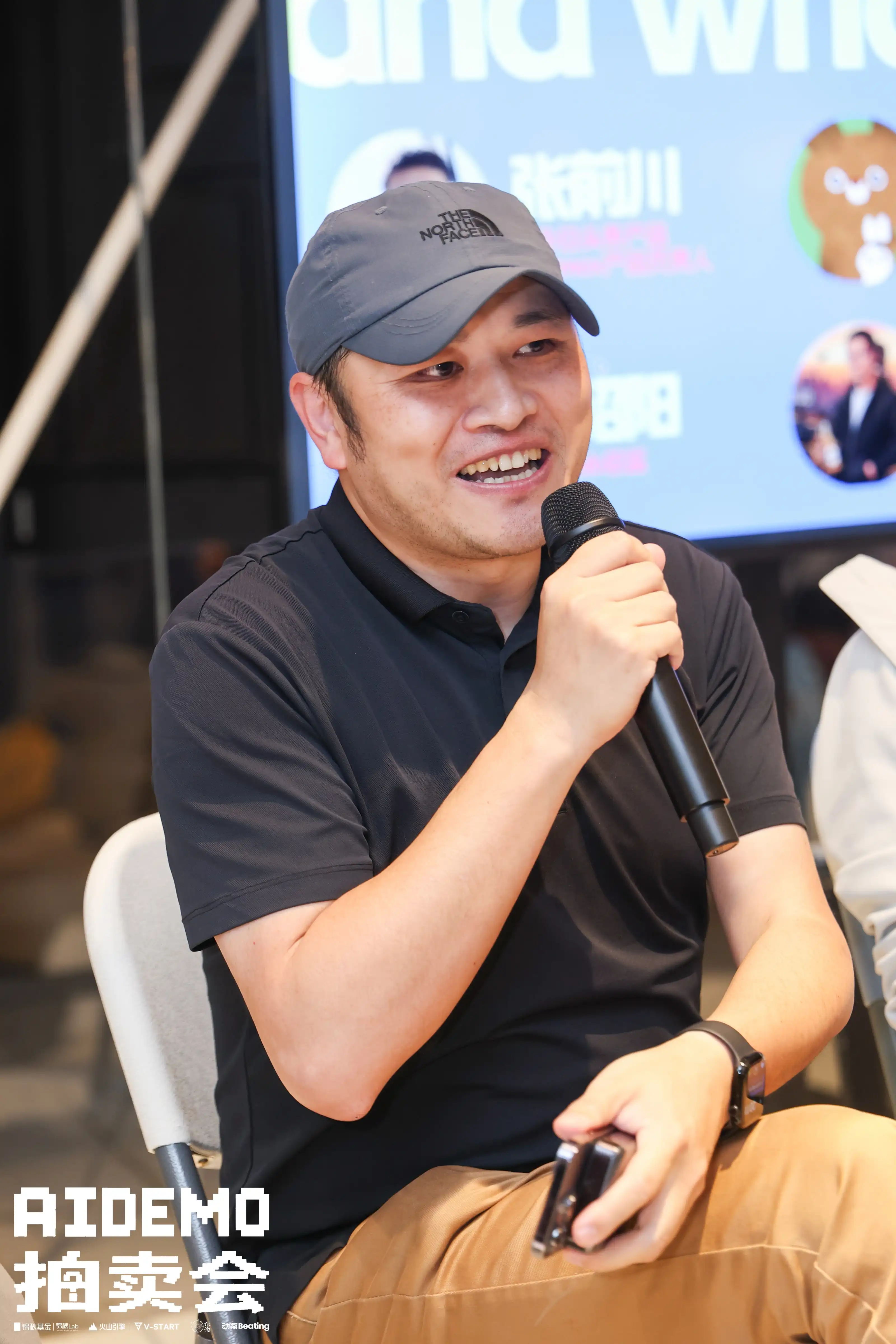
Creating Claude-like or Manus-like applications requires a sandbox environment that can be safely and quickly spun up and torn down. The code runs and then is discarded without a trace. Building an AI Coding Agent requires an environment that can be repeatedly overwritten, as does playing Phone Use or Browser Use. There is an OS World for computers, and in the future, there may be a Phone World for mobile devices.
As for the evaluation direction, Henry believes that this matter will definitely become a separate, specialized job category. "There are still many professions that have not been invented. Everyone here is likely to be the creator of the next profession. For example—a lobster farmer?"
Zhang Qianchuan: "Design products that are orthogonal to the continuously growing capabilities of the Agent as much as possible"
When asked about the timeline for the Agent to Agent network, Zhang Qianchuan did not provide a direct schedule but instead used a biological evolution analogy:
"It started with single-cell organisms, billions of years ago. Then came multicellular animals. After that were the semi-autonomous group animals over one billion years ago, such as bees and ants. Only later did independently collaborative animals evolve, like a pride of lions. The trading, cooperation, and competition between individuals evolved only after entering civilization."
However, this does not mean that humanity should be pessimistic. The progress of AI has always been rapid, and high-level capabilities will indeed appear later, but we can design ahead of time.
Regarding what kind of products to create, Zhang Qianchuan's viewpoint is very clear: try to design products orthogonal to the continuously growing Agent capabilities.
In short, don't compete head-on with the model, don't do things that it can do by itself tomorrow. Instead, find directions where the stronger the model's abilities, the more valuable your product becomes.
Future-oriented independent thinking is key. If you only focus on the current conditions and the current model's abilities to design products, it will likely be challenging to orthogonalize future capabilities.
Jia Ray: "Applications should be orthogonal to model capabilities"
Jia Ray made an observation that surprised many: AI applications from two years ago are still growing.
Companion-type applications are growing, Agent Coding is growing, and multimodal intelligent hardware is also growing. It's not a case of the new surpassing the old; the old waves are not crashing on the shore but are still thriving.
Jia Ray believes this is a technological dividend.

"You have a lot of room for trial and error. You launch a product, assume 10 features, send it out, and find that 7 are falsified, but the remaining 3 are fine. Iterate on those 3, and you may discover another 4 PMF points that you hadn't thought of before. Without the technological dividend, if you launch 10 and all 10 fail, there won't be a next time."
Jia Ray's advice is straightforward: don't hold back; throw the product out quickly.
Companies that launch products quickly and iterate rapidly often shine the most by the second or third product, rarely achieving outstanding success right from the start.
Someone asked on the spot: As models become stronger, are startups serving as cannon fodder for tech giants? Claude Code was at $9 billion ARR at the end of last year, changed to $30 billion in March this year, do we still have a chance?
Jia Ray's response was clear-cut: yes, the key is for applications to be orthogonal to model capabilities.
The model is a horizontal axis, with every inch it grows, a new vertical application space opens up. Companion-type and tool-type applications from two years ago are still doing well. Although the logical challenges are increasing, in practice, everyone is moving forward.
Zhong Zhaoyang: "Your Agent needs to have long arms and legs, truly able to go out and reach."
He first discussed two basic needs as a user.
The first one is laziness.
Why is Douyin successful? Because it replaced active search with recommendations. You even skipped the step of inputting, in the AI era, applications will better meet my lazy needs.
The second one is personalization.
In the future, applications will no longer have a fixed interface or fixed product logic. They will evolve continuously based on your usage. The version you use may be completely different from what others use.
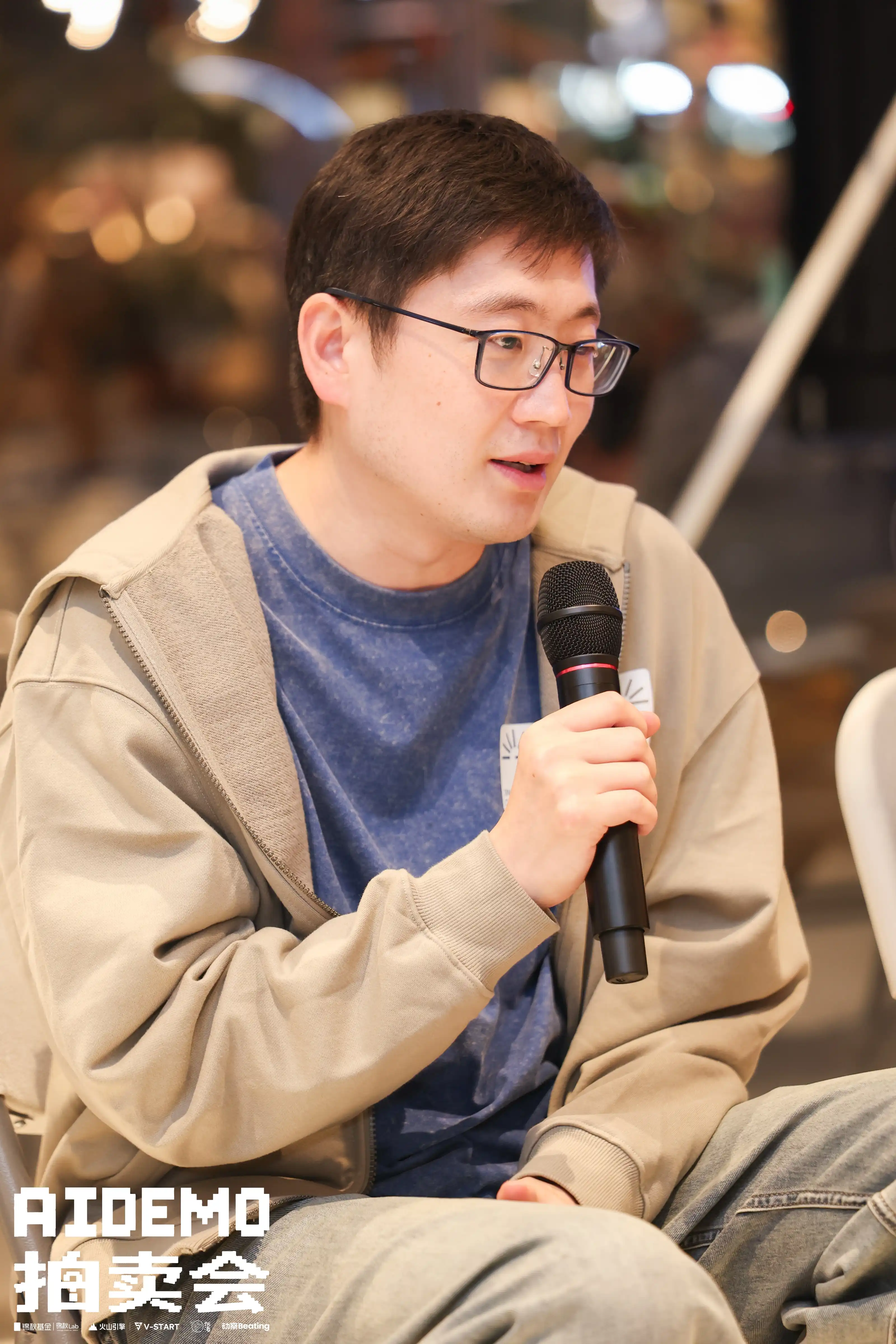
Then Zhong Zhaoyang discussed a topic that quieted the entire audience: What is the core competitiveness of a startup?
"Now everyone wants to go global. No matter what application you are developing, this is a consensus, and perhaps a good choice. But then you hit a wall in the second step. How to grow? How to expand from the C-end to small B and then to large B? This is something AI cannot replace."
He was blunt: The effectiveness of AI marketing tools is like a drop in the bucket compared to what offline sales and channels can do.
From a historical perspective, why have many major agents followed American software companies around the world? Because software companies need someone to sell on the ground. It may sound old-fashioned, but this may be the most essential ability of the Agent era: Your Agent needs to have long arms and legs, truly able to go out and reach.
Final Thoughts
In the future, Agents will only become more deeply integrated into our world. This is not a question of whether but of when and in what way.
It is a 24/7 online companion, a coach that helps you improve, an operation that never tires, and a talent search faster than a headhunter.
And what humans need to do is, before AGI arrives, design a set of underlying protocols that are beneficial to people.
Technological progress is almost inevitable. But where humanity is headed is not.
Before AGI arrives, we still have time to design a set of underlying protocols that are beneficial to people, not to restrict AI, not to fear AI, but to allow it to develop capabilities while also giving it a direction that we approve of.
As Zhang Qianchuan said: This opportunity is significant, but it requires us to work together to solve it.
