Futures, Options, Contracts for Difference – these things sound quite professional.
In the past, many people used to think that derivatives were the most sophisticated play in the traditional financial markets, but these plays are becoming more and more common in the crypto industry.
Aside from the discussion around the underlying U.S. stocks, many hot topics have recently been buzzing in the crypto community: "I recently made a killing in arbitrage on Hyperliquid, I don't even feel like doing research anymore," "All I see in my eyes is funding."
A few years ago, these statements would have been about Bitcoin and Ethereum arbitrage opportunities, but as U.S. stocks have gone on-chain, they are now focused on stocks such as Samsung, NVIDIA, and GameStop.
Although trading U.S. stocks has become almost brainless now, with popular sectors like chipmakers, energy, and optics, blindly throwing money in would likely lead to account growth. There are always people around who have made multiples by betting on one or two stocks. But for these savvy crypto professionals, the way they make money has absolutely nothing to do with whether "stocks go up or down."
A group of people from the crypto industry are quietly engaging in a new money-making business on U.S. stocks using strategies from the crypto market.
An Everlasting Contract
This logic starts with something called a perpetual contract. A perpetual contract is the most traded form of "alternative futures" in the crypto market. It doesn't have an expiry date for settlement, no need for manual rollovers, designed specifically for betting on price movements, leveraging positions (turning five dollars into fifty), available for trading 24/7, and no one stops you if you suddenly want to place an order at 3 a.m.
However, the perpetual contract had a problem since inception: with a contract that never expires, how can its price stay pegged to the actual stock price without deviation?
The solution that the crypto industry introduced for perpetual contracts is a mechanism called the funding rate.
The funding rate is essentially a headcount tax – whoever has more people pays.
For example, if you are bullish on NVIDIA and don't want to wait for the U.S. stock market to open, you directly open a five times leveraged long position on the contract.
But the issue is, there are too many people wanting to do the same thing – the long side is crowded, while the short side has only a few. To balance the positions, the system mandates: the side with fewer participants pays the side with more. So, as a long position holder, every few hours, you automatically pay a sum to those taking the short side. The more people join you in going long, the more you pay, making it feel like you're actually paying a fine.
So how expensive can this fine be? Looking at some actual numbers will make it clear.
Binance is the world's largest cryptocurrency exchange by trading volume. The funding rate for Samsung Electronics perpetual contracts on the platform is 364% on an annualized basis, meaning that if you long Samsung with full leverage for a whole year, the funding fee alone would consume more than three times your initial capital. Nokia has an annualized rate of 403%, and BBX 591%.
Another noteworthy platform is Hyperliquid, currently the largest on-chain decentralized perpetual contract trading platform. It does not require registration, KYC, and anyone can directly connect their wallet to trade. It is a product in the crypto world that has made perpetual contracts closest to the experience of a centralized exchange.
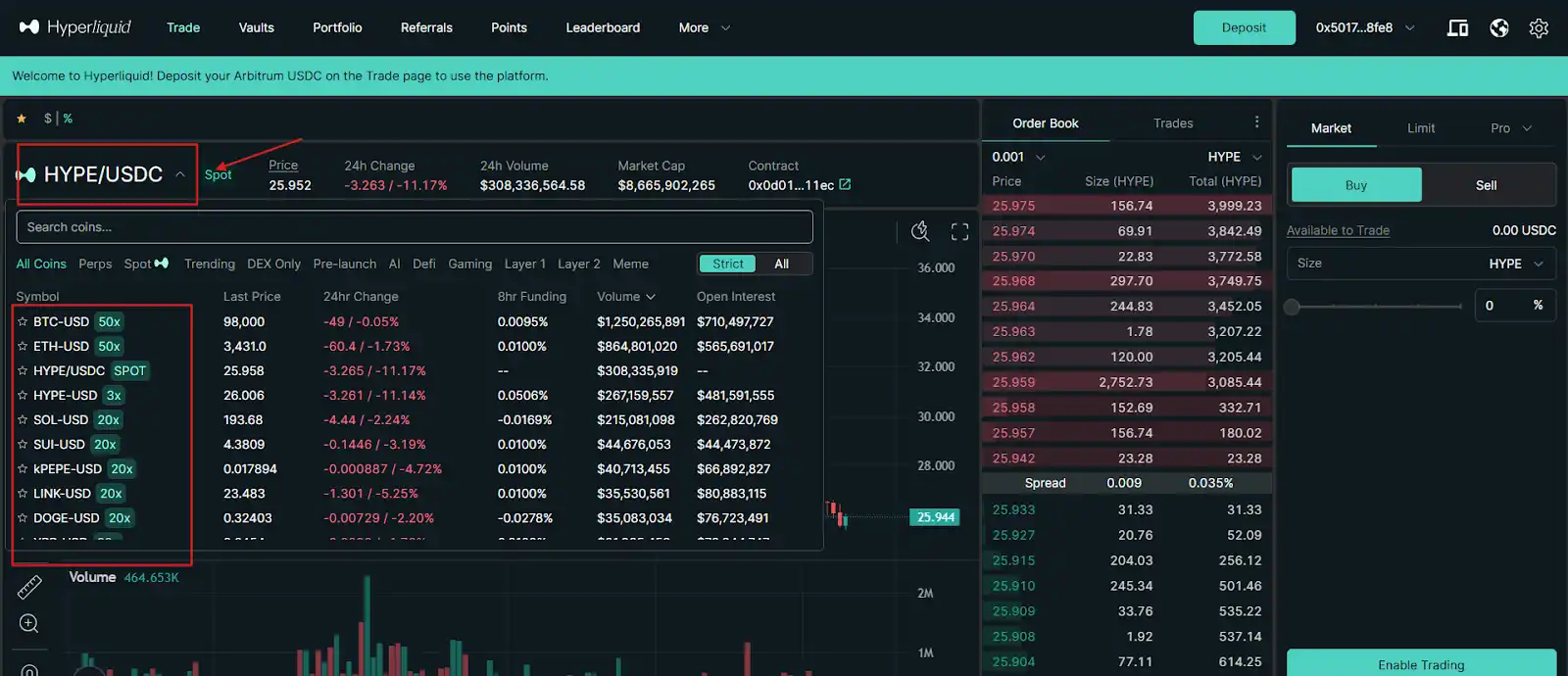
Dell has a rate of 281%, GameStop GME 227%, and even Zoom at 287%. Even a company that provides video conferencing services has so many people eager to leverage and bet on its rise.
An interesting aspect of this fee rate is that it is a clear signal of the intensity of both long and short positions.
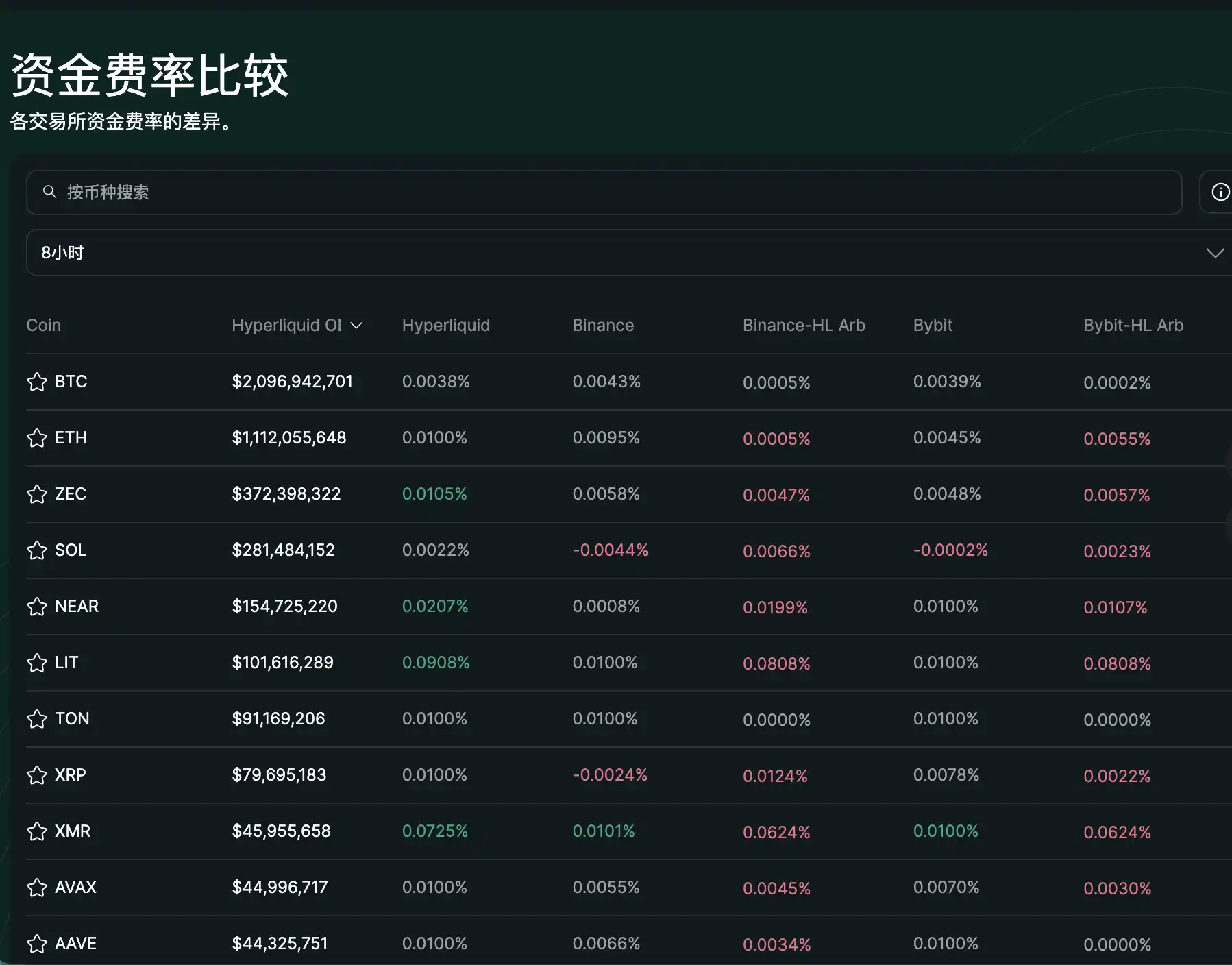
Now, the market is filled with people whose heads are overheated. The stock that has been most aggressively chased recently, where the most long positions have been crowded, will have the highest rate. Conversely, the opposite is true. For example, one of the largest pharmaceutical companies in the U.S., Eli Lilly, has a negative rate. Both on Binance and Hyperliquid, the rate is negative. Longing Eli Lilly on Binance not only does not incur a fee, but also earns a reverse payout of 65% on an annualized basis; on Hyperliquid, it can earn 103%.
This indicates that there are too many short positions on Eli Lilly, and the system is in turn spending money to hire long positions to maintain balance. The same stock has different rates on different trading platforms. For instance, Apple has a 0 rate on Binance and an annualized rate of -14% on Hyperliquid. This rate difference itself is an arbitrage opportunity. These numbers do not lie; the more aggressive the buying pressure, the more satisfying it is for the opposing side.
New Business Opportunities on the Blockchain Stock Market
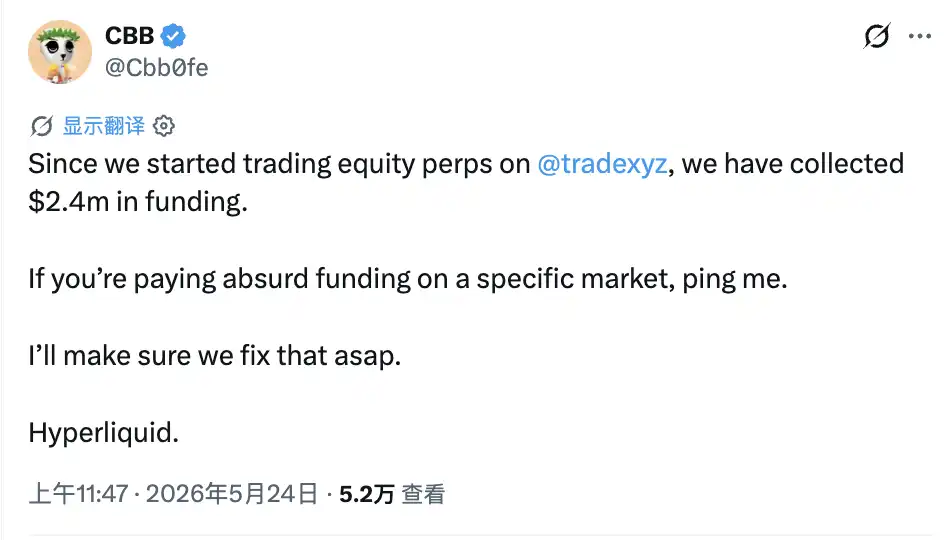
Cbb (Twitter: @Cbb0fe) is a well-known whale in the crypto community, whose initial fortune was made in the crypto market. Over the years, he has been conducting token perpetual contract arbitrage. He once publicly shared how he earned $5 million by running an arbitrage bot on the Hyperliquid chain.
He was also among the first to transplant this strategy to the US stock market.
Cbb's operation logic is simple: he buys real stocks in the traditional market while taking an equivalent amount of short positions in the futures market. When the stock price rises, the profit from the spot market compensates for the futures market losses; when the stock price falls, the profit from the futures market compensates for the spot market losses.
With this hedging strategy, the price movement is irrelevant to him. The only thing he cares about is the funding fee in between. He mentioned that recently, solely by collecting funding fees, he has already earned $2.4 million. While many people are frenziedly trading US stocks for wealth, he is the one selling shovels to these gold miners. Now that US stock perpetual contracts have emerged, he has applied this well-practiced strategy from the crypto world directly to assets such as Apple and Samsung.
Some may wonder why this kind of opportunity exists mainly in the crypto world and not in traditional finance. In fact, there is a similar concept in traditional markets known as stock borrowing fees and overnight interest rates. Whether you finance a long position or borrow stocks for a short position, there is a cost involved. However, this cost goes to the brokerage firm, and the entire mechanism is opaque. You cannot see the overall market's long/short ratio, let alone act as a counterparty to receive this fee. Brokerage firms control this business and ordinary individuals only have to pay without the opportunity to receive payment. Perpetual contracts have brought this mechanism to light, allowing anyone to see real-time funding rates and enabling anyone to be the fee collector. This is an innovation from the crypto world that has now been extended to US stocks.
Individuals like Cbb are not the only ones involved; institutions have also set their sights on this lucrative opportunity.
Ethena is one of the largest stablecoin projects in the Ethereum ecosystem and is considering moving a portion of its reserve to engage in hedging. They have calculated that this move could generate an additional $40 to $80 million in revenue annually.
Through delta-neutral hedging (spot long + perpetual short), Ethena captures funding rates, becoming a core mechanism for its USDe yield. This strategy has been integrated into its protocol as a quantifiable "rent-seeking" income rather than mere speculation.
For institutions, this is not gambling but rather a stable cash flow that can be included in asset allocation, akin to rent-seeking, except the tenants are those leverage-hungry stock traders.
So the question is: Will astronomical annualized return rate figures like Samsung's 364% and BBX's 591% continue to exist, or will they be leveled off sooner or later?
Let's take Bitcoin as a reference. In the early years, the perpetual contract funding rate for Bitcoin was around 18% annually. Later, when spot ETFs were launched and Wall Street's arbitrage funds entered, the rate was quickly pushed down to 9% within a few months, cutting it in half.
It is highly likely that the perpetual contracts for US stocks will follow a similar path. The current high rate is because there are not many arbitrageurs entering yet, and the order book is thin.
However, now that Binance has listed trading for over 7,000 individual stocks, the NYSE is pushing for 24/7 trading, and the US futures regulator CFTC has started hinting at providing a compliance path for perpetual contracts, both sides are converging. Currently, the CFTC has opened a compliance path for Bitcoin perpetual contracts, platforms like Coinbase have launched simulated perpetual products, and Hyperliquid's stock perpetual open interest (OI) continues to grow. With arbitrage funds flowing in, a rate compression path similar to Bitcoin's early days, going from 18% to 9%, is likely to repeat itself in US stock perpetual contracts.
Therefore, at this stage, it is essentially an early-mover advantage window, where those who enter first can enjoy the juiciest piece of the pie.

Welcome to join the official BlockBeats community:
Telegram Subscription Group: https://t.me/theblockbeats
Telegram Discussion Group: https://t.me/BlockBeats_App
Official Twitter Account: https://twitter.com/BlockBeatsAsia
