There is a photo of a sunset stored on the phone. Zoomed in to the limit, it is just several million tiny dots that only emit red, green, and blue light.
The human eye has only three types of cone cells for distinguishing color. In 1931, the International Commission on Illumination (CIE) met in Cambridge and wrote physiological perception into a set of coordinates; from then on, color could be encoded, transmitted, and replicated exactly. Even earlier, in December 1877, Edison recited the nursery rhyme "Mary Had a Little Lamb" into the phonograph and turned the crank, becoming the first person in human history to hear his own voice played back.

More than a century later, humans have learned to preserve many things. After a person leaves, his appearance remains in the photo album, and his voice remains in the recordings.
But the taste of a dish that person made can never be preserved.
Replicating it again and again from memory, how much salt to add, how much heat to use, there always seems to be something slightly off. As for exactly what is off, no one can describe it clearly.
The nose and tongue are the two organs on the human body that are hardest to fool; humans have three to four hundred normally functioning olfactory receptors, and any faint odor will trigger multiple responses at the same time, with a combinatorial dimension so high it is close to impossible to exhaust; the taste on the tip of the tongue is also inextricably entangled with volatile odors, physical touch, temperature, and even the emotion of the moment when it is eaten.
Human understanding of this system has been astonishingly slow. It was not until 2004 that Richard Axel and Linda Buck won the Nobel Prize for discovering odor receptors and the organizational mechanism of the olfactory system, a full 73 years after the CIE mapped color into coordinates. Another 19 years later, in September 2023, Science published a "principal odor map" drawn by machine learning, driven by the Monell Chemical Senses Center and Osmo, a startup spun out of Google Research.
In this wave of AI, AI first learned to see, learned to hear, learned to write and generate images, and can even imitate anyone's timbre convincingly enough to pass as real.
But at the door of taste and smell, the corresponding machine learning technology has only just begun to step onto the stairs.
For the massive consumer goods industry, this sensory blank space has always come with an extremely high price. In the food and beverage sector, every new product moving from R&D formula to real shelves is essentially a bet on whether real consumers will actually buy it, and for what subtle, unspeakable sensory experience they will pay.
What Aiweijue is doing is building a truly usable computational model and digital twin for human taste and smell in this highly non-standardized world that has never been fully digitized.
The Spaceship Without Blueprints
In April 1970, Apollo 13 was on its way to the moon when an oxygen tank exploded.
Three astronauts were stranded in deep space more than 300,000 kilometers from Earth. What saved them was another spacecraft on the ground—more precisely, a full-scale simulator.
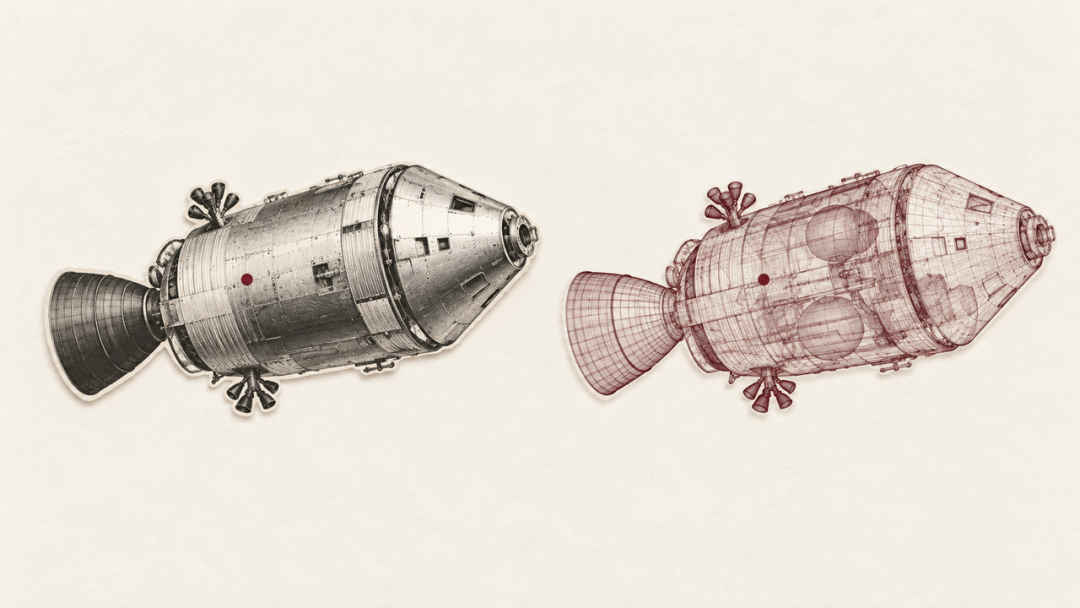
Ken Mattingly, who was originally scheduled to serve as command module pilot, was temporarily replaced 72 hours before launch due to suspected measles infection. After the accident, Mattingly climbed into the ground simulator and, in total darkness, calculated over and over how to use the spacecraft's remaining tiny bit of power to reawaken the dormant command module.
All three men ultimately returned to Earth alive.
This extreme rescue in the history of human spaceflight was later widely recognized as the earliest prototype of the Digital Twin concept—although the term would not be formally written into NASA's technology roadmap until 40 years later, in 2010.
The reason the ground team could run through every dead-end scenario for the spacecraft in the sky beforehand was that every copper wire, every relay, and every physical valve on the spacecraft had absolutely precise engineering blueprints behind it.
Later, we also gained simulation models endowed with twins, such as "flight simulators" in aerospace and "wind tunnel simulators" in the automotive industry. Yet a "food and beverage market simulator"—several times larger than the aviation and automotive industries and closely tied to what people eat and drink every day—has not yet systematically emerged.
Dongcha Beating: First, please introduce yourself and what Aiweijue is doing.
Erik: My name is Erik, and I am the founder of Aiweijue. Simply put, what Aiweijue mainly does is digitize human taste and smell, as well as broader sensory experiences (ie. flavor-triggered emotions, food behavior patterns, food memories, etc.), and build a unique sensory Digital Twin for each person.
The traditional approach is to conduct a series of market research on a product and then launch it into the real consumer market, betting tens of millions of yuan in project costs on the possibility of a "hit product." What we do is, during the new product R&D stage, first use this digital twin to represent the target customer group and help food and beverage brands validate market acceptance in a virtual environment.
Dongcha Beating: People's tastes have always been non-standard, and even individuals find it hard to describe them objectively. To replicate a person's senses, what data ultimately needs to be collected at the foundational level?
Erik: The core is three dimensions.
The first layer is physiological sensory perception, including basic taste, olfactory pathways, and the physical and chemical tactile sensations in the mouth.
The second layer is food behavior science, which leans more toward psychological mechanisms—for example, when facing new flavors, is a person more inclined toward novelty-seeking or conservatism? When making consumption decisions, are they more easily swayed by their social circle, or are they extremely individual-centered? What are the triggering patterns of different flavor and functional events at the individual level?
The third layer is memory. Food and beverages are deeply bound to a person's growth trajectory and dietary cultural background.
By integrating these three layers of data, what we are trying to restore is the high-dimensional subconscious sensory experience that consumers find difficult to express precisely in words. It is equivalent to letting this digital twin tell the brand on the consumer's behalf where this consumer's true mindset actually resides.
Dongcha Beating: Your clients are all major consumer brands. What they ultimately pay for is—is it a consulting report, or a professional dataset?
Erik: We build tools on top of the underlying dataset, and what we deliver is bottom-up real-time research as well as "what-if" simulation results for different product proposals.
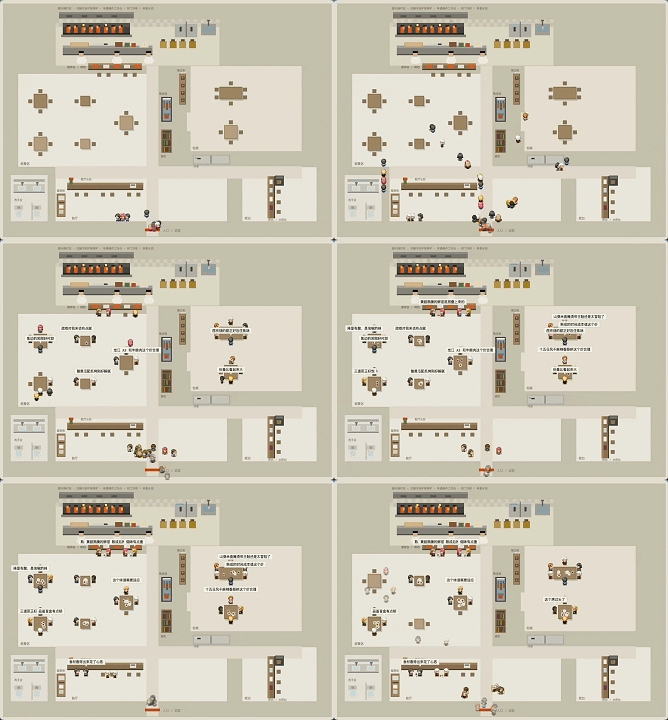
For example, when an R&D team wants to create a new product, in the early stage they often have only a very vague idea. The specific flavor, mouthfeel, texture direction, and even packaging and naming have not yet taken shape. At this point, looking at flavor trend data and competitor data can only identify the general direction but cannot be translated into a specific product; or directly recruiting several batches of people for focus groups often yields conclusions that are opinion-based, flat, and overly focused on analysis-triggered "intellectualized defense," which leads to data drift in collection.
What we deliver is a bottom-up simulation report.
Traditional market research is mostly top-down statistical logic, extrapolating from historical big data, and this kind of deduction naturally has boundaries when facing major innovative categories. True prediction needs to be bottom-up: first get the digital twin mechanism of each individual consumer running, then gather hundreds or thousands of digital twins together to fully simulate the chain reactions at both the group and individual levels when a product is launched into the real market.
What is ultimately delivered to the client comes in two forms.
The first is twin dialogue: clients can chat directly with this group of digital twins. A product idea travels from the shelf to the consumer's mouth, and then from the mouth to social networks, with four key nodes: exposure, purchase, tasting, and spread. At each node, questions can be asked from three stances. Exploratory, such as "whose eyes will this packaging first stop on the shelf"; descriptive, such as "how will women aged 25 to 35 in first-tier cities evaluate this sparkling sensation"; causal, such as "if the sweetness is reduced by 20%, which group will stop repurchasing." After asking, the system generates an insight report in real time, telling you who likes it, who doesn't, and what their likes and dislikes are overall, and specifically which local segment they fall into.
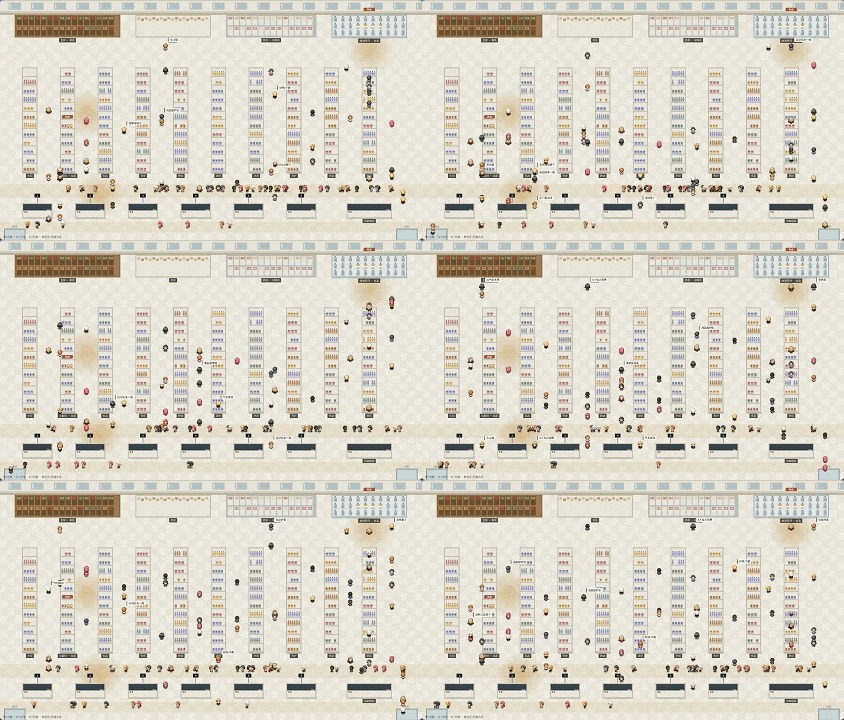
The second is the simulator: twin dialogue stops at the "spread" step, because spread is not a matter for one person. The idea of taste has always been social; a person often falls in love with a certain flavor first because others are eating it. So within the framework of computational sociology, we integrate each individual's sensory layer and behavioral layer for fine-tuning, allowing hundreds or thousands of digital twins to influence each other in a virtual community. The simulation can run a full scenario, or be split into four sub-scenarios run separately: supermarket retail, online e-commerce, dine-in restaurants, and grab-and-go tea, coffee, and ice cream shops. What comes out is a product's real "social path of hit product spread": who starts it, who it passes through, which channel accelerates it, and which circle it stops in.
Dongcha Beating: Most consumers simply cannot describe their sense of taste and smell clearly, and some don't even know basic vocabulary for describing flavors. How is this underlying data actually collected?
Erik: Yes, in most languages there are only about 400 words describing sensory experience. So we built an online platform, askyumi.com, which has two modes.
One is the experimental mode: this is a digital assessment of about 20 minutes that measures intuitive reflexes and deep cognitive responses, and also measures anchors at the values level. The collection methods come from tools commonly used in the sensory industry and experimental psychology. Results are relatively clean only when people are assessed in a low-pressure, relaxed environment.
The other is the public model (non-commercial): Human flavor preferences, like personality traits, are extremely difficult to convey accurately with everyday vocabulary, so we created Avatars similar to a "taste version of MBTI," using an analogical framework to help ordinary people describe and communicate about taste. This side has now partnered with the World Taste and Smell Association (WTSA) and is building the first large-scale research-oriented taste and smell database in the Asia-Pacific region.
Dongcha Beating: Can a 20-minute online test build a digital twin? Have you done backtesting? How high can the fidelity actually reach?
Erik: Yes, we have. Accuracy is the most fundamental metric across our entire business. Currently, the fidelity of real-person backtesting is around 86%, and we hope to raise it above 90% in the coming months.
The principle of the backtesting mechanism is to compare the same person's Digital Twin with the person themselves. We have them redo blind tests two weeks later and two months later, comparing the real human choices with the digital twin's predictions in the system for consistency, and the overlap is roughly 86%.
This is fitting at the individual level. At the group level, we are also collaborating with computational sociology institutions on larger-scale social experiments, directly feeding real events that occur in the consumer goods world into the system to see how close the group biases evolved from thousands of digital twins are to the direction of the real market.
Dongcha Beating: In consumer product R&D where the tolerance for error is extremely low, is 86% convincing in terms of predictive results?
Erik: From a statistical perspective, as long as you invoke hundreds or thousands of twins at a time, this granularity is already fully sufficient in practice. It could even be said that it can provide far more effective information than traditional questionnaires and offline in-depth interviews. Moreover, there is also 11-19% inconsistency in people's behaviors and attitudes over time.
Traditional consumer research tools inherently have three limitations.
The first is language. The vocabulary humans use in daily life to describe flavors is extremely impoverished—just a few hundred words over and over. In descriptive sensory evaluation, the most critical issue is that the same word has different meanings: what people in North China call "fragrant" and what people in the Southwest call "fragrant" are often two different things—North China tends to imply soy-sauce-like aromatic associations, the Southwest tends toward spicy aromatic associations, and the Southeast may refer to umami, herbal aromas, and so on (the same applies to sweetness and spiciness). Low-dimensional descriptive evaluation is inherently very difficult to use to reconstruct high-dimensional composite chemical perception.
The second challenge is state drift. Sensory experience is not static; it fluctuates in real time with external environmental stimuli and internal physiological and psychological states. For example: tolerance for sweetness is completely different when hungry versus just full; sensitivity to bitterness at 10 AM and 9 PM is not at the same level; corporate sensory evaluation laboratories more or less face the challenge of being detached from real-world contexts—though most food and beverage companies today are aware of this.
The third challenge is rational interference. Offline interviews love to directly ask respondents whether they would buy or whether they like something. Once a sensory question is translated into a rational judgment, the answer consumers give is completely different from the subconscious action of paying at the shelf.
What digital twins can do is precisely to place this consumer back into a specific consumption context, to simulate his instinctive reactions rather than listen to his rational explanations.
Dongcha Beating: Eating and drinking are extremely emotional behaviors. How do you eliminate the interference of respondents' immediate emotions during testing?
Erik: There's a term in the industry called state dependent. Whether a subject is hungry or anxious at the moment will directly cause data drift.
We've designed scenario segmentation in our question framing, throwing the same person into different contexts and stimuli for comparison, measuring his decision shift and decision time difference under external interference. This part can be calibrated and hedged with algorithms.
We're also now introducing eye tracking, micro-expression analysis, and EEG data, attempting to capture millisecond-level reactions that people themselves aren't even aware of when making choices.
Dongcha Beating: At a moment when most technology narratives are focused on computing power and large language models, why choose the most obscure taste model?
Erik: I don't think taste and smell are obscure—we experience them every day; they can be categorized as a high-frequency, high-value mass blind spot. But my earliest real understanding of this mechanism came from a very personal accident:
During COVID, I completely lost my sense of taste and smell, lasting four to six months. I later relied on neuroplasticity methodologies to train my taste and smell for recovery, and eventually regained them. Since then, I began to realize the importance of these two senses for health, memory, and well-being. If everyone's senses could be modeled, then we could bring flavor design and nutritional value to this person in a healthy and delicious way.
Beating: After regaining your sense of taste, have your food preferences changed?
Erik: After recovering, I feel I've gained some metacognition. I can step back and experience the fact that I am "experiencing" something.
In the past, everyone took taste and smell for granted and rarely reflected on them. But once the connection is reestablished, you notice that every time you swallow something, a very clear image emerges in your mind.
Eating is essentially a time-based "streaming" information flow. The brain has a predictive coding mechanism that pre-fills the approximate taste of a product before you see it; then comes orthonasal olfaction, followed by entry and chewing, molecules releasing in the oral cavity, retronasal olfaction flowing back, and finally swallowing. In the past, eating was just eating; now I realize every step in the entire chain can be broken down.
This perceptual ability became much clearer after retraining my sense of taste and smell.
Beating: How did you later decide to start a business in this direction?
Erik: I truly love this, and I want to push it further.
Food and beverage is an extremely massive, ancient traditional industry. In this field, data, taxonomies, and ontologies—you can hardly find decent, general-purpose infrastructure on the market. Big companies lock their proprietary data tightly behind walled gardens, and the industry's general sensory models are a complete blank.
Since there's no blueprint, we might as well start building first—beginning with collecting each person's real flavor preferences, and see whether we can deliver value in the ancient food industry.
Beating: In a year when mainstream VCs are all focused on LLMs and embodied intelligence, won't investors question whether this niche has too low a ceiling?
Erik: At first glance, everyone will definitely think it's obscure. Vision, language, robotics—these are grand narratives whose depth is visible at a glance.
But if you break down a real human perceptual system, the reason vision and language were conquered first is precisely because they are the easiest to symbolize and concretely extract.
What truly governs deep memory and a person's life experience are actually those ineffable senses at the底层 of the brain. People think it's small because few have noticed this layer that influences our daily sensory experience and subconscious decisions every day; yet it is precisely this kind of attribute that is called a mass blind spot—and the incremental market that is about to arrive.
Beating: If you were to summarize the core pain point of this track, what would it be?
Erik: How to truly reach the consumer's mind.
In the consumer goods industry, whether in marketing or R&D, the ultimate underlying proposition is always this. In the past, people relied on intuition, measurement, and expensive trial and error to take chances; if algorithms could calculate the mind slices of each group in advance, brands could create products that are inherently connected to their minds.
Beating: From what you've said, what you're doing is no longer limited to the taste level; there's also a lot related to consumer psychology.
Erik: Indeed, it's not limited. Food and beverage products are our strong suit, so we start from there. But across the entire consumer goods industry, all unspoken implicit preferences can apply this methodology.
For example, in English, we talk about taste. In the narrow sense, taste is flavor; in the broad sense, taste is taste. Taste is extremely difficult to quantify because it's hard to break down with language. It's a high-dimensional cognitive space, and its external form can be a playlist or a certain aesthetic intuition in the fashion industry.
If we can project a person's underlying values and belief system through a digital twin, we can see clearly what shape the mind of this consumer actually takes behind each specific category.
Red and Green Buttons
On a November evening in 1941, sociologist Robert Merton originally just wanted to have dinner at his colleague Paul Lazarsfeld's house.
As soon as he entered, Lazarsfeld didn't even let him take off his coat and told him that the government urgently needed to test a new wartime radio program that very night.
The two wives were left at home, and the two men braved the night wind to a cramped recording studio on 59th Street in Manhattan. A crowd of listeners sat in the dark room, each holding two crude electrode buttons—press green for like, red for dislike.
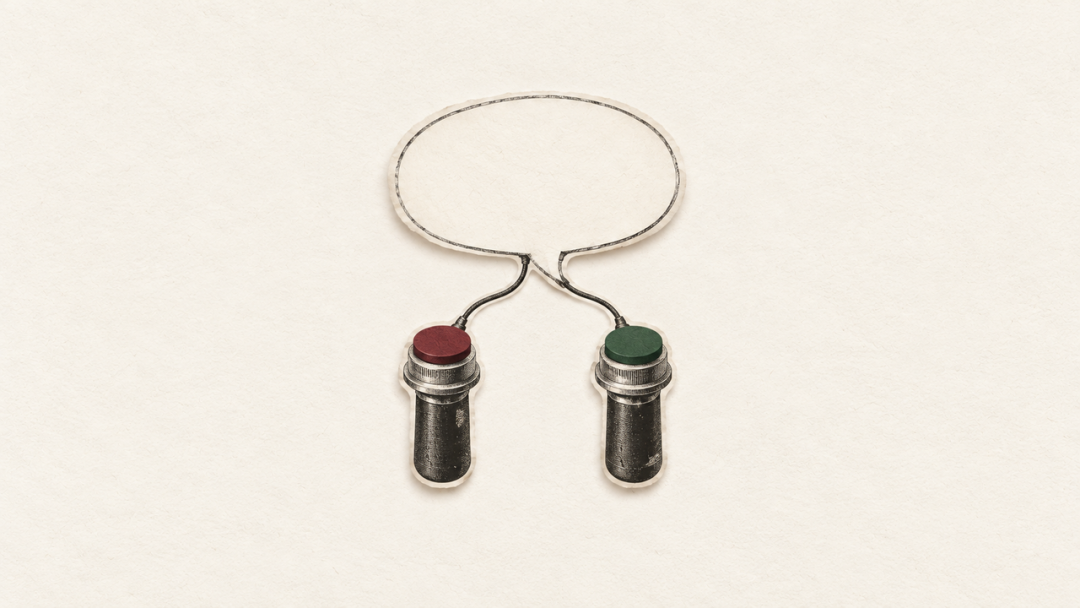
Merton leaned against a dark corner all night. He found that compared to those two mechanical buttons recording likes and dislikes, what was truly interesting was pressing the listeners layer by layer with "why" after the lights came on.
The "Focus Group," which later dominated the commercial consumer world for over half a century, was born out of that disrupted dinner.
Over eighty years later, those two red and green buttons evolved into questionnaires, in-depth interviews, blind test reports, and massive consulting and industry research, ultimately deciding for shelves who stays and who goes. A dinner that never happened became the methodology for deciding countless meals for all of humanity.
The players at the table had long since written the rules in stone, and the old players have even held their seats for over half a century.
Today, a newcomer with a digital twin concept who wants a seat at the table to grab a share must first prove two things to the giants holding tens of millions in R&D budgets: where exactly the old methods have failed, and just how big this business really is.
Dongcha Beating: From a capital perspective, how big a business is taste data really?
Erik: If calculated purely on a stock logic, the global food and beverage market is roughly $9 trillion, of which agri-food tech investment to date totals $311 billion; in the production value chain, consumer goods giants allocate 0.5% to 2.5% of their budgets to consumer science and market insights, directly corresponding to a stock market of $40 billion to $200 billion.
But that is only the most conservative stock market calculation. The real space lies in the increment.
What truly remains undigitized beneath the iceberg is humanity's underlying perception and emotion. That is an entirely new incremental market at least ten times, or even hundreds of times, the size of traditional market research. Imagine if, when developing a product, you could directly pull a person more vividly back into childhood memories or bring a completely new sense of freshness—this domain is still underexplored. To achieve this, we first need to fully understand each individual.
Dongcha Beating: In a consumer goods world filled with century-old consulting firms, is Aiweijue taking the饭碗 of traditional market research, or doing extremely arduous market education?
Erik: Taking someone's饭碗 is stock-market behavior. Frankly speaking, consumer research itself is an extremely mature market, and the methodologies the big players have used for decades are not wrong. What we are doing is swapping in a set of higher-premium measurement tools, externalizing consumers' higher-dimensional subjectivity from dimensions that could not previously be quantified.
After plugging digital twins, language models, and new sensory science tools into the giants' existing pipelines, this is not a zero-sum game but mutual reinforcement—brands can thereby reduce the probability of tens of millions in new product failures, and consumers can encounter tastier, healthier products on the shelves.
Dongcha Beating: For leading food and beverage companies, or companies you've worked with, roughly how much budget do they spend each year testing different flavors?
Erik: It depends on how aggressive the product is. For extremely aggressive cross-category new products, major companies typically allocate 0.5–2% of their total budget for market research.
Some also use small-step fast iteration or A/B testing to test flavors, and costs fluctuate significantly. Roughly speaking, for a product project with a RMB 10 million budget, setting aside a few hundred thousand yuan for flavor research is a very standard pricing range in the industry.
Dongcha Beating: Which market are you mainly targeting now? China, or Southeast Asia, Europe and the US? Which market do you think has the most potential?
Erik: Our current clients include companies in mainland China, as well as in Singapore and Europe. However, the food and beverage industry is basically dominated by global conglomerates.
If you look at iteration speed, the Chinese market shows a state of extreme innovation and small-step iteration. Innovation in Europe and the US is often defensive—a European might think coffee should taste like coffee, so why add all sorts of random flavors to it?
But in China, consumers and brands don't carry as much baggage around flavor anchors as in Europe. Tolerance for extreme innovation is extremely high, and product iteration even happens on a weekly basis. This fast pace is rarely seen in European and American markets.
Dongcha Beating: So your current data is also mainly from mainland China?
Erik: Our main databases are currently in China and the US, with Europe roughly the third-largest region. Because the earliest distribution channel was in China, China remains a relatively major market.
Dongcha Beating: In terms of commercial delivery, does Aiweijue sell standardized SaaS subscriptions or heavy customization solutions?
Erik: Both layers.
The lighter layer is charged by volume, and clients can directly call the API to converse with the digital twin.
The heavier layer is vertical customization. Dairy, baking, beverages—each subcategory has completely different processes. Some major companies specifically focus on carbonation sensation, some need to test burst-core sensation, and some even specifically test the tactile sensation of popping boba in the mouth. These cases require targeted modeling for a single sensory indicator and must be delivered as hands-on customized solutions.
Because although food and beverage is one industry, its scenarios are extremely numerous.
Dongcha Beating: The physical pathways for each consumer category are completely different. Won't this approach make the data too heavy? Does every category require building a vertical model from scratch?
Erik: The surface-level pathways and application scenarios are indeed different, but the underlying neural mechanisms are interconnected.
Olfaction is the only sense that does not pass through thalamic relay; the olfactory bulb projects directly to the amygdala and the entorhinal cortex-hippocampal circuit. Therefore, whether it's perfume, skincare products, e-cigarettes, or food and beverage, the coupling of smell with emotion and memory is tighter and earlier than with other senses.
In flavor perception, taste provides only a few basic dimensions, and the vast majority of identification information comes from retronasal olfaction—pinch your nose, and most foods become indistinguishable. Our judgment is that as long as the core framework mapping olfaction to emotion is solidly built, the portion of the weights determined by molecular structure and neural pathways can be transferred across categories. The category-specific parts are mainly the delivery mode (orthonasal or retronasal) and cultural context, which can be calibrated with a relatively small amount of vertical data—there's no need to start from scratch for each category.
Dongcha Beating: Can you use some specific data to give us a more intuitive sense of how much money you can help clients save?
Erik: Take a pizza brand as an example. Under their previous traditional process in the UK, conducting an offline survey with 500 people and 30 dimensions would take two to three weeks and cost $3,000 to $4,000 in hard costs.
After switching to digital twins, we expanded the sample 4x to 2,000 digital twins, asked the same 30 questions, and completed the entire run in about 30 minutes. When compared with real offline re-test data, the error was within 5%.
The results are valid within a statistical framework, but helped the client cut nearly 90% of their upfront market research resources.
The greatest value of such cases is not in saving a few thousand dollars in survey fees. When a consumer giant launches a national-level new product, from mold opening and packaging materials to channel distribution, it's a real capital expenditure of tens of millions or even hundreds of millions of dollars—we can help them provide a reference for market success rate.
Dongcha Beating: Calculated against this control group, just looking at this single step, you've helped the client cut nearly 90% of the book costs?
Erik: That is our goal, yes, but it also depends on the client's existing workflow. We never recommend that clients completely eliminate the human tasting step, because that is another evaluation method.
The core value of this system lies at the very top of the funnel. When you have 100 R&D directions or ideas, in the past, limited by budget, you could at most pick 10-50 for small-scale testing, finding 30 real people for each product test—and tens of millions would be burned through just on testing.
Now you can throw all 100 directions into the simulator and run them through, filter out the two or three with the highest winning potential, and then find 5 to 10 real humans for final tasting.
Real-human testing is no longer a blind test with a wide net cast everywhere; it has become a calibration anchor. Incremental markets can be unlocked by removing those sunk costs through sensory algorithms.
Dongcha Beating: Where exactly do the scarcity and barriers of taste data lie? Is it extremely high collection thresholds, or is it that the giants' data cannot be bought even with money?
Erik: Structural barriers, actually have little to do with money. Structural high-dimensional sensory data largely does not yet exist. Images and text can be scraped from the internet, but taste happens in everyone's mouth and brain—you have to first know what to ask and how to measure before this data can be produced.
Breaking the barriers down into five layers: first is methodology. We believe "flavor = cognition," so we don't do top-down statistics but rather bottom-up measurement of mechanisms: sensory, behavioral, and food memory measured together across three layers. The sales data and panel data in the hands of the giants are outcome data—they can tell you "like or dislike" but cannot answer "why." Big data cannot extrapolate the future; only understanding mechanisms can predict forward.
Second is IP. The methodology is沉淀 into scales, frameworks, and theoretical models—for example, the sensory contagion theory that explains how hit products spread through populations, which is the foundation of TasteNET.
Third is data volume and granularity. We have 110K+ digital twin samples, covering 38 countries and regions. But granularity is more critical: every piece of data lands on a specific person—we know who gave what score, why, and whether they would recommend it to friends.
Fourth is industry and academic collaboration. We have brought high-value solutions addressing high new-product failure rates to leading food and beverage and big-flavor enterprises, and we work with Singapore's A*STAR, Columbia University College of Physicians and Surgeons, the University of Cambridge Department of Psychology, and others to bring methodology and validation standards.
Last and most important is the team. We are a few very curious young partners who are passionate about what we do, so our organizational structure allows us to validate and engineer the latest sensory science, food behavior science, and brain science research into products within weeks. The industry we are in is a traditional yet continuously discovering industry—there is so much research related to food and people that we don't know. We hope to use AI to bring new "human experience measurement objects" into the actual industry value chain.
Dongcha Beating: Where does Aiweijue stand in the current landscape of this track?
Erik: I am particularly confident about the current development status.
The feedback from academia has come faster than we expected. I just returned from Future Food-Tech in London. Not long ago, at EuroSense, the top academic conference in sensory science, more than 80 thematic reports were selected from over 1,000 paper submissions, and in the end only 10 received spotlight status. Aiweijue was one of them. At least in the eyes of academia, the thesis of using digital twins to create a "virtual society" to test sensory perception is novel and valid.
On the commercialization side, we are still working hard to push things forward. It takes a certain period of time for new technology to be accepted by B-end clients, but we want to be results-oriented, letting clients concretely see how much money they can save and what value can be achieved after using it, and then continue to push the market side.
Dongcha Beating: In a cycle where proprietary data is becoming increasingly expensive, how should algorithms and data pipelines iterate next?
Erik: First, look at what the data itself is. Flavor data, when broken down, is entirely high-dimensional biological variables. Humans have about 400 functional olfactory receptor genes, and about 30% of receptor functions differ between any two people. Vertically, there are neural circuits; horizontally, there are oral, ENT, and other microenvironments such as saliva and oral microbiota. There are so many variables that they cannot be exhaustively enumerated, so relying on stacking questionnaires and sales data to fit the surface layer has a very low ceiling; no matter how large the sample is, it is only describing what has already happened.
The direction of iteration is to push the data pipeline down to the mechanistic layer. Questionnaires and ratings are the final output of the perceptual process, and the middle has already been filtered once by language and social expectations. What is truly informative is the signal before filtering: EEG to observe the temporal process of neural responses, facial EMG to observe immediate reactions of pleasantness, facial expression coding and eye tracking to observe attention and emotion, and then small-scale fMRI for mechanistic validation. Each of these channels has its own blind spots, but after aligning them to the same set of stimuli, the intersecting part is the underlying structure the model needs to capture.
Then the algorithm's task changes. It is no longer to find correlations from a pile of labels, but to learn a mapping from molecules and receptors to emotion and preference from multi-channel physiological signals. The DREAM Olfaction Challenge has already proven that predicting odor perception from molecular structure is feasible. What we are doing is extending this chain backward, connecting it to emotion and decision-making. As long as the skeleton of the mechanistic layer is stable, the upper-layer categories, scenarios, and populations are all parameters, and there is no need to collect data from scratch every time.
This involves too many disciplines—neuroscience, sensory science, molecular chemistry, machine learning—and no one can master the entire system alone. So our position is to build the underlying alignment framework and models, while mechanism research and high-precision data collection are done together with leading institutions.
Beating: At the technical level, what unique thresholds have you already established? What do you most want to break through next, and what changes will that bring to the business?
Erik: Look at it in two halves—one half is product, the other half is data.
At the product layer, we need to achieve plug and play. We've seen too many R&D teams working on fermentation, alternative proteins, and frontier food tech—their technology is solid, but once a new ingredient enters the real market, they don't know how accepted or liked it will be. We want to achieve this: whenever any new molecule or food tech IP comes out, the system can instantly match it to the commercial scenario that best fits consumer mindset.
At the data layer, what we invest most in is depth.
Whether it's the underlying physiological signals of taste, smell, and touch, or sociological communication at the group level, the industry has historically used fragmented traditional tools. We need to use algorithms to interlock biological variables with consumer psychology.
This involves too many interdisciplinary gray areas. How exactly this subject should be defined and classified has not yet been thoroughly exhausted in the scientific community. That's also why we must be tied to top academic institutions for research.
Beating: In the next year, what type of clients do you most want to work with?
Erik: We still hope to work with more food and beverage, flavor and fragrance, cosmetics, and fragrance brands. Aroma and taste are my personal greatest passion, and making delicious food is also my lifestyle. Being able to create some value on the consumer end would make me very happy.
Madeleine Cake
In 1910, Proust had the walls of his bedroom at 102 Boulevard Haussmann in Paris entirely lined with cork to block out street noise.
This patient, long severely tormented by asthma, for the next decade or so habitually stayed up at night and slept by day, sealing himself inside the cork-lined room to write a book called In Search of Lost Time. In the book, he wrote about a madeleine cake dipped in hot black tea, and at the moment the narrator swallowed it, the entire childhood town of Combray suddenly rose up from the tea.
When the final three volumes of the book were published in 1927, Proust had long been buried.

The scientific community later borrowed this name, naming the neural mechanism by which faint smells and flavors instantly pierce through time and space, awakening deep memories, the "Proust Effect."
By this point in the conversation with Erik, the discussion had departed from the commercial arithmetic of how to price a deal and began to touch upon a more hidden and harder-to-digitize truth: taste is never pure physical perception—it is the deepest entry point into a person's consciousness and memory.
Dongcha Beating: Regarding taste data, what underlying mapping relationship exists between geographical terroir and population preferences?
Erik: To put it simply, it's that a land nurtures its people—the underlying foundation is actually human geography.
The physical molecules humans consume are actually extremely limited: animal fats and proteins, plant roots, stems, leaves, and fruits, plus ground seeds. What truly creates enormous differences in flavor is craft—such as fermentation, pickling, and cooking techniques—which is the most humanistic and most interesting part of the entire chain. Because it establishes each person's and each group's sensory anchors and fluctuation circumference.
But flavor is never static.
Before the Columbian Exchange in 1492, there were no tomatoes on Italian pizza; Sichuan and Chongqing also had no chili peppers long ago—that was the result of South American crops slowly embedding themselves alongside economic and migration waves. The evolution of dietary habits is essentially a whole set of complex sociological and economic chain reactions.
We are currently working with academic institutions to tackle a more hidden subject: the contagion mechanism of the senses.
The senses, like stress and anxiety, resonate in groups. The simplest scenario: when queuing at a cafeteria, to what extent does the dish ordered by the person in front of you induce your choice? When ordering at a dinner table, are you pulled by the social status of your tablemates, kidnapped by their taste, or simply driven by some explicit form?
These unsolved mysteries at the sociological dimension—we are trying to run them through one by one using sandbox experiments.
Dongcha Beating: This also explains why "health narratives" can forcibly push avocados into becoming a global hit. Taste is never just a biological reflex of the tongue—it is repeatedly shaped by popular culture and social class.
Erik: Yes, you can think of it that way.
Taste has two layers. In the narrow sense, it's the perception level—purely the physical and chemical reactions of biological receptors to molecules. In the broad sense, taste is the external manifestation of personal memory, social identity, and class markers.
In English, they say "You are what you eat." Looking at someone's plate is like scrolling through their NetEase Cloud Music playlist—it directly reveals the underlying fabric of their personality.
Compared to vision and hearing, taste is the highest-dimensional embodied perception, because you must allow physical molecules from the external world to truly penetrate your mouth, dissolve into your bloodstream, and become part of your body. It's the most direct physical entry point for peering into human decision-making mechanisms.
动察Beating: This sounds a lot like the "Stanford Town" experiment the academic world did before—throwing a bunch of Agents into a virtual sandbox to observe group evolution. Except you've moved it into the real consumer market?
Erik: The underlying logic is the same.
Our core hypothesis is: does a person's flavor preference really belong only to themselves?
When you suddenly fall in love with a certain taste, is it because your tongue genuinely likes it, or because you saw everyone else eating it in your information feed? Food is never isolated. When a new restaurant blows up in a city, who sparked it first? Who's seeding the trend? And what kind of psychological structure do the people being influenced have?
What we simulate in the sandbox is exactly the real pathways of this kind of social fission (the academic term is cascading propagation), helping brands pre-simulate which packaging, which flavor angle, and what narrative to launch a new product with, in order to create the biggest ripple effect in real society.
动察Beating: How do you view world models, and the world models as people currently understand them? These models are basically all-in on vision and spatial generation. If olfaction and taste are missing, can it still count as a complete world model?
Erik: Last time I was in Singapore, I asked Fei-Fei Li this question face to face.
A so-called world model must necessarily be a digital twin reconstruction of the physical world based on human subjective perception. We run physical rules and game scenarios inside it, trying to get AI to understand reality.
But I followed up with a question: if a large model that claims to recreate the real world is directly missing taste, smell, and micro-touch from the five senses, can it really still count as a complete "world model"?
Fei-Fei Li partially agreed with that assessment at the time.
But nitpicking at the philosophical level is meaningless—the hardest part is how to actually wash these non-standard chemical molecules into data.
Whether you call it a "world model" doesn't matter at all. Pure concept-play is worthless in the real business world. What matters most is first running out real, tangible economic value in the current fast-moving consumer goods supply chain.
Dongcha Beating: Looking further ahead, do you think what you're doing will become standard equipment for the food industry and even more related industries? Or will only the more leading companies in the industry use it?
Erik: Of course we hope to become standard equipment, because we have great confidence in our technology and data. But industry standard equipment and standards are all spoken through results. We hope to deliver results, and also hope that through industry-academia-research collaboration, we can create a model of industry-universal, underlying data and tool methodology.
Just like the ImageNet that Fei-Fei Li built back then, which became the open-source foundation for the entire computer vision field afterward, backed by ultra-high-quality data. What we're doing now with academic institutions is essentially trying to build a FlavorNet belonging to flavor in this chaotic industry.
The so-called FlavorNet not only includes volatile organic compounds (VOCs), but also aligns the molecular trajectory data of VOCs, then maps them to sensory, emotional, and memory atlases of different populations, doing large-scale end-to-end mapping.
Learning a set of low-dimensional universal representations from high-dimensional flavor perception, then developing various vertical sub-models downstream.
Once this infrastructure is built, the applications that can grow are by no means limited to flavoring pizza—personalized nutrition, food preservation and spoilage early warning, and even early screening of plant diseases on the agricultural side are all extensions of this chemical perception model.
Dongcha Beating: Besides food and beverages, which other fields do you think have big opportunities, and that you can do?
Erik: Emotional healing. This is a scenario I personally really like.
Today's workplace professionals and young people are generally in a constant state of tension and high pressure. Food therapy, aroma healing, the so-called medicine-food homology—essentially all of them use physical molecules to撬动 the brain's neurotransmitters.
The intervention of smell and flavor on emotions is extremely strong, but the biggest pain point in the past was "one face for a thousand people"—no tool could measure the sensitivity thresholds of different people to specific aromas and tastes. Once the granularity can be cut fine enough for personalization, this market will be much bigger than simply making snacks.
Dongcha Beating: The examples you just listed feel more data-rational, monitoring and predicting rational indicators. Do you want to move more in that direction, or more toward mass culture and sensory-oriented directions?
Erik: Emotion itself is a functional trigger event.
In neurology, so-called pleasure and healing are essentially specific event triggers—these two things are never separated. Ultimately, consumer behavior always comes back to the physical body.
Humanity's baseline is health; above health, we crave palate pleasure and want joy. The sexiest business opportunity is always "both delicious and healthy."
If the system can calculate the molecular intersection point between the two, we can stand in front of supermarket shelves and find, for each specific person, the combination that best matches their current physiological state and lifestyle.
Dongcha Beating: Let's push the imagination further. What kind of company do you ultimately want Aiwijue to become? When this prediction system becomes standard at scale, what will happen to the consumer world?
Erik: In the long run, I still hope Aiwijue can become an end-to-end prediction company. That is, before any high-value decision, we can run it through a "market simulator."
Car manufacturing has wind tunnels, aerospace has flight simulators, but in the consumer goods market worth hundreds of billions of dollars, there has previously been almost no proper sandbox tool. Every new product launch budget of tens of millions should, before kicking off, first run through hundreds or thousands of parallel virtual societies to test which combination has the highest win rate.
For the industry, it minimizes the risk of blind bets; for ordinary people, the products on shelves can have less industrial formula and more design truly tailored to their own minds.
If we go one step further, I firmly believe taste and smell are senses with greater consciousness-externalizing properties than vision and hearing. You must allow the world's substances to enter through chemical senses and become part of shaping yourself, so it is essentially the foremost trust protocol entry point for human decision-making. Looking at a person's relationship with food often reveals that person's relationship with the world.
Today the entire tech circle is feverishly discussing intelligence and consciousness. But humanity has studied its own consciousness for hundreds of years and has always lacked a highly externalizing measurement scale.
The large number of paradigms accumulated by sensory science may very well become the key anchor for decoding consciousness. We hope to span sensory science, FMCG industry, and AI, and through a person's act of "eating," reverse-engineer the largest uncharted territory deep in human consciousness.
Dongcha Beating: So taste is just a starting point, and behind it lies a grand narrative about intelligence and consciousness.
Erik: At first, I didn't think it would be this big; the starting point was very industry pain-point oriented. But as we went deeper, we realized that the act of human eating—its temporality, physiological limitations, and the entire process of swallowing external substances into the stomach—is the most externally evident and experientially measurable attribute of consciousness, and the hardest psychophysical representation to fake.
In business, this is called consumer science. But if we want to extrapolate general intelligence in depth, we must first understand how human consciousness operates. To understand consciousness, we need an externally measurable subject, and eating behavior naturally possesses the measurable characteristics of external human experience.
Previously, the public account wrote a review article on this topic; welcome to critique and exchange ideas.
Umami
In 1907, Kikunae Ikeda, a chemistry professor at Tokyo Imperial University, tasted a flavor in a bowl of kelp tofu soup made by his wife that could not be classified as sour, sweet, bitter, or salty.
Ikeda repeatedly boiled and extracted from dozens of kilograms of kelp, and the next year isolated glutamate, naming this mysterious flavor "umami"; in 1909, he brought in businessman Saburosuke Suzuki, packaged this purification process into a can of white crystals, and named it "Ajinomoto."
Arrogant Western mainstream scientific community refused to acknowledge this discovery for nearly a hundred years.

It was not until 2000 that neuroscientists at the University of Miami finally clearly identified the specific receptors on the human tongue that perceive it, and umami was officially stamped as the fifth basic taste.
A chemist's keen tongue, a pot of home-cooked hot soup, plus a businessman willing to bet in uncharted territory—a huge business lasting over a hundred years thus began.
Back to today. Without the manpower of big corporations or massive computing power, Aiweijue's current situation is more like an extremely lightweight adventure, with only four and a half people full-time and part-time, trying to pry open another ancient business about taste in a consumer goods world dominated by giants.
Dongcha Beating: Now, the things that can be concretely imagined have basically been snatched up by AI giants. For example, OpenAI just finished DevDay and launched a bunch of new features, taking over very concrete tasks like office work and vision. So doing things that everyone still finds relatively abstract might actually have a lot of room. When hiring for this kind of non-standard business, what trait is most scarce?
Erik: Our team is extremely small, just 4 people. Two of them are my co-founders.
One co-founder handles the underlying backend and big data, the other co-founder is mainly responsible for product form; there is also a colleague in charge of marketing, and I am mainly responsible for algorithms and sensory science, translating complex physiological, psychological, and behavioral variables into structured data that machine learning can process.
Right now, the biggest bottleneck is interdisciplinary composite capability.
Engineers who understand machine learning are everywhere, but the vast majority have never set foot in the decision-making chain of the real consumer industry; conversely, senior experts on the front lines of food science and sensory evaluation generally have not gone through structured training in machine learning engineering.
People who understand both sides are extremely scarce. But today's open-source tools and foundation models happen to give this kind of cross-disciplinary person a springboard to quickly assemble two or three disciplines together.
Dongcha Beating: Kikunae Ikeda had Saburosuke Suzuki beside him, who dared to bet in uncharted territory. On the Aiwijue side, who was the earliest person to bet?
Erik: It's a bit of a coincidence. The first person who invested in me was actually not investing in Aiwijue, but in a post-rock album I made when I was playing in a band in Canada.
That person is Li Rongbin, English name Eraser. He himself was once the lead singer of an underground punk band and also ran a label. Recently he came out to start his own fund, First Rule Ventures, and Aiwijue is one of the companies he has invested in.
The rules of his fund are set very narrowly: only invest in AI applications, only invest in the first round, and only make 5 deals a year. He has done the math: if you really want to accompany an entrepreneur in the early stage, you need to give them at least a full day a week, and at most you can only accompany 5 compani
