After the previous week's tech stock selloff, US stocks rebounded on October 19. The seven tech giants led gains again, with the Nasdaq 100 index rising more than 2% intraday at one point, as the market temporarily shed fears of a repeat of the 1987 "Black Monday."
But as trading progressed, the rebound gradually lost momentum. CoreWeave surged at one point after a rating upgrade, then gave back its gains; emerging cloud service providers failed to hold onto their opening strength; bond investors still demanded higher risk compensation. Meanwhile, options market hedging against a sharp decline did not fade as the index recovered.
The index was supported by the tech giants, but the financing and macroeconomic pressures that drove the earlier selloff have yet to ease significantly.
Index recovers, buying remains cautious
That day, US stocks kept climbing ahead of Goldman Sachs' AI-themed conference call, but the market began to pull back after the call ended around midday Eastern Time.
At the close, the Nasdaq 100 remained the strongest performer among major stock indices, but had clearly pulled away from its intraday high. The Dow Jones and Russell 2000 barely held onto gains, while the S&P 500 struggled to stabilize after reclaiming its 50-day moving average.
The rebound was concentrated in tech and consumer discretionary sectors. The seven tech giants provided important support for the S&P 500 and Nasdaq 100, but gains failed to broaden to enough individual stocks, and market breadth remained weak.
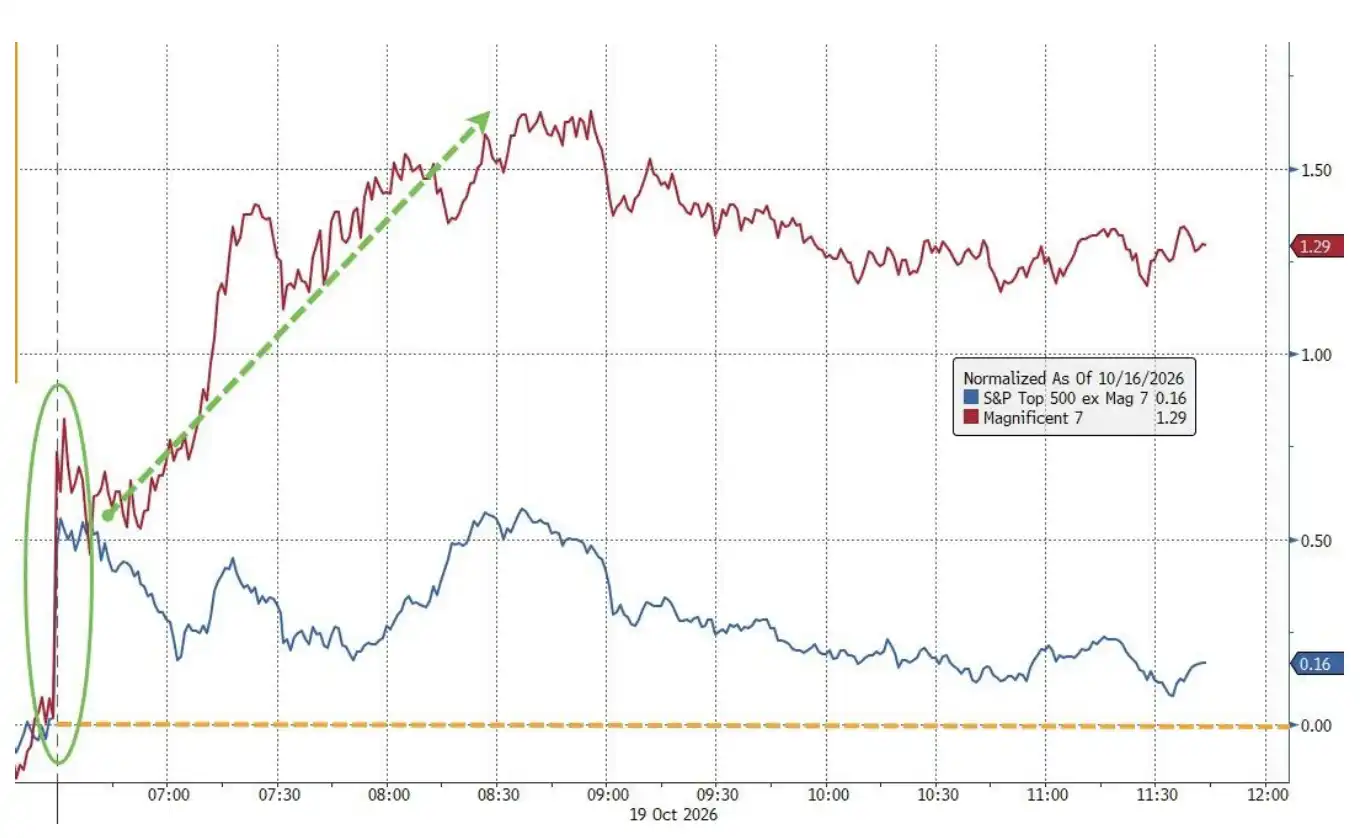
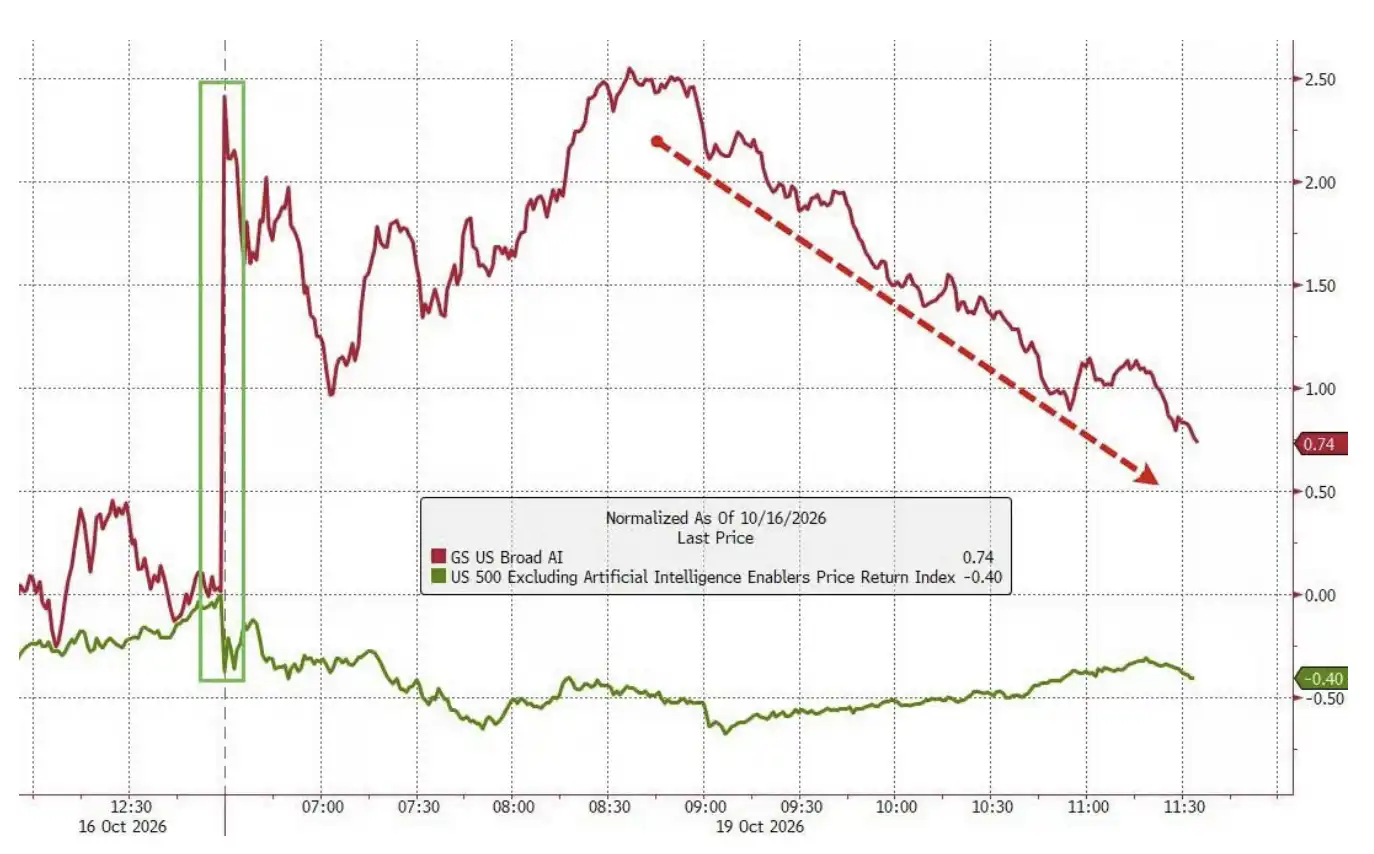
Within the AI sector, a similar pattern emerged: the broad AI stock basket opened strong, then quickly pulled back, with the rebound high again below the previous high. Although overall performance remained better than the S&P 500 excluding AI stocks, its trajectory has yet to show signs of sustained buying returning. Momentum stocks and memory chip stocks only rebounded modestly, and the emerging cloud service provider sector ultimately barely held onto gains.
Goldman Sachs trading desk flow observations further reflected this caution. The desk described the day as "wait-and-see mode," with trading activity at only 3 out of 10 and overall orders slightly skewed toward buying.
Actions also diverged among different types of investors. Long-only institutional investors leaned toward buying consumer, macro products and financials, while hedge funds leaned slightly toward selling, reducing consumer, materials and technology, media and telecom sectors.
These data reflect the order structure observed by Goldman Sachs' trading desk, but they align with the signal from the tape: dip-buying capital emerged, but the willingness to add exposure across the board remains limited.
CoreWeave Rallies Then Retreats, Financing Concerns Remain in Focus
CoreWeave's (NASDAQ: CRWV) performance epitomized the shift in AI trading sentiment on the day.
After Goldman Sachs upgraded the stock, its shares briefly rose more than 7%, but quickly pulled back to near the prior Friday's lows. The optimism from the rating upgrade failed to translate into sustained share price support.
Near the close, news that Nscale and Anthropic were in talks over a $45 billion cloud computing deal briefly lifted the emerging cloud service provider sector. But the market reaction quickly faded, and related stocks failed to extend gains. The potential deal remains in negotiation and is still far from generating actual revenue and cash flow.
For emerging cloud service providers primarily targeting AI demand with GPU compute infrastructure at their core — known as NeoClouds — investors are scrutinizing both demand and financing. Large contracts can support growth expectations, but the capital needed to build data centers, procure equipment, and maintain operations often must be invested ahead of revenue.
As a result, an increase in potential orders does not necessarily mean short-term financing pressure will ease in tandem. Investors also need to assess whether companies can raise capital at manageable costs and convert contracts into cash flow before debt maturities.
The bond market remains cautious. CoreWeave's bond prices extended the prior Friday's rebound at the open but failed to break through the day's highs. Credit spreads on its 2032 maturities remain around 1,000 basis points, and spreads on other data center-related bonds continue to widen.
1,000 basis points equates to 10 percentage points. Credit spreads represent the additional yield compensation investors demand relative to benchmark bonds. Wider spreads typically signal greater investor caution toward credit risk and may raise the cost companies face when issuing new debt or refinancing.
Equities briefly reacted positively to rating changes and potential contracts, but the bond market has yet to meaningfully reduce its pricing of financing risk. This divergence means AI infrastructure companies still need to validate their growth expectations through cash flow and financing capacity.
Volatility Retreats, but Demand for Downside Protection Still Rising
As stocks rebounded, the VIX — which measures expected volatility for the S&P 500 — gave back some of the prior Friday's gains. But short-term options trading may have amplified the earlier volatility and also influenced the subsequent pullback.
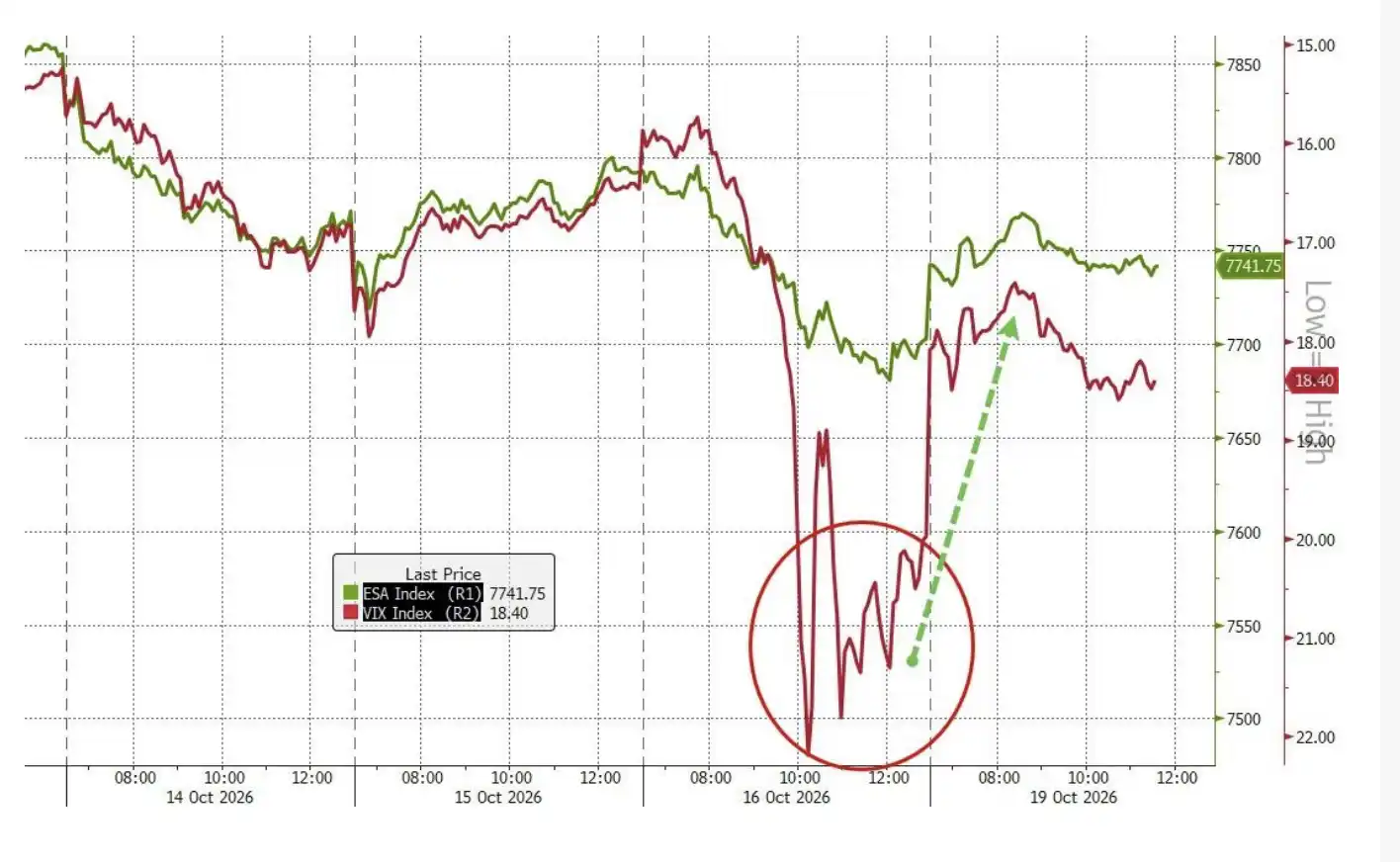
According to SpotGamma analysis, on the previous Friday, VIX options expiring October 21 with strike prices near 20 had concentrated open interest exceeding 100,000 contracts, and VIX call option volume for that expiration date surpassed 1 million contracts that day.
Heavy trading in near-expiry options can amplify volatility through dealers' hedging adjustments. Therefore, the VIX pullback both reflects some easing of panic sentiment and may include the effects of short-term positioning changes, and is not yet sufficient to confirm that market risk has been resolved.
Related options positioning models show that even after Friday's options expiration, the market overall remains in a negative gamma environment. In this situation, some dealers may need to sell when the market falls and buy when it rises to adjust their hedging exposure, thereby amplifying price swings. The specific impact depends on the distribution of positions and actual hedging behavior.
More noteworthy is that demand for protection against sharp declines is increasing.
Bloomberg macro strategist Frank Monkam noted that the S&P 500 Downside Exposure Index (SDEX) has risen to its highest level since March, up nearly 20% from its early October low. This change indicates that even as major stock indices remain resilient, the options market is reassessing downside risk.
In Monkam's view, macro pressures building in rates and energy markets are gradually transmitting to the equity market; meanwhile, debt and financing issues are gaining increasing weight in AI investment discussions, with CoreWeave becoming a typical case. Investors are beginning to pay more attention to "left-tail risk," i.e., extreme declines with low probability but potentially large losses.
This makes the sustainability of the current rebound still unverified. Whether tech giants can continue to support the index is important, but the more critical changes are whether the rally can broaden to more individual stocks, whether credit spreads of AI infrastructure companies can narrow, and whether downside protection demand in the options market can cool down.
Before these signals appear, the index recovery only shows that selling has temporarily eased, and the market's concerns about AI financing and the high interest rate environment still remain.
Welcome to join the official BlockBeats community:
Telegram Subscription Group: https://t.me/theblockbeats
Telegram Discussion Group: https://t.me/BlockBeats_App
Official Twitter Account: https://twitter.com/BlockBeatsAsia
