In recent days, the U.S. stock market has swept away its previous sluggishness, hitting new highs. AI-related stocks have been particularly dazzling, with NVIDIA reaching a market cap of $5.26 trillion. Sectors such as optoelectronics, power chips, and HBM memory, as long as they are related to the AI industry chain, have also seen a significant rise.
Similar to the cryptocurrency market, the biggest beneficiaries during this period have been a group of small-cap stocks that have skyrocketed from a few dollars to tens of dollars based on a compelling "narrative."
However, just yesterday, one such stock experienced a sharp collapse. The reason was that its CFO unlawfully disclosed an order in a video refuting a short-seller report.
Narrative Stitching Monster
POET, a small company based in Toronto, is known for its core product, Optical Interposer. It can be understood as a special substrate that interconnects electronic chips and photonic chips on the same silicon wafer, enabling data to travel between GPUs at lightning speed in AI data centers. In the industry chain, this is a key layer highlighted in NVIDIA-Marvell's co-packaged optics roadmap.
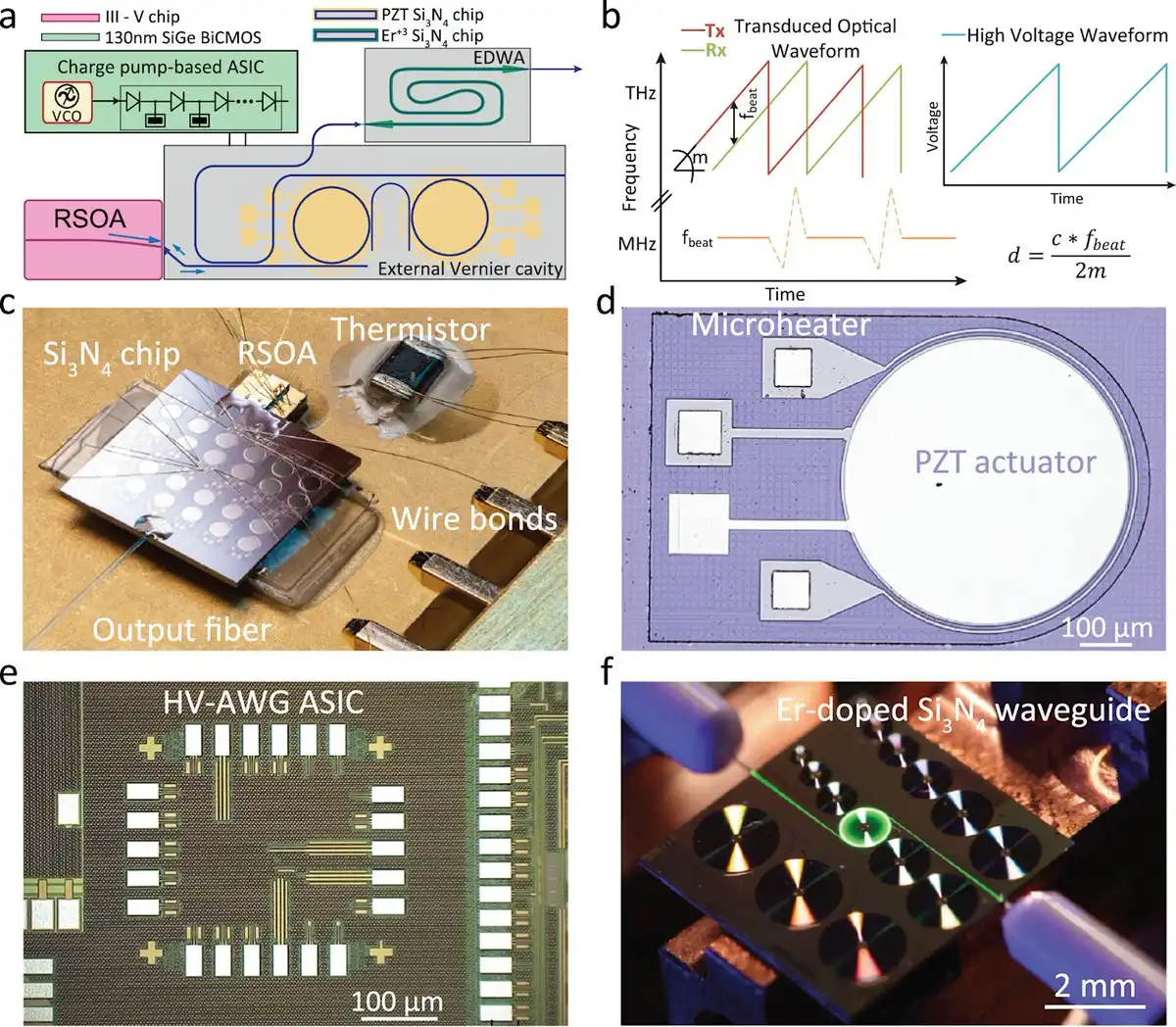
The story was well told. From $0.93 in early 2024 to $8.82 in October 2025, POET surged by 847%. Korean retail investors, in particular, showed a strong preference for it, touting it as another "hidden gem in NVIDIA's supply chain" in KakaoTalk groups.
However, any investor who has looked at the company's financial reports would cast doubt on its future prospects.
With full-year revenue of $1.07 million in 2025, the net loss was 5858 times the revenue. From 2020 to the present, cumulative revenue amounts to $2.34 million, less than a community pizza chain. Meanwhile, funds raised through additional offerings during the same period reached nearly $538 million, causing a 303% dilution of shares — expanding from 38 million shares at the end of 2022 to 153 million shares at the beginning of this year.
Retail investors say they are not investing in the current cash flow but in future potential.
The issue lies in the fact that this company has envisioned seven different "futures" over the past decade: a monolithic GaAs semiconductor before 2017, automotive LiDAR in 2018, IoT interconnectivity and 5G optical access in 2020, medical devices from 2017 to 2019, AR/VR devices since 2018, and now AI infrastructure.
Each time, they aimed at the hottest trend of the moment, and each time, they failed to deliver.
After Short Sellers Entered, Executives Made a Mishap
On April 14, the short-selling firm Wolfpack Research released a report on POET. The core content of the report can be viewed in two layers.
First is the allegation of stock promotion targeting the company.
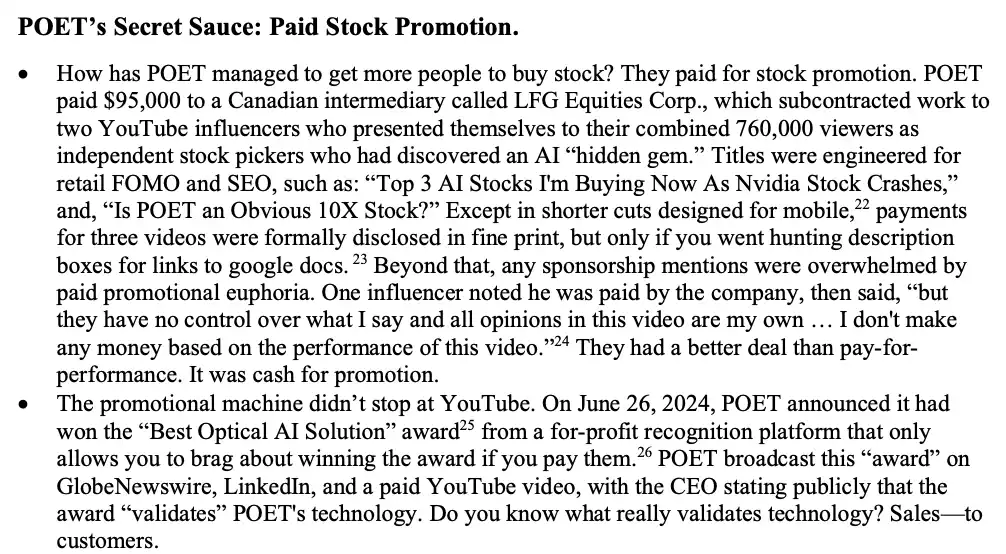
POET paid a middleman named LFG Equities $95,000, who then subcontracted YouTube influencers to promote POET as an "undervalued hidden gem in the AI field," with three videos reaching a total of 760,000 subscribers posing as independent investors.
Simultaneously, the company conducted a discounted private placement through the Cayman fund MMCAP: the private placement at $5.50 per share concluded on October 7, 2025, and on the next day, MMCAP's holdings decreased from 16.2% to 9.99%—selling approximately 5.8 million common shares within 24 hours, retaining warrants.
Wolfpack obtained 41 samples of small-cap stocks that had employed similar promoters and found that the median price of these stocks had dropped 92% from their highs.
Much more critically, Wolfpack argued that POET should be classified as a PFIC, a Passive Foreign Investment Company.
Under U.S. tax law, if a foreign company derives over 75% of its total income from passive sources like interest or if over 50% of its assets are cash, it will be deemed a Passive Foreign Investment Company. POET's financials perfectly fit both criteria: $4.55 million in interest income in 2025, $1.07 million in operating revenue, with passive income accounting for 80.9% of the total income; holding $313 million in cash on its books, over 95% of its assets are passive.
The cost of being classified as a PFIC is borne by retail investors. Even if shares are not sold, retail investors must pay a 37% tax on their annual paper gains. Failure to report once can lead to an indefinite retroactive review by the IRS.
When Wolfpack released this short report, there were only 28 hours left until the tax deadline on April 15.
On April 15, POET acknowledged that it did indeed qualify as a PFIC for 2025 and announced it would relocate its domicile from Canada back to the U.S. to ensure no such issues arise in the future.
Following the usual script for such "meme stocks" like POET, the next scene is expected to see the stock price slowly decline, reverting its valuation back to reality.
But the story took a unexpected turn on April 21.
POET's CFO, Thomas Mika, participated in a video interview on the Stocktwits platform, directly addressing Wolfpack's short-selling report. He referred to the short sellers as "maggots," emphasizing that the company has $430 million in cash, real customers, and products.
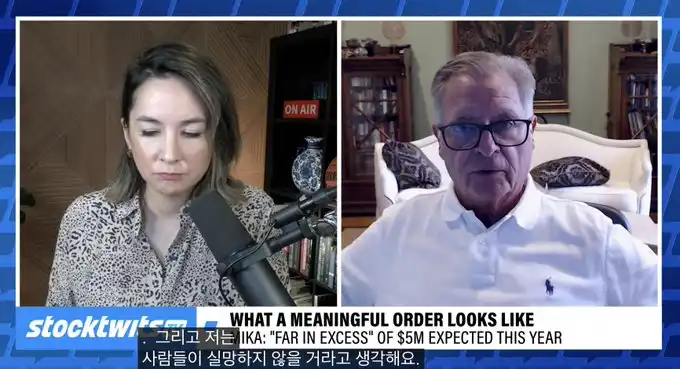
The highlight of this interview was Mika personally confirming that the company had received a $5 million purchase order from Celestial AI, a division of Marvell, with shipments set to begin this quarter.
The market reacted immediately.
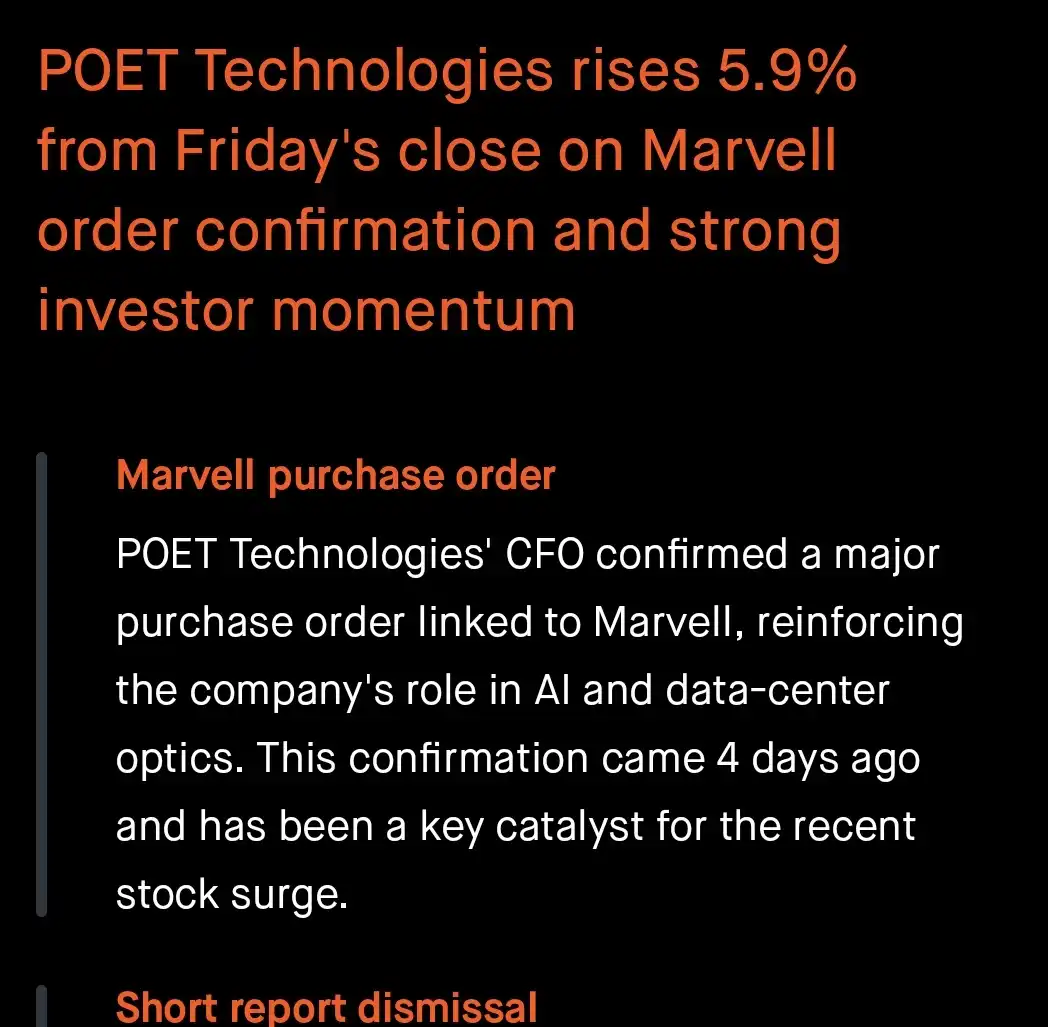
On April 21, POET surged by 19.32%, followed by another over 20% pre-market surge on April 22. Stock market influencer Serenity posted on X: "The confirmation of being a direct supplier to Marvell has prompted the market to reassess POET's position in the NVIDIA-Marvell optical communication roadmap."
What the jubilant retail investors were unaware of was that unilateral disclosure of order information by POET required authorization from Marvell.
Within the semiconductor supply chain, the collaboration between downstream customers and upstream suppliers is governed by confidentiality agreements. The disclosure of any details such as customer product roadmaps, order amounts, or product specifications can affect the bargaining chips between downstream customers, especially cloud service providers, and semiconductor companies, who are very sensitive to such information.
On April 23, Marvell notified POET in writing: due to a breach of confidentiality obligations, all purchase orders were canceled, including the initial volume production orders scheduled as early as April 2023.
A three-year partnership wiped out by a single interview.
Collapse
POET received the order cancellation notice on April 23 but did not disclose it promptly as required of a public company.
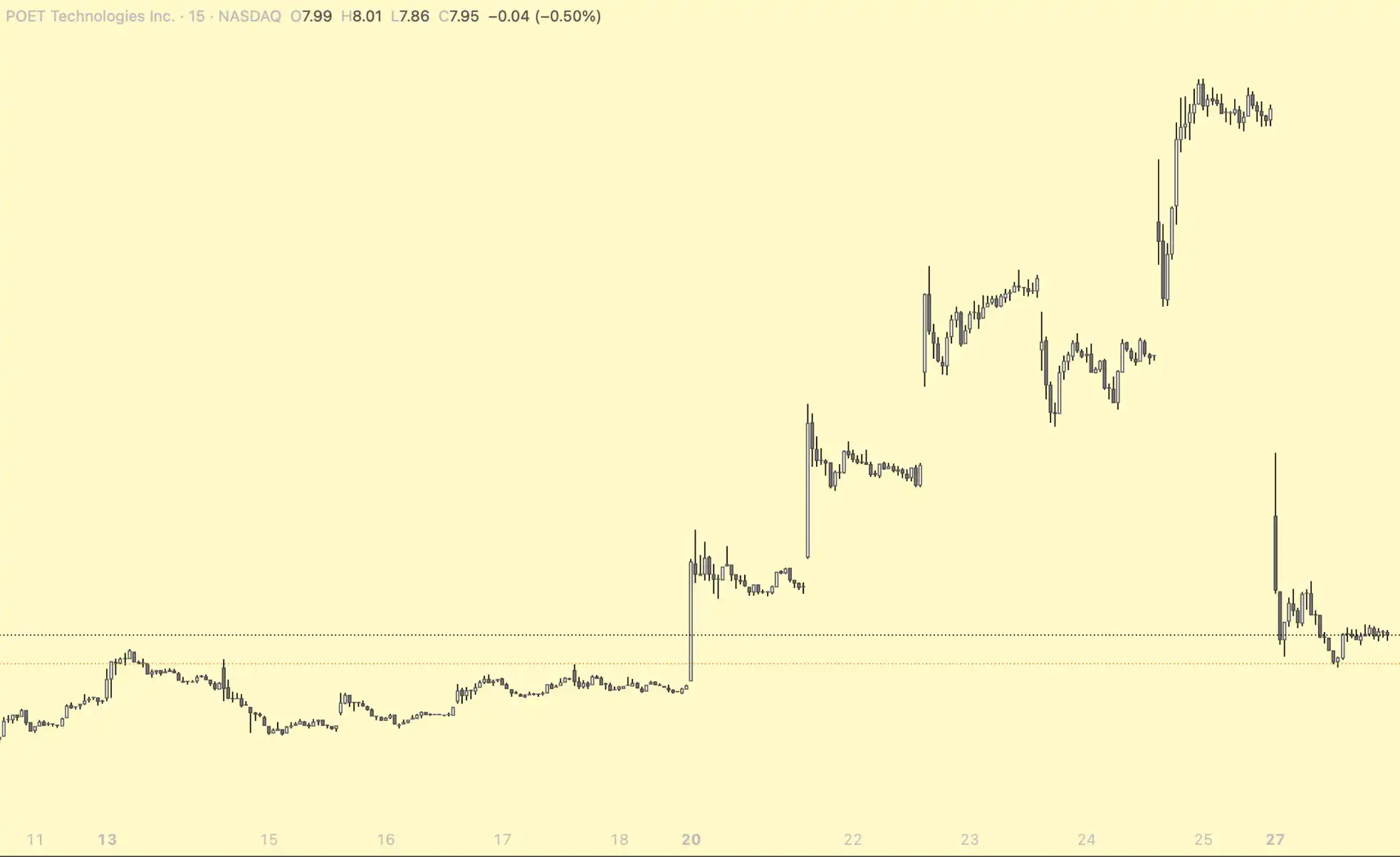
On that day, POET's stock price dropped 8% at the opening, which the market interpreted as a normal correction after a previous surge. On April 24 (Friday), the stock price continued to rise by 28%. Throughout the weekend, retail investors encouraged each other in forums, seeing a stock that had just recovered from a short-selling attack, had its CFO personally confirm a Marvell order, and surged for two consecutive days, viewed as an AI "hidden gem."
The order was completely unaware it had been formally canceled on April 23.
From Thursday's close to Monday's open, the company remained silent for nearly four trading days. Critini Research analyst Jukan later commented, "The company received the notification on the 23rd, but waited until the 27th to disclose it. Shareholders who bought on the high during this period should consider litigation."
On April 27 (Monday) pre-market, a notification sent shockwaves among retail investors.
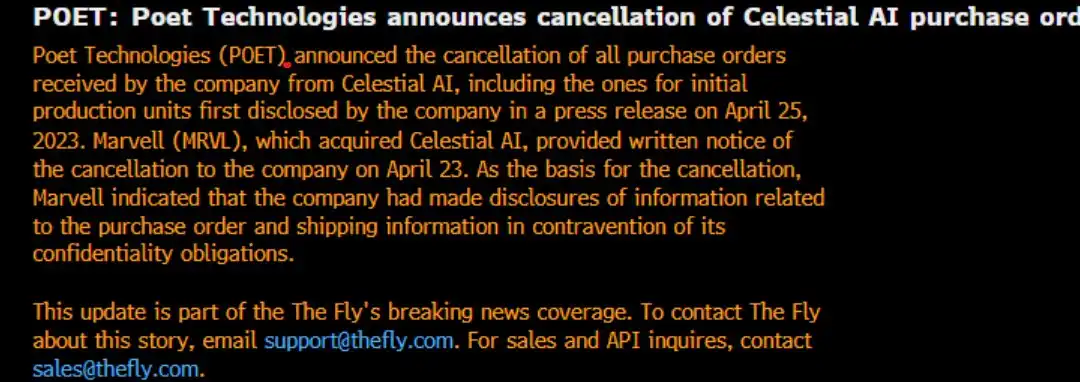
All purchase orders from Celestial AI—including the initial production order disclosed for the first time in 2023—were canceled, citing the company's violation of confidentiality obligations related to orders and shipment details.
At the opening bell, POET plummeted nearly 46%, followed by a further 10% drop in after-hours trading. The market value evaporated by almost half in a single day.
Serenity pointed out that Marvell's order cancellation logic ran deeper than just a breach of the confidentiality agreement. What POET did within Marvell's co-packaged optical roadmap essentially involved encapsulating lasers from other manufacturers into Marvell's designed silicon photonics—a segment in the industry supply chain most vulnerable to vertical integration.
Marvell could directly procure from laser suppliers like Lumentum and handle the packaging themselves. The confidentiality agreement incident merely gave Marvell a reason to accelerate this decision.
In other words, Marvell's order cancellation conveyed the true message: we no longer need POET.
The sharp decline also impacted the upstream supply chain and small-cap stocks in the same sector. Several laser suppliers considered by the market as POET beta testers—SIVE, LITE, LPTH—collectively fell on that day.
Conclusion
In the U.S. stock market, a significant number of companies adeptly replicate the standard process familiar to crypto traders: ride the trend, craft a narrative, engage KOLs for promotion, drive up the stock price, and then dump shares under the guise of negative news. The target of this operation remains the FOMO-driven retail investors.
At the moment the CFO of POET ranted against the short sellers, branding them as "maggots" in a video, perhaps they did not anticipate that this very video would attract lawsuits and ultimately allow the shorts to emerge victorious.
Welcome to join the official BlockBeats community:
Telegram Subscription Group: https://t.me/theblockbeats
Telegram Discussion Group: https://t.me/BlockBeats_App
Official Twitter Account: https://twitter.com/BlockBeatsAsia
